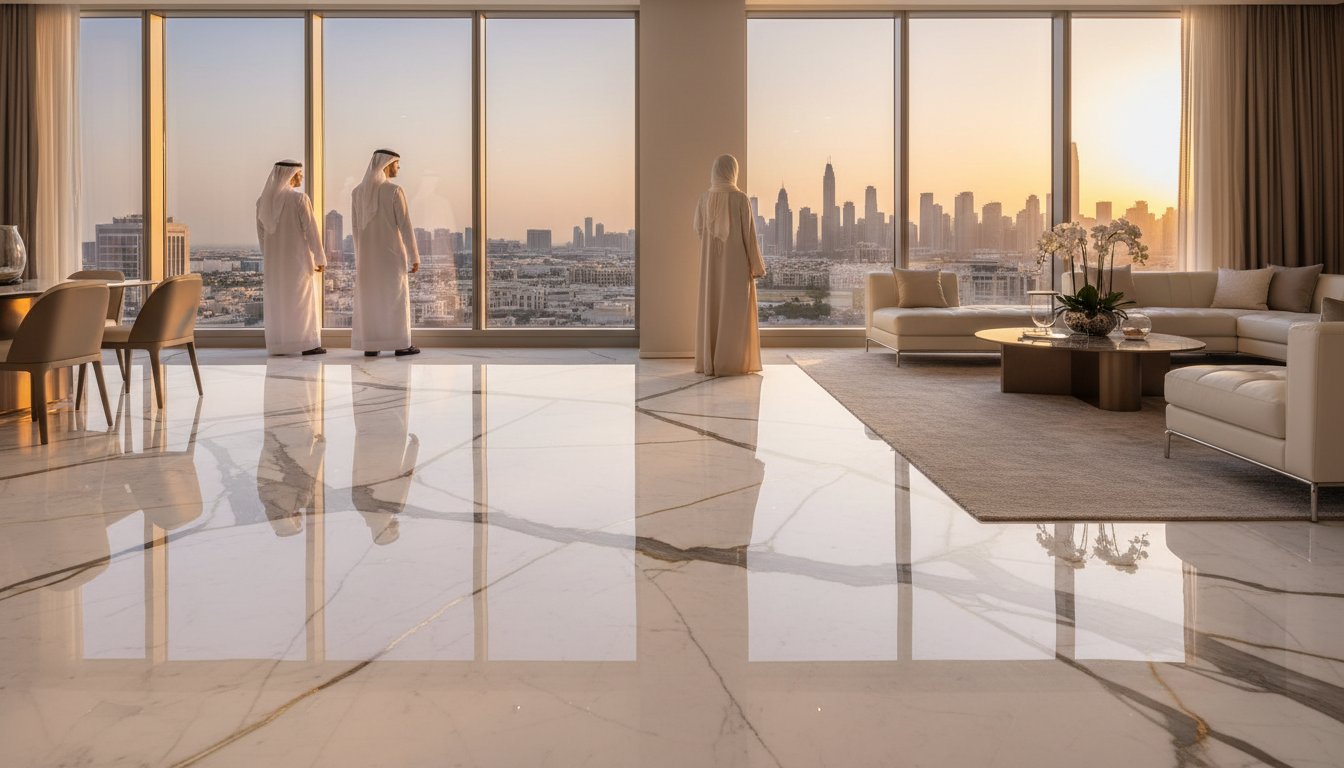
Marble flooring is the hallmark of luxury in Dubai and across the UAE, yet this timeless elegance often comes with questions of practicality. Property owners frequently hesitate, concerned about the initial investment, the complexities of maintenance, and the challenge of rectifying damage like scratches, stains, or a loss of shine. The fear of making a costly mistake-either in selection or upkeep-can be a significant barrier to achieving the desired aesthetic and value for your property.
This comprehensive guide is designed to eliminate that uncertainty. We provide the essential, results-oriented information you need to make a confident and informed decision. You will discover the distinct advantages and disadvantages of different marble types suitable for the UAE climate, learn the correct techniques for cleaning and protection to prevent damage, and understand the advanced restoration solutions available to renew even the most worn surfaces. Prepare to master every aspect of marble flooring, ensuring your investment remains a source of pride and value for years to come.
Understanding Marble Flooring: A Foundation of Luxury
Marble is a metamorphic rock, formed when limestone is subjected to immense heat and pressure within the Earth’s crust. This geological process creates a dense, crystalline stone renowned for its unique and intricate veining. For a technical overview of its composition, this guide to Understanding Marble provides a solid foundation. For centuries, this natural stone has been synonymous with luxury and sophistication, gracing the halls of palaces and the pedestals of timeless sculptures. Its inherent elegance and durability have cemented its status as a premier architectural material.
In Dubai’s dynamic property market, marble flooring remains a definitive choice for high-end residential and commercial spaces. Its ability to stay cool underfoot makes it a practical solution for the UAE climate, while its opulent appearance aligns perfectly with the city’s architectural ambition. Installing marble is not merely a design choice; it is a significant investment that enhances a property’s aesthetic appeal and can substantially increase its market value, making it a preferred option for developers and homeowners seeking to maximize their return.
Popular Types of Marble Flooring in the UAE
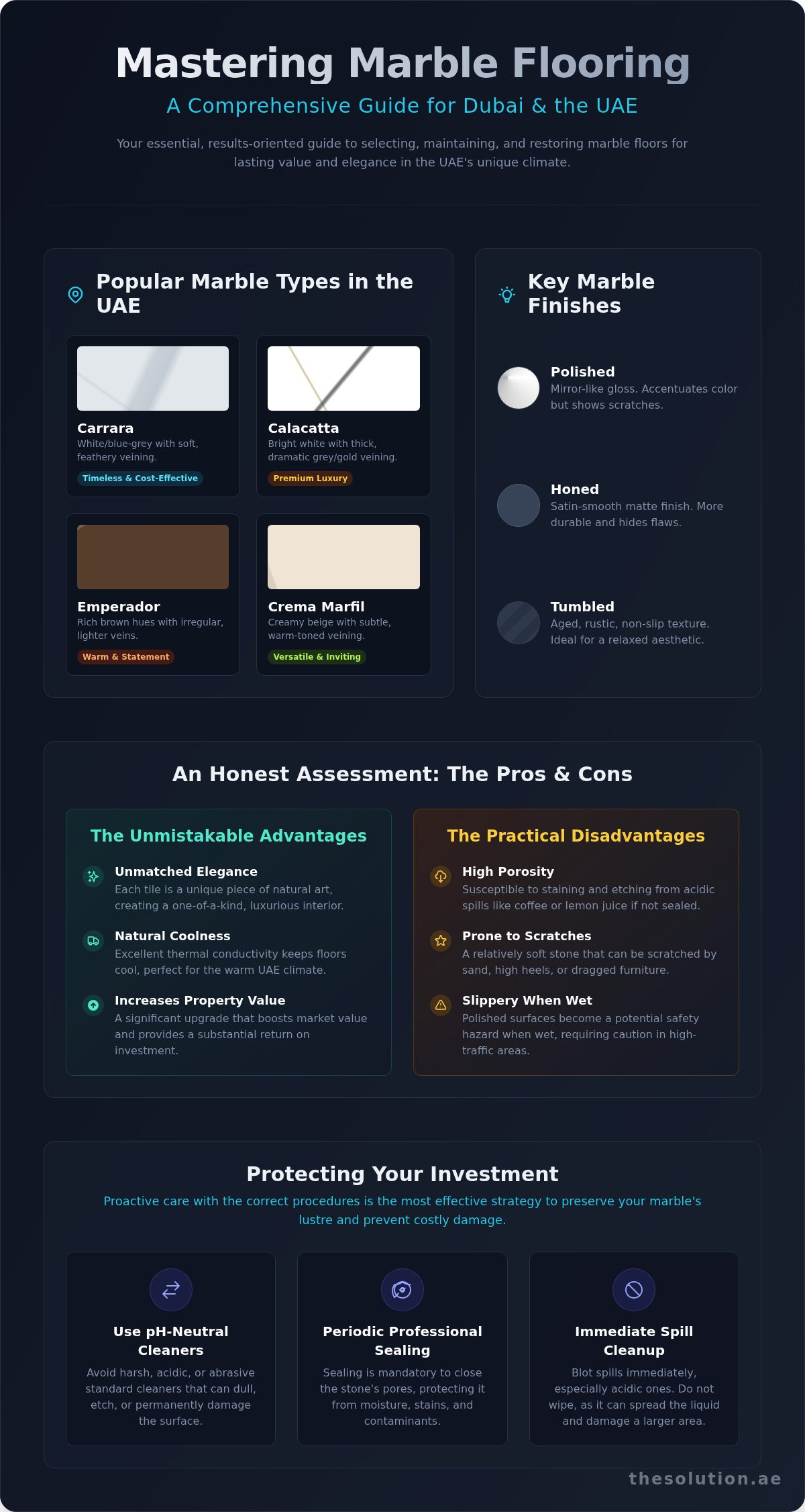
- Carrara: A classic Italian marble known for its white or blue-grey background and soft, feathery grey veining. It offers a timeless look at a relatively cost-effective price point.
- Calacatta: Considered the epitome of luxury, Calacatta features a bright white field with thick, dramatic veining in grey or gold tones. It is rarer and thus carries a premium price.
- Emperador: Sourced from Spain, this marble offers rich brown hues with irregular veins and calcite clusters, creating a sense of depth and warmth ideal for statement areas.
- Crema Marfil: A versatile Spanish marble with a creamy beige background and subtle veining. Its neutral tone provides a warm, inviting base that complements a wide range of interior styles.
Key Finishes and Their Impact on Appearance and Maintenance
- Polished Finish: This high-gloss finish creates a mirror-like, reflective surface that accentuates the stone’s natural color. While visually stunning, it is more susceptible to showing scratches and requires diligent maintenance to prevent etching.
- Honed Finish: A honed finish provides a satin-smooth, matte surface. It is less slippery than polished marble, better at concealing minor flaws, and is often preferred for high-traffic areas due to its superior durability.
- Tumbled Finish: Created by tumbling the marble tiles with sand and aggregates, this finish results in a rustic, aged appearance with a non-slip texture. It is an excellent choice for creating a more traditional or relaxed aesthetic.
The Pros and Cons of Marble Flooring: An Honest Assessment
Marble is synonymous with luxury and timeless elegance. However, selecting it for your property requires a clear understanding of its unique characteristics. A comprehensive look at the pros and cons of marble flooring reveals it as a premium material that rewards proper care with exceptional longevity. This assessment provides property managers and owners in the UAE with the critical information needed to make an informed decision and protect their investment.
The Unmistakable Advantages of Marble
The appeal of this natural stone is rooted in several distinct benefits that make it a premier choice for high-end residential and commercial spaces across the UAE.
- Unmatched Elegance: As a natural stone, each tile features unique veining and colouration. This ensures that every marble flooring installation is a one-of-a-kind masterpiece, elevating the aesthetic of any interior.
- Natural Temperature Regulation: Marble is an excellent thermal conductor, allowing it to remain cool to the touch. This inherent property makes it an ideal flooring solution for the warm climate of the UAE, providing natural comfort underfoot.
- Exceptional Durability: While softer than granite, a properly sealed and professionally maintained marble floor can last for generations. Its longevity is a testament to its structural integrity when cared for correctly.
- Increases Property Value: The installation of marble is widely recognised as a significant upgrade that directly increases a property’s market value, often providing a substantial return on investment.
The Practical Disadvantages to Consider
To maintain its pristine condition, one must be aware of marble’s inherent vulnerabilities. Understanding these challenges is the first step toward implementing a maintenance strategy that preserves the stone’s beauty and integrity.
- High Porosity: Marble is a porous stone, making it highly susceptible to staining and etching. Acidic substances like lemon juice, vinegar, or coffee can damage the surface and cause permanent marks if not rectified immediately.
- Susceptibility to Scratches: As a relatively soft metamorphic rock, marble can be scratched by abrasive materials. Sand tracked in from outside, dragging heavy furniture, and even high heels can compromise a polished finish.
- Specialised Maintenance: Standard cleaning products are often too harsh for marble. It requires specific pH-neutral cleaners to avoid dulling the surface. Periodic professional sealing is also mandatory to protect the stone from moisture and stains.
- Slippery Surface: A highly polished marble floor can become extremely slippery when wet, posing a potential safety hazard. This is a critical consideration for high-traffic areas or facilities where spills are common.
Essential Maintenance: How to Clean and Protect Your Marble Floors
Maintaining the pristine condition of your marble flooring is not a costly endeavor; it is a matter of correct, consistent procedure. Proactive care is the most effective strategy to prevent surface damage, preserve the stone’s natural lustre, and avoid expensive restoration work. By implementing a structured maintenance routine, you protect your investment and ensure your floors remain a hallmark of quality and elegance for years to come.
Safe Daily and Weekly Cleaning Routines
The first line of defence against damage is diligent cleaning. In the UAE’s environment, fine sand and grit are primary causes of scratches. We recommend the following non-negotiable steps:
- Frequent Dust Mopping: Use a dry, clean microfiber dust mop daily to remove abrasive particles that can scratch the surface underfoot.
- Use pH-Neutral Cleaners: When wet mopping (once or twice a week), use only a cleaner specifically formulated for natural stone. Dilute it according to the manufacturer’s instructions and use a damp, soft microfiber mop.
- Install Quality Doormats: Place high-quality mats at all entrances to trap dirt, sand, and moisture before they reach your marble flooring.
What NOT to Use on Marble (Common & Costly Mistakes)
Using the wrong cleaning products is the fastest way to inflict costly, irreversible damage. Marble is a calcium carbonate-based stone, making it highly sensitive to acids and harsh chemicals. Understanding the correct chemistry is a core part of the essential maintenance for marble floors. Avoid the following at all costs:
- Acidic Cleaners: Vinegar, lemon juice, and all-purpose cleaners containing acid will etch the marble, creating dull spots and removing the finish.
- Abrasive Products: Scouring powders and abrasive scrubbing pads will permanently scratch the polished surface.
- Generic Tile Cleaners: Many common floor cleaners contain alkaline or acidic agents that can break down the sealant and dull the stone over time.
The Importance of Professional Sealing
A high-quality impregnating sealant acts as a vital protective barrier. It penetrates the pores of the marble to inhibit the absorption of liquids and oils, giving you more time to clean spills before they become permanent stains. To test your sealant, place a few drops of water on the surface; if the water beads up, the seal is intact. If it darkens the stone or is absorbed, it is time to reseal. We advise professional sealing every 1-3 years, depending on foot traffic, to prevent staining that can cost thousands of Dirhams to rectify.
Common Marble Floor Damage and When to Call a Professional
Even with diligent daily and weekly care, the natural softness of marble makes it susceptible to damage over time. High-traffic areas, accidental spills, and environmental factors common in the UAE can degrade the appearance of your investment. Recognizing the type of damage is critical to determining the correct course of action and knowing when to escalate from maintenance to professional restoration.
Etching vs. Staining: Identifying the Damage
Understanding the difference between etching and staining is crucial, as their remedies are entirely different. An incorrect approach can worsen the problem.
- Etching is a chemical reaction that corrodes the stone’s surface, creating dull spots. It is caused by acidic substances like citrus, vinegar, or harsh cleaning agents reacting with the marble. This is not a discoloration but physical damage to the finish itself.
- Staining occurs when a substance absorbs into the pores of the marble, causing a distinct colour change. Culprits include oil, coffee, or wine that have been left to sit on the surface.
While some surface stains can be managed, etching has physically damaged the stone and requires professional honing and diamond polishing to restore the surface to its original lustre.
Scratches, Scuffs, and Dullness
The primary reason a once-glossy marble flooring installation loses its shine is due to an accumulation of microscopic scratches. Abrasive particles like sand and grit, frequently tracked indoors, act like sandpaper underfoot. This dense network of fine scratches diffuses light rather than reflecting it, resulting in a dull, worn appearance. Deeper scratches or chips from dropped objects cannot be buffed out with consumer products and require specialist intervention using innovative resin fillers and precision tools to achieve a seamless, durable repair.
Why Professional Restoration is the Smart Choice
DIY polishing powders and waxes offer a temporary, superficial shine at best. They do not rectify underlying damage like etching or scratches and can build up over time, trapping dirt and creating a hazy finish. Attempting to fix deep damage without the correct equipment often leads to more visible and costly problems.
Professional restoration is the most effective and intelligent financial decision. The cost to replace a premium marble floor can run into tens of thousands of Dirhams, not to mention the significant disruption. In contrast, our restoration techniques renew your existing stone for a fraction of that cost, rectifying all forms of damage and returning the surface to its original factory finish. Don’t live with damaged marble. Get a professional assessment from our experts.
The Professional Marble Restoration Process: Bringing Floors Back to Life
While consistent daily and weekly care is essential, there comes a time when even the most well-maintained marble requires professional intervention to rectify wear and tear. Professional restoration is a highly technical process that goes far beyond simple cleaning. It is a systematic renewal designed to restore your marble flooring to its original, factory-finish condition, protecting your investment and proving significantly more cost-effective than replacement, which can cost thousands of dirhams.
Our process is transparent and results-oriented, utilizing specialized equipment and innovative techniques to deliver an exceptional finish. Here is a step-by-step overview of how our highly skilled technicians bring your floors back to life.
Step 1: Deep Cleaning and Damage Assessment
The process begins with a meticulous deep clean using industrial-grade, pH-neutral solutions to strip away ingrained dirt, grime, and failing old sealants. This initial step reveals the true state of the marble. Our technicians then conduct a thorough damage assessment, identifying every chip, scratch, etch mark, and area of unevenness (lippage). This allows us to formulate a precise rectification plan tailored specifically to your floor’s condition.
Step 2: Diamond Grinding, Honing, and Polishing
This multi-stage mechanical process is the core of the restoration. We employ a weighted rotary machine with diamond abrasive pads to achieve a flawless surface.
- Grinding: Coarse-grit diamond pads are used to remove deep scratches and lippage, creating a perfectly level and uniform surface.
- Honing: We proceed with progressively finer grit diamond pads. This stage smooths the stone, removing any marks from the grinding phase and producing a uniform matte or satin finish.
- Polishing: The final stage uses specialist polishing compounds and fine-hair pads to achieve the desired level of gloss, from a subtle sheen to a deep, mirror-like reflection.
Step 3: Sealing and Final Finishing
Once the desired finish is achieved, protecting the stone is paramount. We apply a premium-quality impregnating sealer, which penetrates the pores of the marble to provide long-lasting resistance to stains and moisture from within. The floor is then given a final buff to enhance its lustre and ensure a flawless appearance. To ensure the longevity of our work, we provide you with tailored advice for ongoing maintenance of your restored marble flooring.
For a comprehensive assessment and to restore your marble surfaces to their exceptional, original condition, contact our restoration specialists today.
Protect Your Investment: The Final Word on Marble Flooring
Marble offers unparalleled elegance for any Dubai or UAE property, but its natural beauty requires diligent care. Understanding its unique characteristics and committing to a consistent maintenance routine are fundamental to preserving the value of your marble flooring. When daily wear, etches, or stains inevitably appear, professional intervention is not just a solution-it is the most intelligent path to rectify damage and restore its pristine condition.
Before considering a costly and disruptive replacement, trust the specialists. The Solution provides cost-effective repair solutions that save you up to 80% compared to replacement. Our highly skilled technicians deliver expert natural stone restoration on-site across Dubai and the UAE, ensuring minimal disruption to your home or business.
Restore your marble’s original beauty. Contact The Solution for a consultation. Let our team help you preserve the timeless elegance of your investment for years to come.
Frequently Asked Questions About Marble Flooring
How much does marble flooring cost to install in the UAE?
The installation cost for marble flooring in the UAE typically ranges from د.إ 250 to د.إ 600 per square metre. This price is influenced by the marble’s grade, origin (e.g., Italian Carrara vs. Omani marble), and the complexity of the installation pattern. The final cost also includes labour, subfloor preparation, and finishing materials. For a precise quotation, a professional assessment of the project scope is required to ensure an accurate and cost-effective outcome.
Can you use a steam cleaner on marble floors?
We strongly advise against using steam cleaners on marble flooring. The high heat and intense pressure can damage the sealant, leaving the porous stone vulnerable to staining and etching. Over time, this can dull the finish and lead to costly restoration work. For routine cleaning, we recommend using a pH-neutral cleaner specifically formulated for natural stone and a microfibre mop. This method effectively cleans without compromising the integrity of your marble.
How often should I have my marble floors professionally polished and sealed?
The frequency of professional polishing and sealing depends on foot traffic and maintenance. For high-traffic commercial areas, we recommend an annual service to maintain lustre and protection. In residential settings with average use, professional servicing every two to three years is typically sufficient. Regular sealing is crucial as it creates a protective barrier against spills and stains, preserving the stone’s natural beauty and preventing the need for more extensive, costly restoration later.
Is it possible to repair a deep chip or crack in a marble tile?
Yes, rectifying deep chips and cracks in marble is a highly effective process. Our technicians utilize specialist resins and colour-matching compounds to fill the damage. The repaired area is then honed and polished to blend seamlessly with the surrounding surface, restoring the tile’s structural integrity and aesthetic. This professional repair is a significantly more cost-effective solution than replacing the entire tile, which can be a disruptive and expensive endeavour.
Which is better for a kitchen, a honed or polished marble finish?
For kitchen environments, a honed marble finish is the more practical choice. Its matte surface is less likely to show minor scratches and etching from acidic substances like lemon juice or vinegar, which are common in kitchens. While a polished finish offers a high-gloss, reflective look, it is more susceptible to showing imperfections and requires more frequent maintenance to retain its appearance. A honed finish provides a durable, elegant surface better suited to the high-use nature of a kitchen.
Can yellowing in older white marble be fixed?
Yellowing in older white marble can often be rectified. This discolouration is typically caused by iron deposits within the stone oxidizing, or from the use of improper cleaning agents or wax coatings that have aged. Our restoration process involves a deep cleaning and poultice application to draw out the embedded stains and impurities. This is often followed by light honing to remove the affected surface layer, successfully restoring the marble’s original white appearance and clarity.


