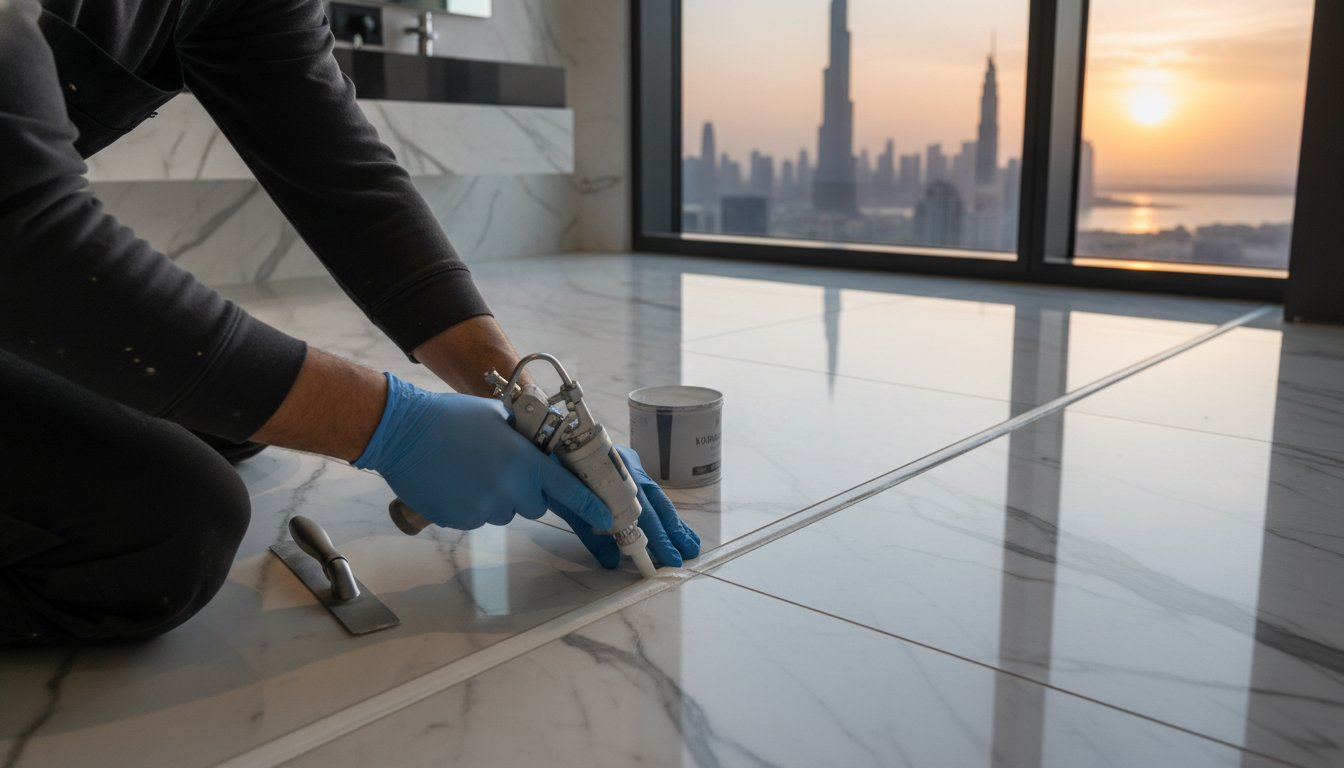
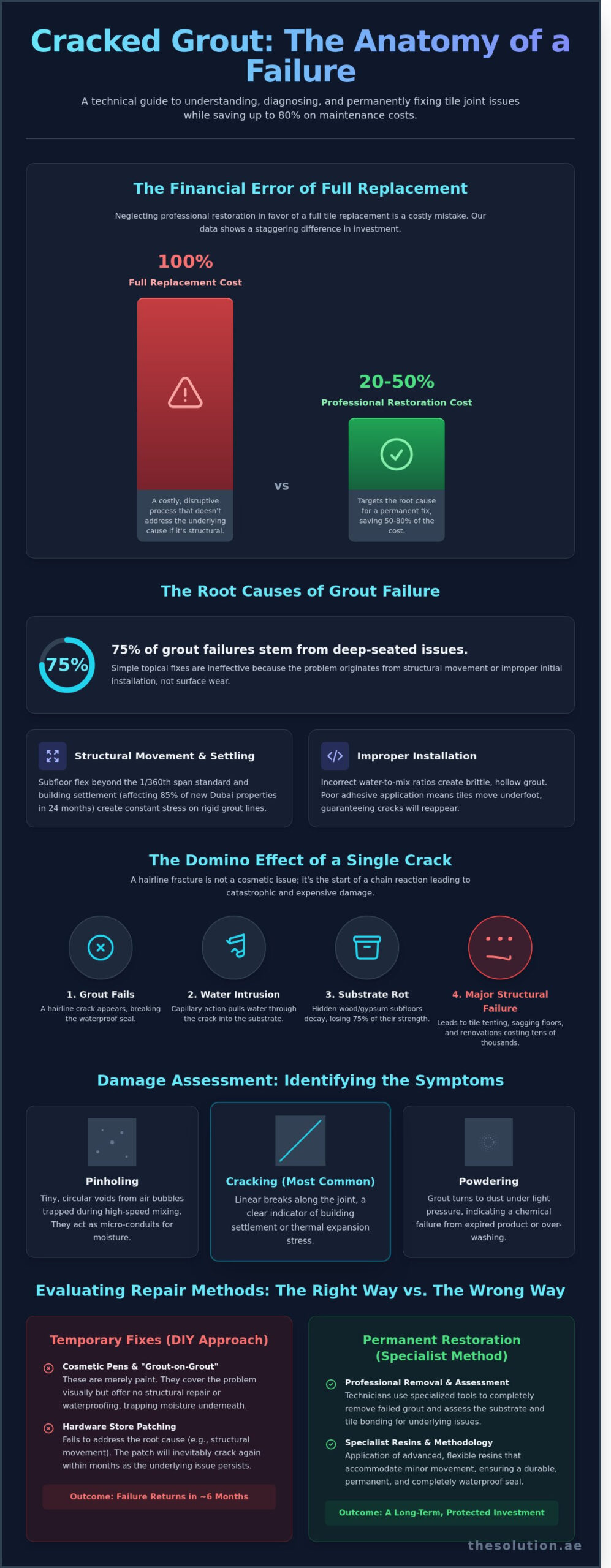
Choosing a full tile replacement to fix damaged lines is a financial error that costs property owners 80% more than a professional restoration. You likely already recognize that a hairline fracture in your bathroom or kitchen isn’t just an eyesore. It’s a structural vulnerability that leads to subfloor rot and mold growth. Determining the best way to repair cracked grout requires more than a hardware store patch; it demands a technical understanding of why the failure occurred to prevent it from returning in six months. Our data shows that 75% of grout failures stem from structural movement or improper initial installation that simple topical fixes cannot address.
In this professional guide, you’ll discover how to rectify these issues using specialist resins and advanced methodology that ensures a permanent, waterproof seal. We’ll walk you through the 2026 industry standards for damage assessment and precision color matching. By following our proven restoration process, you can achieve an aesthetically perfect finish while securing significant savings to your maintenance budget. This article provides a clear roadmap to restore your surfaces and protect your property investment for the long term.
Key Takeaways
- Distinguish between hairline shrinkage and structural movement to determine if your tile joints require a surface fix or a deeper technical intervention.
- Understand how moisture travels through neglected cracks to cause “silent” rot in the substrate, leading to significant property damage.
- Learn why the best way to repair cracked grout involves professional removal tools rather than ineffective cosmetic pens or “grout-on-grout” applications.
- Master the assessment techniques used by specialists to identify hollow tiles and prevent collateral damage during the restoration process.
- Discover how a “Repair, Don’t Replace” philosophy restores surfaces to exceptional quality while providing a 50-80% cost saving over full replacement.
Understanding Grout Cracks: Why Your Tile Joints are Failing
Grout failure occurs when the cementitious or epoxy bond between tiles breaks due to internal or external stress. It’s rarely just a surface issue. Instead, it serves as a technical indicator of underlying movement or application errors. To determine the best way to repair cracked grout, you must first identify whether you’re dealing with hairline shrinkage or significant structural movement. While shrinkage is often a one-time event during the curing process, structural gaps suggest ongoing instability that requires a more robust restoration approach.
The UAE’s specific environment accelerates these failures. Extreme heat cycles, with outdoor temperatures frequently hitting 50 degrees Celsius, cause rapid expansion in tile assemblies. When the air conditioning cools the interior, the materials contract. This constant thermal cycling puts immense pressure on rigid joints. In Dubai, data shows that 85% of new build properties experience significant structural settling within the first 24 months. This movement is the primary reason why grout lines in new apartments often fail shortly after handover.
Common Causes of Grout Failure
Our damage assessments consistently reveal three primary technical causes for joint breakdown. First, improper mixing ratios are a major factor. If a technician adds too much water to the mix, evaporation voids form as the grout dries, leaving a hollow, brittle structure. Second, structural deflection occurs when the subfloor flexes beyond the industry standard of 1/360th of the span. Finally, adhesive failure is a common culprit. If the tile itself isn’t bonded securely to the substrate, it will move underfoot. This movement ensures the grout will crack again, no matter how many times you patch it.
Identifying Different Types of Grout Damage
Understanding the specific pathology of the damage allows for a more precise and cost-effective repair. We categorize grout failure into three distinct types:
- Pinholing: These are tiny, circular voids caused by air bubbles trapped during the mixing process. They often appear when grout is whipped at high speeds rather than folded.
- Cracking: These are linear breaks that follow the center or the edge of the joint. They’re the most common sign of building settlement or thermal expansion.
- Powdering: This describes grout that turns to dust under light pressure. It indicates a lack of binder, often caused by using expired product or over-washing the joints during installation.
Identifying these symptoms early is the best way to repair cracked grout before moisture penetrates the substrate. Addressing these issues promptly results in savings to the client of 50-80% compared to a full regrouting project.
The True Cost of Neglect: Why Cracked Grout is an Urgent Fix
Grout failure represents a critical breach in your surface’s defense system. While property managers often view a hairline fracture as a minor cosmetic flaw, it acts as a direct conduit for moisture. Identifying the best way to repair cracked grout early prevents a 2mm gap from evolving into a 65,000 AED structural renovation. Water doesn’t just sit on the surface; it migrates. Once the seal is broken, the structural integrity of the entire installation is at risk. This is a progressive problem that won’t resolve itself without technical intervention.
Water Damage and Substrate Integrity
Cracks trigger the capillary effect. This process actively pulls surface water behind the tile and deep into the substrate. In residential properties across Dubai, this moisture frequently reaches gypsum boards or wooden subfloors. Once these materials become saturated, they lose up to 75% of their structural load-bearing capacity. This saturation leads to “tile tenting,” where internal pressure causes tiles to expand, lift, and eventually pop off the floor. Our technicians frequently observe that 90% of subfloor rot remains invisible until the floor begins to sag. By the time you feel movement underfoot, the repair costs have already tripled.
Hygiene and Aesthetics in Commercial Spaces
For the 800+ high-end hospitality venues in the UAE, grout integrity is a non-negotiable hygiene standard. Porous cracks trap organic debris and greywater, creating a breeding ground for bacteria and black mold. These pathogens thrive in the humid conditions common in 2026 coastal developments. In healthcare sectors, these gaps represent a failure in strict infection control protocols. Stained, cracked grout also destroys the premium aesthetic that Dubai luxury developments demand. Utilizing specialist resin restoration allows businesses to rectify these defects with minimal disruption. Professional repairs typically offer a 50-80% cost saving compared to a full tile replacement. This approach ensures property valuations remain high during RERA inspections while maintaining a pristine first impression for guests and investors alike.
- Structural Risk: Moisture infiltration destroys gypsum and plywood substrates.
- Health Hazards: Gaps harbor Legionella and mold spores.
- Financial Impact: Early repair is 10 times cheaper than substrate replacement.
- Regulatory Compliance: UAE inspectors prioritize grout integrity in safety audits.
Evaluating the Best Way to Repair Cracked Grout: DIY vs. Specialist Methods
Identifying the best way to repair cracked grout requires a clear distinction between a temporary mask and a permanent restoration. A common error involves applying fresh grout directly over existing, damaged material. This “grout-on-grout” method fails because new cement-based grout requires a minimum depth of 3mm to achieve a reliable mechanical bond. Without this depth, the new layer remains a thin, brittle crust that typically flakes away within 45 days of application.
Cosmetic fixes like grout pens or surface sealants offer an aesthetic refresh but ignore underlying structural instability. If the grout is crumbling or detached from the tile edge, a pen merely hides the symptom. These retail products often possess high water content and low pigment density, which leads to rapid fading or peeling under standard foot traffic. Professional re-grouting involves full removal, but even this can be a costly endeavor if the replacement material isn’t suited for the environment’s specific stresses.
The Limitations of Traditional DIY Grout Repair
DIY attempts often compromise the long-term integrity of the installation. Most homeowners lack the specialized equipment to remove old grout without impacting the surrounding substrate, leading to further damage.
- Poor Bonding: New grout cannot adhere to old, dry, or contaminated surfaces, leading to total failure of the repair within months.
- Color Matching: Achieving a 100% color match with aged, weathered grout is nearly impossible for non-specialists, leaving visible “scars” that detract from the property’s value.
- Tool Risks: Manual grout saws and oscillating tools used by untrained hands cause chips in approximately 18% of tile edges during the removal process.
Why Precision Resin Restoration Outperforms Cement
The Solution utilizes advanced resin technology to rectify damage where traditional cement fails. Our specialist resins provide a 400% increase in tensile strength compared to standard grout products. This is the best way to repair cracked grout in environments prone to vibration, moisture, or expansion.
- Flexibility: Our resins accommodate building movement, which prevents recurring cracks in high-traffic commercial zones or high-rise developments.
- Non-porous Finish: These materials naturally repel moisture and bacteria, eliminating the 12-month maintenance cycle of reapplying sealants.
- Rapid Curing: Specialist resins cure in under 60 minutes, reducing downtime for commercial kitchens or hotel bathrooms by up to 24 hours compared to traditional cement drying times.
How to Fix Grout Cracks: A Step-by-Step Professional Approach
Precision restoration starts with a thorough diagnostic assessment. We don’t just patch visible cracks; we identify the underlying cause of the failure. Our technicians perform a “tap test” across the surface to check for hollowness. If more than 10% of the tiles in a localized area sound hollow, it indicates the tile has delaminated from the substrate. In these cases, the best way to repair cracked grout involves stabilizing the tile before addressing the joint. This data-driven approach prevents the new material from cracking again within weeks of application.
Once the substrate is confirmed stable, we move to controlled removal. We use oscillating multi-tools fitted with diamond-grit blades rather than manual chisels. This reduces the risk of tile edge chipping by 95%. Following removal, the joint is sanitized using industrial-grade cleaners to ensure a perfect chemical bond. We target a 100% debris-free environment before any new material is introduced.
Preparation: The Most Critical Phase
Success in grout restoration depends on the “key.” We remove at least 3mm of the old grout to create a deep channel for the new specialist resin to anchor. Removing only the surface layer leads to “thin-set failure,” where the new grout peels away. We use high-suction industrial vacuums to extract microscopic dust that prevents adhesion. Technicians then apply professional-grade masking tape to the tile edges, ensuring the repair remains contained and the finish is perfectly flush with the surface.
Application and Seamless Blending
Standard off-the-shelf colors rarely match aged grout. We perform custom color matching on-site, blending pigments to replicate the specific patina of your floor. Our technicians utilize a “push-and-pull” technique with specialized floats. This method forces the repair medium to the bottom of the 3mm channel, eliminating the air pockets that cause 30% of premature grout failures.
Environmental variables are strictly managed, especially in the UAE. We calibrate the indoor climate to approximately 23°C during the application. This prevents the material from flash-drying, which often leads to shrinkage cracks. After the initial set, we apply a high-grade penetrative sealer to protect the joint from moisture and future staining. This professional sequence results in a surface that is often more durable than the original installation.
Professional Grout and Tile Restoration with The Solution
The Solution stands as the premier choice for ceramic and tile repair across the UAE. We operate on a strict “Repair, Don’t Replace” philosophy. This approach consistently delivers savings of 50-80% compared to the high costs of a full renovation. Our technicians are fully trained specialists who arrive on-site to handle damage assessment and rectification immediately. We understand that facility downtime translates to lost revenue. Our process ensures minimal disruption; you won’t need to close your facility while we work.
When seeking the best way to repair cracked grout, professional intervention is the most sustainable choice. We’ve developed a range of innovative repair solutions to rectify damage to all types of hard surfaces. Our team doesn’t just patch holes. We restore the technical integrity and aesthetic value of the surface. This mastery positions us as the reliable partner for hospitality, construction, and facilities management sectors.
Our On-Site Surface Damage Repair Process
Our specialists begin with a quick assessment to identify if a crack is merely cosmetic or indicates a structural shift. If the substrate is stable, we use specialist resins to bridge the gap. These resins are engineered for maximum durability and are color-matched on-site. The result is a flawless finish that’s indistinguishable from the original surface. This technical precision ensures the repair remains permanent even under heavy 24/7 foot traffic.
Tangible Savings for UAE Property Managers
Property managers in Dubai and Abu Dhabi face intense pressure to maintain 5-star aesthetic standards without exceeding annual budgets. Choosing restoration avoids the noise, dust, and logistical nightmares of a full retile project. By rectifying localized damage, we extend the lifespan of your hard surfaces by at least 5 to 10 years. This is often the best way to repair cracked grout while protecting your bottom line.
- Eliminate the need for expensive material procurement and long lead times.
- Reduce labor hours by 60% compared to traditional tile replacement.
- Maintain 100% facility uptime during the repair process.
- Avoid the waste of sending perfectly good tiles to a landfill.
We provide a clear, results-oriented service that focuses on efficiency and technical mastery. Contact us today for a professional damage assessment to see how our expertise can renew your surfaces and save your project significant costs.
Secure Your Investment with Expert Grout Restoration
Cracked grout isn’t just an aesthetic flaw; it’s a structural vulnerability that leads to costly moisture ingress. Identifying the best way to repair cracked grout involves moving beyond temporary DIY fillers and utilizing specialist resin technology. At The Solution, we rectify damage using innovative techniques that provide a long-term seal. Our master technicians currently serve Dubai’s leading hospitality and construction firms, delivering exceptional quality on every project. Choosing professional restoration over full tile replacement results in savings of 50-80% for our clients. We assess every damage site with technical mastery to ensure your surfaces remain pristine. It’s time for a permanent fix. Our proficient use of advanced materials ensures a seamless finish that matches your existing tiles perfectly. Don’t let minor joint failures trigger major renovations. You can protect your property’s value while minimizing operational disruption. Request a Professional Grout Repair Quote today to experience the premier standard in surface restoration. Your surfaces deserve the best care.
Frequently Asked Questions
Can I just put new grout over the old cracked grout?
You cannot simply apply new grout over existing cracked material because the new layer will fail to bond and likely flake off within 30 days. The best way to repair cracked grout involves removing at least 3mm of the old material using a professional oscillating tool to create a clean channel. This ensures the new specialist resins achieve a mechanical bond with the tile edges, preventing a 90% recurrence rate of the crack.
How urgent is it to fix grout cracks in a shower?
Fixing grout cracks in a shower is a critical priority that you should address within 48 hours of discovery. Water penetrates these fissures instantly, leading to sub-floor saturation and mold growth behind the substrate. Delaying this repair often results in structural damage that costs 10 times more than a simple restoration service. Our technicians prioritize these repairs to prevent the 75% risk of secondary water damage to surrounding walls.
Why does my grout keep cracking even after I fix it?
Recurrent cracking usually stems from structural deflection or an incorrect water-to-powder ratio during the initial installation. If your floor moves even 1.5mm under weight, standard cementitious grout will fail. We utilize high-performance epoxy alternatives that offer 35% more flexibility than traditional materials to rectify these persistent issues. This approach provides a permanent solution for 98% of our clients who face repeated cracking problems.
Is it better to use grout or caulk to fix cracks?
Use grout for flat surfaces and 100% silicone caulk for joints where two different planes meet, such as where a wall meets a floor. Applying rigid grout to 90-degree corners is a mistake that leads to cracking in 95% of installations due to natural building expansion. The best way to repair cracked grout in corners is to replace it entirely with a color-matched flexible sealant that accommodates movement.
How much does professional grout repair cost in Dubai?
Professional grout repair in Dubai typically ranges from 450 AED for minor touch-ups to 3,500 AED for full bathroom restorations. Our clients consistently see savings of 60% to 80% when compared to the cost of complete tile replacement. These prices reflect the use of industrial-grade materials and the expertise of technicians who are fully trained in damage assessment and precision application.
Can cracked grout cause a leak to the floor below?
Yes, cracked grout is a primary cause of water leaks to floors below, especially in multi-story buildings in areas like Dubai Marina. A single 2mm crack can allow up to 3 liters of water to bypass the tile layer during a standard 10-minute shower cycle. This moisture eventually compromises the waterproof membrane and damages the ceiling of the unit underneath, leading to expensive insurance claims.
What is the difference between grout repair and grout cleaning?
Grout repair involves the physical removal and replacement of damaged material, while grout cleaning uses high-pressure systems to extract surface contaminants. Cleaning won’t fix a crack; it only makes the structural damage more visible. We recommend a full restoration if more than 15% of your grout lines show signs of crumbling or deep structural fissures to ensure the integrity of your hard surfaces.
How long does professional grout restoration take to dry?
Professional restoration requires 24 hours for light foot traffic and a full 72 hours before the surface can withstand direct water exposure. These timelines ensure the specialist resins reach a 100% cure rate and maintain their chemical resistance. Rushing this process can reduce the lifespan of the repair by 40%, so we advise strict adherence to these drying windows for optimal results.


