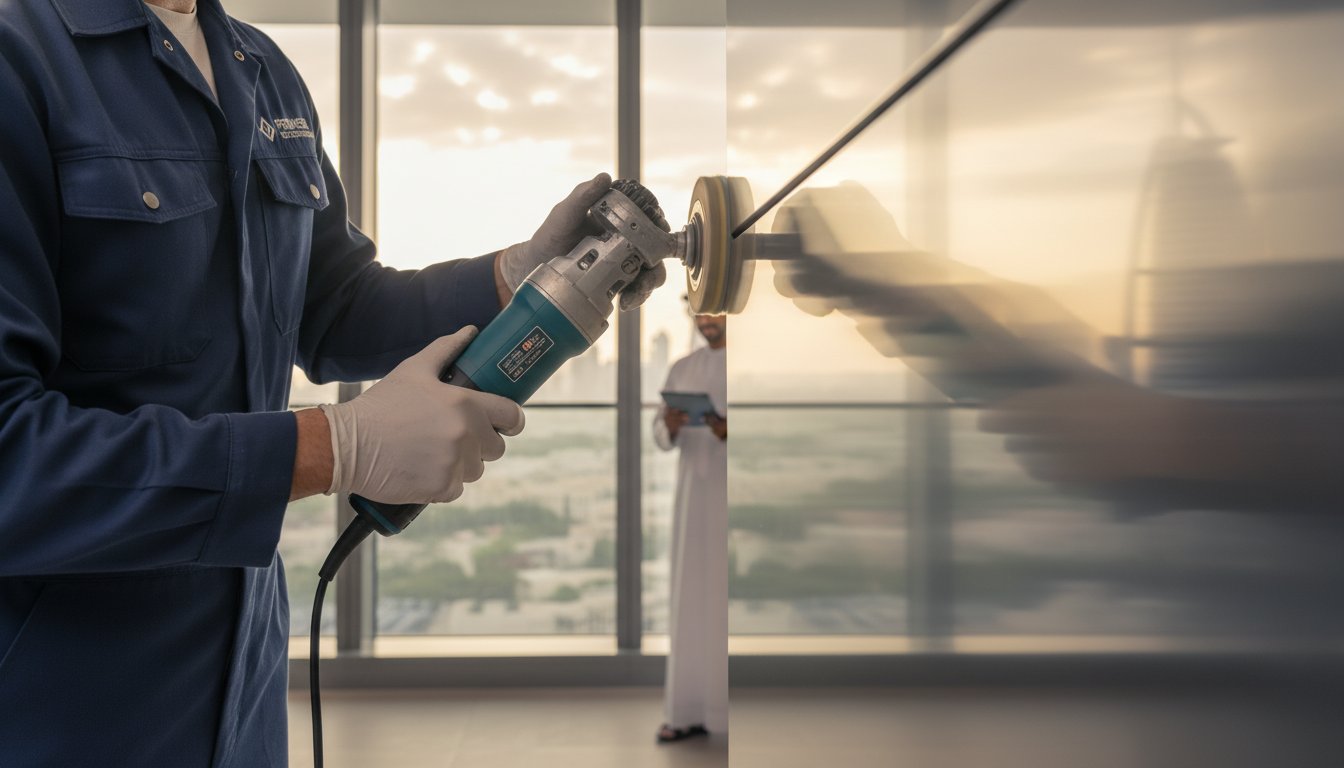
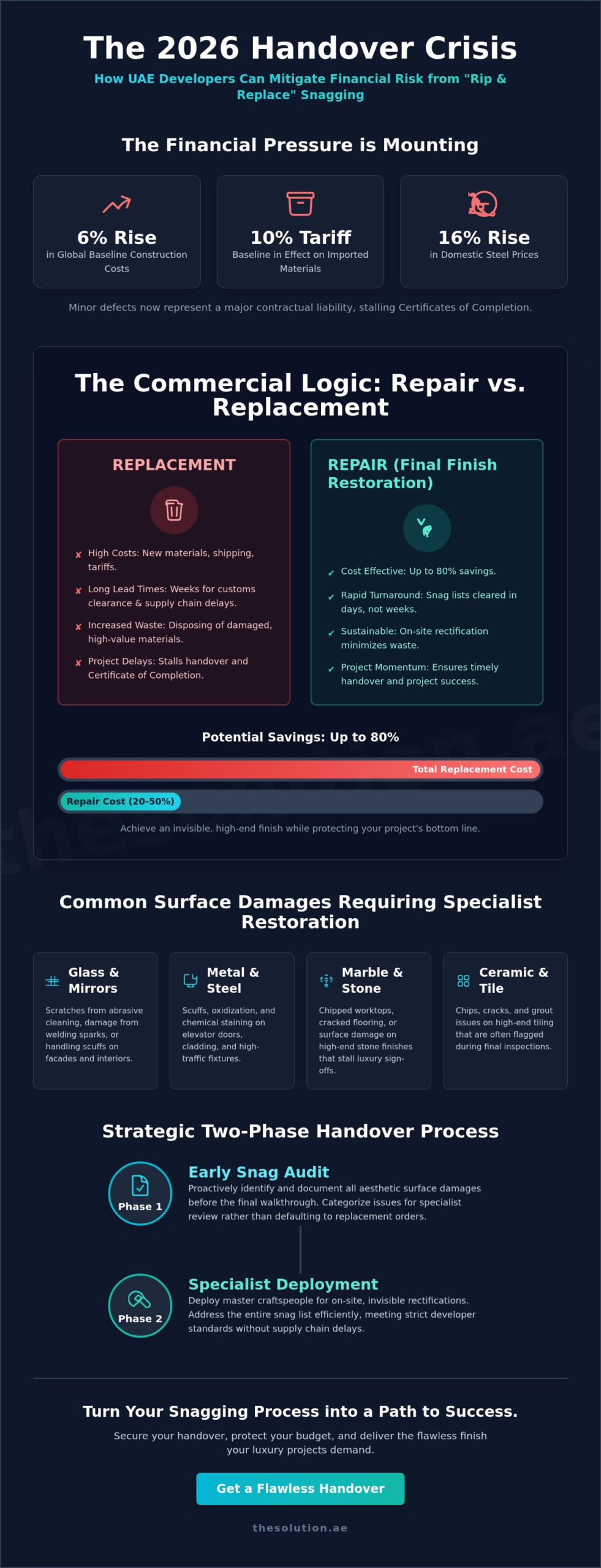
With global baseline construction costs rising by 6% in 2026 and a 10% baseline tariff in effect through July, the financial risk of “rip and replace” snagging has never been higher for UAE developers. You likely feel the mounting pressure as the final walkthrough approaches. A single scratched elevator panel or a chipped marble worktop can stall a Certificate of Completion, especially as local authorities tighten inspection standards for luxury developments. Utilizing professional construction final finish repairs is the most efficient way to rectify these issues without the long lead times or high costs associated with importing new materials.
We understand that clearing a snag list in days, not weeks, is critical for your project’s bottom line. Our restoration methods ensure you can secure your handover while achieving savings of 50-80% compared to the total cost of replacement. This guide provides a strategic 2026 handover checklist to help you achieve invisible, high-end results that meet the most demanding luxury standards. We’ll show you how to turn the snagging process from a commercial bottleneck into a streamlined path to project success.
Key Takeaways
- Understand the critical role of the final finish phase and how to prevent minor aesthetic defects from stalling your Certificate of Substantial Completion.
- Implement construction final finish repairs as a cost-effective alternative to replacement, saving up to 80% on custom fixtures and high-end materials.
- Learn to identify surface damages—from welding sparks on glass to scuffs on stainless steel—that require specialist restoration rather than costly new orders.
- Follow a strategic two-phase handover checklist to audit snags early and deploy master craftspeople for invisible, on-site rectifications.
- Discover how technical mastery in surface restoration allows you to meet strict developer standards while maintaining project momentum in the final days of construction.
Understanding Construction Final Finish Repairs in the Handover Process
The final finish phase is the high-stakes interval between the completion of major works and the official handover to the client. In this window, the project’s success hinges on the quality of every visible surface. While structural integrity is non-negotiable, it’s the aesthetic perfection of glass, wood, and metal that determines if a developer signs off on the project. Minor surface damage, often dismissed during the peak of construction, becomes a major contractual liability during the final walkthrough. These defects can stall the issuance of a Certificate of Completion and trigger costly delays.
Adopting a specialist restoration approach is essential for modern project managers. With national residential construction costs projected to increase by up to 4% in 2026 and domestic steel prices rising by 16%, the financial burden of replacing damaged fixtures is higher than ever. Professional construction final finish repairs offer a pragmatic alternative. Rather than waiting weeks for replacement materials to clear customs or navigate supply chain bottlenecks, our technicians rectify damage on-site. This methodology ensures that high-value assets are restored to their original specification without the waste associated with full replacement.
The Anatomy of a Snag List
A typical punch list categorizes defects into functional and aesthetic issues. Functional snags, like a faulty door latch, are straightforward to address, but aesthetic defects in luxury finishes require a master craftsperson’s touch. Snagging is the process of identifying and rectifying minor defects before final handover. While replacement is often the default suggestion from subcontractors, it’s rarely the most efficient. Replacing a single scratched elevator panel can involve dismantling the entire cab; whereas restoration provides a seamless, invisible fix in a fraction of the time.
The Impact of UAE Climate on Final Finishes
In Dubai and the wider UAE, the extreme climate introduces unique variables to the finishing phase. High ambient temperatures and humidity levels can affect how specialist resins and finishing waxes cure during construction final finish repairs. Dust and wind-blown debris from neighboring construction sites also pose a risk during the final polish of glass and stainless steel surfaces. For luxury developments in Dubai, where glass-heavy architecture is standard, managing these environmental factors is critical. Our technicians are trained to work within these specific parameters, ensuring that the finish remains stable and durable despite the local environmental pressures.
Common Surface Damages Requiring Specialist Restoration
The final weeks of a project involve intense activity. Thousands of man-hours are spent on-site, making surface damage a statistical inevitability. Scratches on glass, scuffs on stainless steel, and chips in ceramic tiles are the most frequent obstacles to a clean handover. Because labor rates in 2026 have risen to an average of $38 to $58 per hour, the financial impact of removing and replacing these items is significant. Strategic construction final finish repairs allow you to bypass the procurement cycle and rectify damage in situ.
Glass and Mirror Restoration Challenges
Glass is particularly vulnerable to damage from abrasive cleaning and welding sparks. These defects don’t just affect aesthetics; they can compromise the structural integrity or optical clarity of high-rise facades. Our technicians use innovative techniques to remove deep scratches and restore the surface to a factory finish. This process is essential for meeting the rigorous standards often found in the Federal Acquisition Regulation on Quality Assurance regarding contractor responsibility. For a deeper look at our methodology, read our guide on glass polishing and restoration.
Metal and Stainless Steel Finish Recovery
Stainless steel elevator doors and cladding often suffer from scuffs or chemical staining during the final cleaning phase. Restoring the grain on brushed finishes requires technical mastery to ensure the repair is invisible under harsh lobby lighting. We also specialize in removing oxidation and site-exposed staining from architectural metalwork. Our stainless steel finish restoration services provide a proficient solution that avoids the 16% price surge seen in domestic steel throughout 2026. If you’ve identified damage on high-value metalwork, our technicians can provide an on-site assessment to determine the best restoration path.
Hard surfaces like marble, ceramic, and wood also require meticulous attention. Chipped tiles or etched worktops are common snags that general contractors often struggle to resolve without replacement. We use specialist resins and pigments to color-match stone and wood, ensuring a seamless finish. Dents in joinery or scratches in laminate flooring are rectified through targeted construction final finish repairs using precision waxes and polishing compounds. These repairs are durable; they meet the high-performance requirements of luxury commercial and residential developments.
Repair vs. Replacement: The Commercial Logic
Choosing between restoration and replacement is a matter of commercial strategy. In 2026, with baseline construction cost escalation reaching 6% and a global 10% baseline tariff in effect through July, the financial case for replacement has weakened. When you order a replacement for a damaged custom fixture, you aren’t just paying for the item. You’re paying for volatile shipping rates, extended procurement cycles, and the labor required to de-install and re-install. Strategic construction final finish repairs provide a buffer against these rising costs by focusing on the restoration of existing assets.
The “Invisible Cost” of replacement often exceeds the invoice price of the material itself. For example, replacing a damaged marble countertop involves specialized transport and the high risk of breaking the new slab during installation. Restoration typically costs between 20% and 50% of a full replacement. This pragmatic approach also supports environmental targets. By repairing instead of replacing, you reduce construction waste and contribute to a circular economy, a priority for many developers in the UAE looking to meet green building certifications.
A recent case study from a luxury hotel project in Downtown Dubai illustrates this logic. The project faced a critical handover deadline with 42 scratched glass panels in the main atrium. Replacing the glass would have required a four-week lead time and the use of heavy lifting equipment in a finished lobby. Our technicians completed the construction final finish repairs in just five days. This intervention saved the developer from significant delays and allowed the grand opening to proceed without the eyesore of protective hoarding.
Time-to-Completion Benchmarks
In the final stages of a project, time is your most expensive resource. Comparing a 48-hour repair window to a 6-week material lead time reveals the true value of restoration. When you choose to replace a fixed item, you often trigger a ripple effect that disrupts other trades, such as MEP, painting, and flooring teams. On-site repairs eliminate the risk of collateral damage caused by removing fixed items. This speed ensures that your snag list shrinks daily, keeping the project on track for the official handover date.
Budget Optimization for Project Managers
Smart project managers now allocate a specific “Restoration Fund” within their finishing budget to protect their final profit margins. This proactive move helps avoid Liquidated and Ascertained Damages (LADs) that accumulate when aesthetic snags prevent a project from reaching Substantial Completion. At The Solution, savings to the client of 50-80% are normal practice when compared to the total cost of replacement. We provide a highly specialized service that turns complex repair challenges into manageable, low-cost line items on your final account.
The Construction Handover Checklist: Securing a Flawless Finish
Managing a handover requires a systematic approach to eliminate friction with the developer. A well-executed checklist prevents the back-and-forth of rejected snag lists and ensures your project meets the 2021 International Codes currently being enforced. It’s about precision. By identifying defects before the official walkthrough, you maintain control over the project’s narrative and avoid the pressure of last-minute rejections. This structured process turns a chaotic finishing phase into a predictable path toward sign-off.
Phase 1 begins with a Pre-Inspection Audit. Walk the site under high-intensity lighting; defects that are invisible in shadows will become glaringly obvious once the client moves in. Phase 2 involves Specialist Intervention. By integrating construction final finish repairs into your schedule at this stage, you address defects when the site is at its quietest. Our master craftspeople use this window to rectify scratches and chips using specialist resins and polishing compounds that mimic the original material properties.
Phase 3 focuses on Quality Control. We verify the invisibility of every repair under 500 lux lighting to ensure they meet luxury standards. Finally, Phase 4 is the Client Sign-off. Presenting a project where every surface is pristine demonstrates technical mastery and builds immediate trust with the owner. If your project is approaching its final inspection, book a site audit with our master craftspeople to identify and rectify snags before the client walkthrough.
Hard Surface Inspection Protocol
Your inspection must be exhaustive. Check for chips in ceramic and tile repair areas, especially around high-traffic thresholds and wet rooms. You should also examine tile grout for color consistency and staining, as these minor details often draw the eye of meticulous inspectors. Don’t forget to inspect joinery for site-inflicted scratches or burns from hot tools. These aesthetic snags are the most common reason for delayed handovers in high-end developments.
Logistics and Site Readiness
For construction final finish repairs to be successful, the site must be ready for specialist intervention. Ensure that stable power and task lighting are available for our technicians. After a repair is completed, you must protect the area to prevent re-damage from other trades. Managing access is also critical; ensure our teams have cleared paths to restricted zones like elevator shafts or penthouse balconies. This preparation allows our technicians to work with maximum efficiency, clearing dozens of snags per shift.
Professional Restoration: How The Solution Expedites Your Handover
Efficiency on-site is a core priority for our teams. We understand that the final weeks of construction are congested, so our technicians work with minimal disruption to other site activities. By choosing a single partner for glass, metal, stone, and wood restoration, you eliminate the logistical headache of managing multiple subcontractors. This comprehensive capability ensures consistency in quality across the entire project, from the stainless steel elevators in the lobby to the custom joinery in the penthouses. Our track record with prominent clients proves that we can handle the most demanding architectural specifications. For developers who also need to ensure their site office documentation tools are functional, ZD Computer Trading LLC offers specialized repair services for plotters and printers across the UAE.
Why We Are the Premier Choice in Dubai
Our technicians are fully trained in damage assessment and the proficient use of advanced methodology. We’ve developed innovative techniques specifically for the high-end finishes common in UAE luxury developments, ensuring that our repairs are durable and invisible under any lighting condition. For a detailed breakdown of our capabilities across various materials, explore our guide to hard surface repair. This technical mastery allows us to deliver results that meet the highest international quality standards without the need for material replacement.
Getting Your Snag List Cleared Today
We have streamlined our assessment process to respect the time of busy commercial clients. To begin, simply provide photos of the damaged areas; our team will review the extent of the issues and provide an accurate quote. We can scale our team rapidly to meet large-scale project handover deadlines, ensuring your construction final finish repairs are completed within your required window. This assertive approach to snagging keeps your project moving toward final sign-off. Don’t let minor aesthetic defects delay your final payment. Request a professional assessment for your construction snag list today and secure your project handover with confidence.
Securing Your Project Handover with Technical Precision
Closing out the final days of a project doesn’t have to be a race against mounting costs and procurement delays. By prioritizing construction final finish repairs, you shift from a reactive mindset to a strategic one. This approach ensures that every surface, from etched marble to scratched stainless steel, meets the highest aesthetic standards without the 16% price surge currently impacting steel or the 12.6% rise in nonresidential input prices seen in early 2026.
Our methodology relies on specialist resins and innovative techniques to deliver invisible results. We’ve established a reputation for reliability; it’s why we’re trusted by the UAE’s leading construction and hospitality brands. Savings of 50-80% are normal practice for our clients, allowing project managers to protect their final profit margins while meeting strict handover deadlines. You have the tools to clear your snag list with efficiency and technical mastery. Secure your handover with a professional repair assessment and ensure your development makes a flawless first impression.
Frequently Asked Questions
What are construction final finish repairs?
Construction final finish repairs are specialist interventions used to rectify aesthetic damage to hard surfaces before a project’s official handover. These repairs address scratches, chips, and scuffs on high-value materials like glass and stainless steel. By restoring the original finish on-site, you avoid the delays and high costs of procurement. This process is essential for meeting the 2021 International Codes currently enforced as of January 1, 2026.
How long does a typical on-site surface repair take?
A typical on-site repair for a minor snag usually takes between one and four hours to complete. Our technicians can often clear a dozen or more items from a snag list during a single shift. This speed is critical for meeting tight handover deadlines in 2026, where labor costs average $38 to $58 per hour. Rapid intervention ensures that aesthetic defects don’t stall your Certificate of Substantial Completion.
Can you repair deep scratches in tempered glass used in Dubai skyscrapers?
Yes, we use innovative polishing techniques to remove deep scratches from tempered glass while maintaining perfect optical clarity. This is a common requirement for high-rise developments in Dubai where facade glass is vulnerable to welding sparks or abrasive cleaning. Our restoration process avoids the 10% baseline tariff currently applied to imported construction materials through July 2026. It’s a faster, more affordable alternative to ordering custom replacement panels.
Is on-site restoration truly invisible to developers and inspectors?
Professional restoration is designed to be invisible to the naked eye, even under the 500 lux lighting standards used during formal inspections. We use specialist resins and precision polishing compounds to replicate the original surface properties perfectly. This technical mastery ensures that repaired areas blend seamlessly with the surrounding material. Developers and inspectors can sign off on the finish with total confidence in the project’s quality.
What is the cost difference between repairing and replacing a damaged elevator door?
Restoration typically costs between 20% and 50% of the total price of a full replacement. For an elevator door, you save on the material cost, the 16% price surge in domestic steel, and the complex labor of de-installation. Savings to the client of 50-80% are normal practice when choosing repair over replacement. This approach protects your final profit margin from the volatility of 2026 material prices.
Do you provide warranties for repairs in high-traffic commercial areas?
We provide durable repair solutions that are engineered to withstand the rigors of high-traffic commercial environments. Our specialist resins and finishing waxes are stable and long-lasting; they don’t degrade under standard cleaning protocols. This durability is vital for hospitality and retail sectors where surfaces must remain pristine long after the handover. We stand by the quality of our work as the premier choice for complex challenges.
What surfaces can be restored during the construction handover phase?
We can restore almost any hard surface found in modern developments, including glass, stainless steel, ceramic, stone, and wood. This includes everything from scratched elevator panels and chipped floor tiles to dented joinery and etched marble worktops. Having one partner for all construction final finish repairs simplifies site logistics. It ensures a consistent, high-quality result across the entire project without managing multiple specialist subcontractors.
How do you handle repairs for custom-tinted or textured surfaces?
Our technicians possess the technical mastery to replicate custom tints and complex textures on-site. We use precision pigments to color-match the repair to the surrounding surface, ensuring a seamless finish on unique or bespoke materials. Whether it’s a specific wood grain or a textured metal finish, our innovative techniques allow us to rectify the damage perfectly. This capability is essential for luxury projects with custom-made architectural fixtures.


