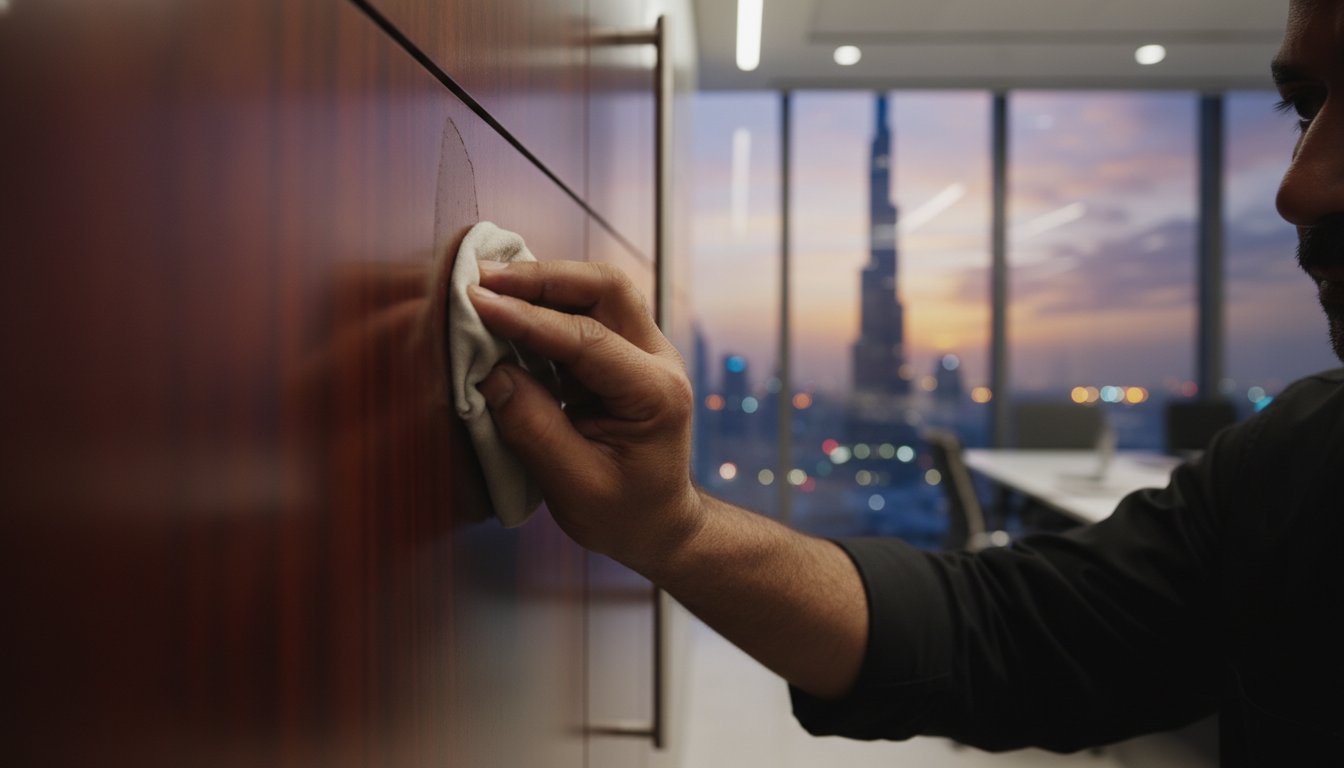
Replacing a bespoke wood panel because of surface damage is often an expensive mistake that overlooks the precision of technical restoration. You’re likely familiar with the frustration of seeing a deep scratch or a chipped edge on a high-end commercial surface, especially when lead times for new furniture in Dubai can stretch into months. It’s a significant aesthetic disruption that many facility managers mistakenly believe requires a total replacement.
This guide demonstrates how you can repair damaged wood veneer with invisible results while saving up to 80% compared to the high cost of a full replacement. We’ll explore the technical methodologies used by specialists to restore structural integrity and surface finish directly on-site. You’ll also learn how these professional repairs align with Dubai’s Building Safety Law (Law No. 3 of 2026), ensuring your premises meet strict maintenance standards with minimal disruption to your daily operations.
Key Takeaways
- Learn how professional restoration provides a high-end finish while reducing your maintenance expenditure by up to 80%.
- Identify the critical differences between surface scuffs and substrate damage to ensure the correct technical approach is applied.
- Discover the precision techniques used to repair damaged wood veneer, including structural rebuilding of chipped edges and pigment re-introduction.
- See why on-site restoration is the most efficient choice for busy commercial environments, bypassing the long lead times of new furniture orders.
- Gain insights into the advanced materials and resins that allow for invisible repairs on even the most delicate wood surfaces.
Understanding Wood Veneer Damage: Why Replacement Isn’t Your Only Option
Wood veneer is a sophisticated material choice that combines the aesthetic richness of solid timber with a stable, technical core. This construction allows designers to achieve expansive, high-end wood finishes that would be structurally impossible with solid planks. However, Understanding Wood Veneer involves recognizing its inherent vulnerability. Because the decorative layer is exceptionally thin, any deep scratch or chip immediately exposes the substrate, compromising the entire unit’s integrity.
In Dubai’s commercial landscape, these surfaces are under constant duress. High-traffic areas like luxury hotel lobbies or corporate boardrooms experience frequent physical impacts from luggage, equipment, and furniture. Unlike solid timber, you cannot simply sand away deep damage. Traditional sanding risks “burning through” the veneer, which makes the damage permanent and far more visible. This is why specialized techniques are required to repair damaged wood veneer effectively on-site without compromising the surrounding material.
The UAE climate introduces unique challenges that many international guides overlook. Rapid transitions between high outdoor humidity and intense indoor air conditioning create cycles of expansion and contraction. Over time, this stress can weaken adhesives, leading to delamination or bubbling. If left unaddressed, these minor issues escalate into major structural failures. Many facility managers fall into the “replacement trap,” assuming a new panel is the only fix. This often leads to color-matching disasters. Natural wood matures and changes shade over time; a new panel will almost never align with the aged patina of your existing installation.
Common Causes of Veneer Deterioration
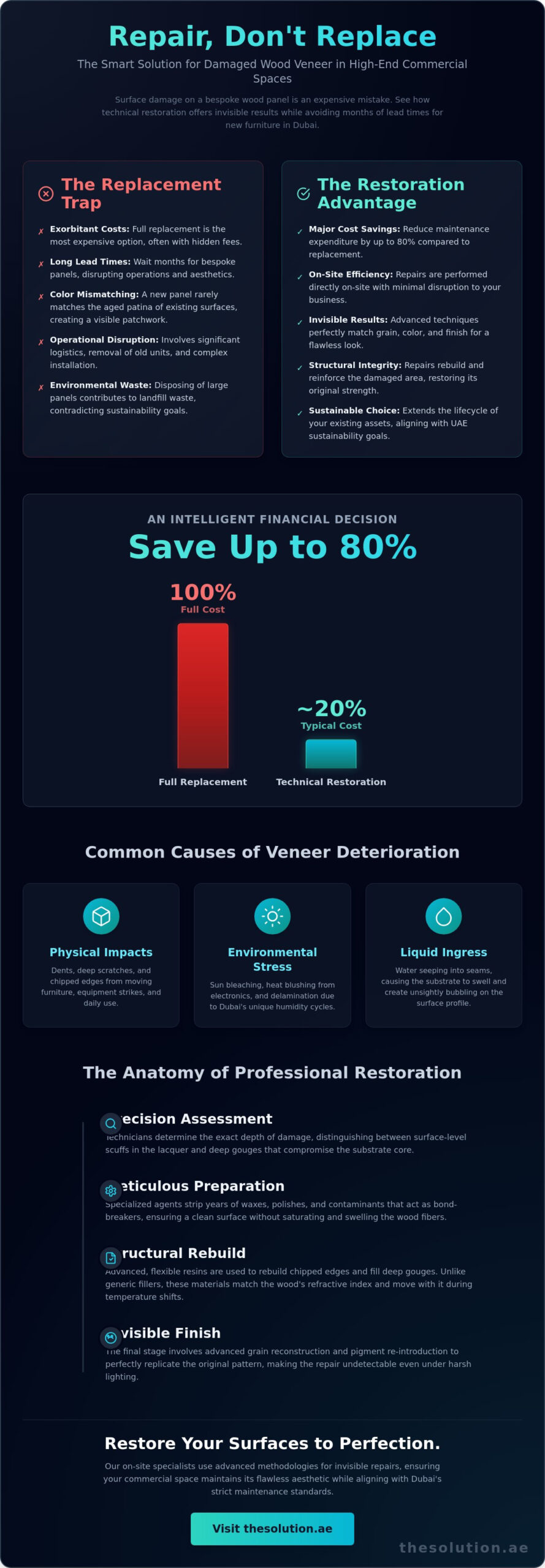
Damage usually stems from three primary sources. Physical impacts, such as dents from moving office furniture or equipment strikes, are the most common. Environmental stress is equally destructive; Dubai’s intense sunlight through floor-to-ceiling windows can bleach surfaces, while heat from laptops or cups causes finish blushing. Finally, liquid ingress is a significant threat. Water that seeps into seams causes the substrate to swell, resulting in unsightly bubbling that ruins the surface’s flat profile.
The Aesthetic and Financial Cost of Damaged Surfaces
A damaged surface in a high-profile commercial space does more than look bad. It suggests a lapse in professional standards. For luxury hotels and A-grade offices, maintaining a flawless environment is an operational necessity. The decision to repair damaged wood veneer rather than replace it is an intelligent financial move. Replacement involves hidden costs like specialized logistics, long lead times for bespoke panels, and expensive installation fees. By choosing technical restoration, you avoid these overheads and align with the UAE’s sustainability goals by extending the lifecycle of your existing assets.
The Anatomy of Professional Veneer Restoration
Professional restoration is a surgical process that begins with a precision assessment. You must first determine the exact depth of the damage. Surface-level scuffs are often localized within the lacquer or oil finish, whereas deep gouges penetrate the thin wood layer and compromise the substrate core. Following established Professional Veneer Restoration Standards ensures that the structural integrity of the panel is maintained throughout the process. This technical evaluation dictates whether the repair requires simple surface reconditioning or a complex structural rebuild.
Preparation is the most critical phase. Most commercial surfaces are coated in years of waxes, silicone-based polishes, and environmental contaminants. These substances act as bond-breakers for modern restoration resins. We utilize specialized cleaning agents that strip these layers without saturating the porous wood fibers. If the wood absorbs too much moisture, it can swell or delaminate from the core. This meticulous approach is what separates professional results from DIY attempts that often fail within weeks.
The “Invisible Repair” philosophy relies on understanding light reflection and material science. Generic wood fillers fail on high-end surfaces because they are opaque and static. They don’t mimic the way natural timber reflects light, nor do they possess the flexibility to move with the wood during temperature shifts. To repair damaged wood veneer successfully, the technician must use materials that match the refractive index of the surrounding grain. Our on-site wood repair specialists use these advanced methodologies to ensure the fix is undetectable even under harsh gallery lighting.
Advanced Grain Reconstruction Techniques
Once the damage is filled, the technician must recreate the wood’s visual identity. This involves hand-painting individual grain lines, “ticks,” and “cathedrals” using fine-tipped brushes and specialized pigments. We use high-impact resins that are engineered to expand and contract at the same rate as the timber. The final step is matching the sheen level. Whether the original finish is a 5% dead matte or a 90% high gloss, the repair must align perfectly with the surrounding surface to remain invisible.
Tools of the Trade: Beyond the DIY Kit
Technical restoration requires precision equipment. We use burn-in tools to melt heat-treated resins directly into the damage, creating a permanent chemical bond with the substrate. Custom-mixed pigments are adjusted on-site to account for the specific lighting conditions of the room. Finally, micro-sanding techniques allow us to level the repair to within microns of the original surface. This ensures a perfectly flat profile that is indistinguishable from the factory finish.
Repair vs. Replacement: An Intelligent Financial Decision
Replacing a high-end veneer unit is rarely a standalone cost. It triggers a “ripple effect” that often requires replacing an entire suite of matching panels to maintain visual consistency. When you choose to repair damaged wood veneer instead of replacing it, you avoid the logistical nightmare of sourcing matching batches. Professional restoration typically follows the “80% Rule,” where the technical repair costs approximately 20% of the total price of a new furniture item. This represents a massive saving in capital expenditure for commercial facilities that manage extensive wood installations.
Operational speed is another critical factor for businesses in Dubai. While a new bespoke panel might have a lead time of six to eight weeks, an on-site technician can complete a precision restoration in a matter of hours. This efficiency eliminates the downtime associated with empty boardrooms or unusable hotel suites. For commercial entities, this speed translates directly into recovered revenue and maintained service standards. It’s a pragmatic approach that prioritizes functionality and fiscal responsibility over wasteful procurement cycles.
Consistency is the final pillar of the financial argument. Natural wood matures over time, developing a unique patina that is impossible to replicate with a factory-fresh replacement. A new door in a corridor of aged panels will stand out as a visible failure in maintenance. Technical restoration preserves the original material, ensuring that the repaired area blends perfectly with the existing suite. This maintains the high aesthetic standards required in luxury environments without the need for a total overhaul.
When to Choose Professional Restoration
Restoration is the primary choice for built-in fixtures where replacement would require structural demolition of surrounding walls or ceilings. It’s also essential for high-value executive furniture where the original timber has aged specifically to the room’s lighting. In construction handover scenarios, where deadlines are non-negotiable, on-site repair is often the only viable method to meet quality benchmarks before the final inspection. A 2024 survey indicated that 62% of property owners now prefer repair over replacement, citing both the preservation of original aesthetics and sustainability as primary drivers (Source: Home Services Trend Report, 2024).
The ROI of Expert Surface Repair
The return on investment for professional repair extends beyond the initial invoice. High-quality restoration using technical resins ensures long-term durability that withstands the 8.5% increase in demand for interior aesthetics projected for the MEA region in 2026 (Source: Market Insights MEA). In the competitive Dubai real estate market, maintaining flawless surfaces directly impacts property valuation and rental yields. One recent boardroom table restoration project demonstrated this value clearly, achieving a 90% saving compared to the cost of a full replacement while delivering a surface that was indistinguishable from the original.
How to Fix Specific Veneer Issues: A Technical Breakdown
Technical restoration is not a one-size-fits-all process. Every defect, from a minor scuff to a structural chip, requires a calibrated methodology to ensure the finish remains seamless. To repair damaged wood veneer at a professional standard, technicians must address the specific pathology of the failure. For example, surface scuffs often only require precision polishing and the re-introduction of lost pigments to restore the depth of the wood’s natural color. In contrast, chemical burns or heat marks create a “cloud” within the finish that must be chemically treated to restore clarity without stripping the delicate wood layer beneath.
Bubbling or lifting veneer is a common result of Dubai’s fluctuating humidity. This occurs when the adhesive bond between the wood and the substrate fails. We solve this by injecting professional-grade resins through micro-ports and using vacuum-sealing or controlled pressure to re-establish the bond. This prevents the veneer from cracking and avoids the need for a full replacement of the panel. For more severe damage like chipped edges, we utilize high-impact resins that provide a structural rebuild, ensuring the corner can withstand the rigors of a commercial environment.
Step-by-Step: Repairing a Deep Chip
- Step 1: Clean the area thoroughly and remove any loose wood fibers to create a stable, contamination-free base for the resin.
- Step 2: Apply a custom-tinted high-impact resin to the void; the color is matched to the deepest tones of the natural timber.
- Step 3: Level the repair precisely with the surrounding surface using specialized micro-planes to ensure a perfectly flat profile.
- Step 4: Re-draw the intricate grain patterns using fine-tipped applicators to mimic the surrounding texture and light reflection.
Restoring Lifting or Peeling Veneer
When edges begin to peel, the risk of moisture ingress increases significantly. Our technicians use precision injection tools to deliver adhesives directly to the failure point. By applying controlled heat and pressure, we re-bond the veneer to its core. This process is finished by sealing the edges with a moisture-resistant topcoat, preventing future delamination in high-traffic commercial zones. If your commercial interiors are showing signs of wear, our specialists provide expert on-site wood repair to restore your surfaces to factory standards.
Addressing these issues early prevents minor aesthetic flaws from becoming permanent structural failures. Whether you are dealing with a single executive desk or a suite of hotel doors, technical restoration provides a fast, cost-effective alternative to procurement. Our methodology ensures that the repair damaged wood veneer process is invisible, durable, and completed with minimal disruption to your daily operations.
On-Site Veneer Repair in Dubai: The Solution’s Expert Approach
Maintaining a commercial facility in Dubai requires more than just standard janitorial work. It demands a technical partner capable of executing complex repairs in high-pressure environments. Our on-site methodology is essential for active hotels and offices where closing a room or boardroom for weeks is not feasible. We repair damaged wood veneer directly where it stands, eliminating the logistical risks of transport and the high cost of replacement. This approach ensures your premises remain operational while we achieve a finish that is indistinguishable from the original.
Technical mastery is the foundation of our service. Our personnel are trained to handle a vast array of materials, ensuring that every finish is restored to its original specification. This expertise extends beyond timber to include specialized stainless steel finish restoration for elevators, cladding, and lobby features. Our experience with iconic hospitality and commercial projects in the UAE has established us as a leading choice for facility managers who cannot compromise on quality. We understand the specific demands of Law No. 3 of 2026, which mandates high standards for building maintenance and safety in Dubai.
Every technician in our team is considered a master craftsperson. We don’t use temporary fixes or DIY products. Instead, we apply advanced resins and pigments that are engineered for longevity in the unique UAE climate. This commitment to quality is why we are trusted by high-profile clients to manage their most valuable interior assets. Our results-oriented mindset focuses on solving your problems efficiently and cost-effectively, providing a reliable partnership rather than just a one-off service.
Why Choose The Solution for Your Wood Surfaces?
We offer comprehensive hard surface repair capabilities that cover every aspect of a modern office or hotel interior. This includes precision ceramic and tile repair for bathrooms, lobbies, and public areas. By consolidating your restoration needs with one specialist, you ensure a consistent standard of excellence across all substrates. Our commitment to flawless finishes is backed by rigorous training and a pragmatic approach that prioritizes your bottom line through significant financial savings.
Ready to Restore Your Surfaces?
Our workflow is structured to respect your time and operational priorities. It begins with a simple photo assessment to determine the scope of work, followed by a detailed quote and flawless on-site execution. It’s a systematic approach that helps facility managers meet their KPIs and budget targets by avoiding the high overheads of procurement and disposal. With the demand for interior renovation in the Middle East expected to grow by 8.5% in 2026, choosing restoration is an intelligent way to maintain your property’s value. If you’re looking to repair damaged wood veneer with a partner that delivers technical excellence, contact us today for a professional consultation and quote.
Secure the Future of Your Commercial Interiors
Choosing technical restoration over replacement is an intelligent business decision that prioritizes both aesthetic excellence and fiscal responsibility. You can avoid the logistical complexities and high costs of procurement by opting to repair damaged wood veneer using professional on-site methodologies. This process preserves the original patina of your high-end fixtures while ensuring your premises remain in top condition without the need for structural demolition or long procurement lead times.
The Solution specializes in invisible restoration for all hard surfaces, providing a seamless finish that maintains the luxury standard of your property. We’re trusted by major UAE hospitality brands to deliver precision results with zero downtime for your operations. Our master craftspeople utilize advanced resins and grain reconstruction techniques to extend the lifecycle of your assets, helping you meet sustainability targets and budget KPIs efficiently.
Don’t let surface damage compromise your professional environment or lead to unnecessary replacement expenses. Request a Quote for Professional Veneer Repair today and experience the benefits of technical mastery. We’re ready to help you restore your surfaces to their original, flawless condition.
Frequently Asked Questions
Can all types of wood veneer be repaired on-site?
Technical restoration is performed on-site for nearly all veneer varieties, including built-in fixtures and large-scale furniture that cannot be easily moved. We treat the wood in its installed environment to account for specific lighting and ambient conditions. This methodology eliminates the risks associated with transporting delicate panels. It is a highly efficient solution for active commercial spaces where minimizing downtime is a priority.
How long does a professional veneer repair typically take?
Most precision repairs are completed within a few hours. While full replacement involves lead times of several weeks, on-site restoration allows for immediate use of the surface. Complex projects involving multiple panels may take a full working day, but the disruption is significantly less than a procurement cycle. This speed allows businesses to maintain their professional environment without significant operational pauses.
Will the repaired area be visible to the naked eye?
A professional repair is designed to be invisible to the naked eye under standard commercial lighting. We utilize hand-painted graining and custom-tinted resins to mimic the refractive index of the surrounding timber. This technical approach ensures that the repair damaged wood veneer process results in a seamless, undetectable finish that restores the surface to its original factory standard.
Is professional veneer repair durable enough for high-traffic areas?
We use high-impact resins that are specifically engineered for commercial use in high-traffic zones. These materials provide a structural bond that withstands the daily rigors of hotel lobbies, boardrooms, and busy corridors. The finished repair is as durable as the original factory coating. It offers long-term resilience against physical impacts and environmental stress, ensuring a lasting aesthetic result.
Can you match the grain of rare or exotic wood veneers?
Our technicians are master craftspeople capable of recreating the intricate patterns of rare and exotic veneers. Whether dealing with burl, bird’s eye maple, or dark ebony, we hand-draw the unique “ticks” and “cathedrals” of the grain. This ensures a perfect visual match regardless of the wood species. We focus on technical precision to ensure the repair blends naturally with the existing material.
How much can I save by choosing repair over replacement?
Clients typically save up to 80% when choosing restoration over full replacement. This calculation accounts for the high cost of bespoke panels, specialized logistics, and expensive installation labor. Choosing to repair damaged wood veneer is a pragmatic financial decision that preserves capital while maintaining high aesthetic standards. It allows facility managers to maximize their maintenance budgets without compromising on the visual integrity of their assets.
What is the difference between a DIY wood filler and a professional resin?
DIY wood fillers are usually opaque, static, and prone to shrinking or cracking over time. In contrast, professional resins are translucent and flexible, allowing them to move with the wood’s natural expansion and contraction. Our technical materials are custom-mixed on-site to ensure they match the specific light reflection and sheen of the original surface, providing a permanent and invisible fix.
We provide rapid restoration services for construction handovers across Dubai and the wider UAE. Our team addresses snags and surface damage quickly to help contractors meet strict quality benchmarks and safety regulations like Law No. 3 of 2026. By utilizing professional lifting and handling solutions from RICHMOND EQUIPMENTS FZC LLC, contractors can safely access high-level finishes to ensure a flawless finish for the final inspection and avoid the long lead times associated with ordering replacement materials during the critical final phases of a project.
We provide rapid restoration services for construction handovers across Dubai and the wider UAE. Our team addresses snags and surface damage quickly to help contractors meet strict quality benchmarks and safety regulations like Law No. 3 of 2026. This ensures a flawless finish for the final inspection and avoids the long lead times associated with ordering replacement materials during the critical final phases of a project.


