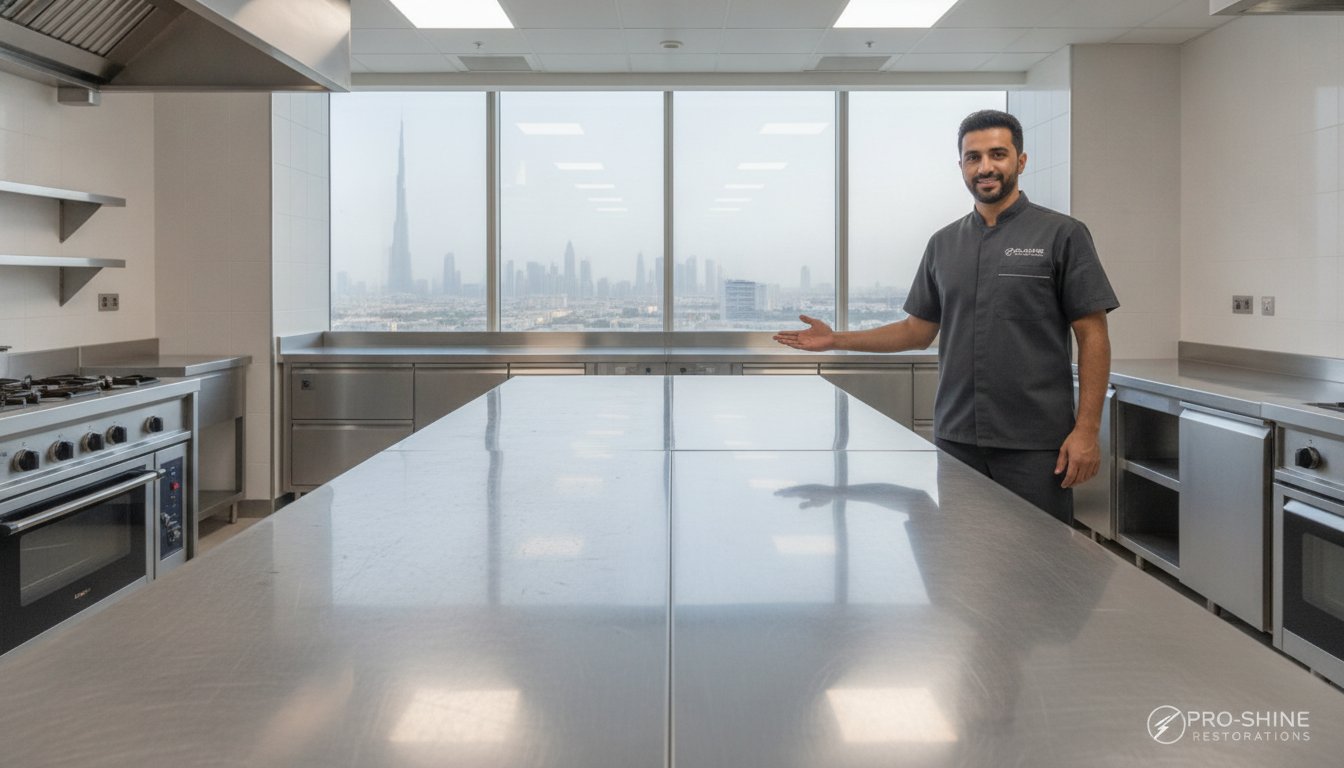
Replacing a custom commercial kitchen in 2026 can cost five times more than a technical restoration, yet many facility managers still believe that deep scratches or chemical dulling are permanent. You’ve likely looked at your degraded surfaces and worried about the massive capital expenditure and operational downtime required for a full replacement. It’s a common frustration in luxury properties and high-traffic culinary environments where aesthetic perfection and hygiene are non-negotiable.
This guide demonstrates how professional stainless steel restoration for kitchens can return your surfaces to their original factory finish on-site, while saving you up to 80% compared to the cost of new installations. You’ll learn how technical interventions achieve an invisible repair that matches the original grain and restores essential structural integrity. We’ll examine the specific methodologies that ensure compliance with Dubai Municipality food safety requirements and the long-term financial benefits of choosing precision repair over total asset disposal.
Key Takeaways
- Understand the technical abrasive processes used to recreate factory finishes and how the chromium oxide layer facilitates natural passivation.
- Discover how professional stainless steel restoration for kitchens delivers up to 80% cost savings by avoiding the high expense of full asset replacement.
- Learn about on-site restoration methodologies that eliminate operational downtime, allowing commercial kitchens to remain functional during the repair process.
- Identify common surface damage types, from deep mechanical scratches to chemical etching caused by aggressive construction cleaning agents.
- Explore the technical standards required to match original grains perfectly while meeting strict hygiene and structural integrity requirements.
What is Professional Stainless Steel Restoration for Kitchens?
Professional stainless steel restoration for kitchens is a high-precision technical process. It isn’t a cleaning service. While janitorial staff focus on removing surface oils and food debris, technical restoration involves the controlled removal of physical damage to recreate a factory finish. This process uses specialized abrasive sequences to level the surface, removing deep scratches, gouges, and chemical etching that standard maintenance cannot touch.
To understand the necessity of this process, we first need to look at the material science. What is stainless steel? It’s an alloy protected by a microscopic, transparent layer of chromium oxide. This passive layer is what prevents corrosion. When a surface is deeply scratched, this layer is breached. Technical restoration doesn’t just improve aesthetics; it facilitates passivation. This is the chemical reaction where the chromium oxide layer “heals” itself once the damaged metal is expertly resurfaced and exposed to oxygen.
Every kitchen surface has a specific “DNA” or grain direction. This might be a linear brushed finish, a satin texture, or a high-gloss mirrored surface. A master restorer identifies this grain and matches the abrasive progression to it. We use a “dry” or “controlled” methodology. This ensures that the surrounding environment remains clean while we achieve a surgical level of precision on the metal itself. When choosing stainless steel restoration for kitchens, the primary objective is an invisible repair that restores both the hygiene and the structural integrity of the asset.
Restoration vs. Industrial Cleaning
Chemical cleaning agents are designed to dissolve organic matter. They cannot rectify physical displacements in the metal. If you have deep pitting or mechanical scratches, no amount of industrial degreaser will solve the problem. DIY scratch kits often fail on commercial surfaces because they lack the consistency to match original grains. They frequently create “hot spots” or uneven patches that highlight the damage rather than hiding it. You should move from a maintenance schedule to a restoration project when the surface becomes porous or visually degraded beyond the reach of daily cleaning protocols.
Understanding Stainless Steel Grades in Kitchens
Identifying Common Damage in UAE Commercial and Residential Kitchens
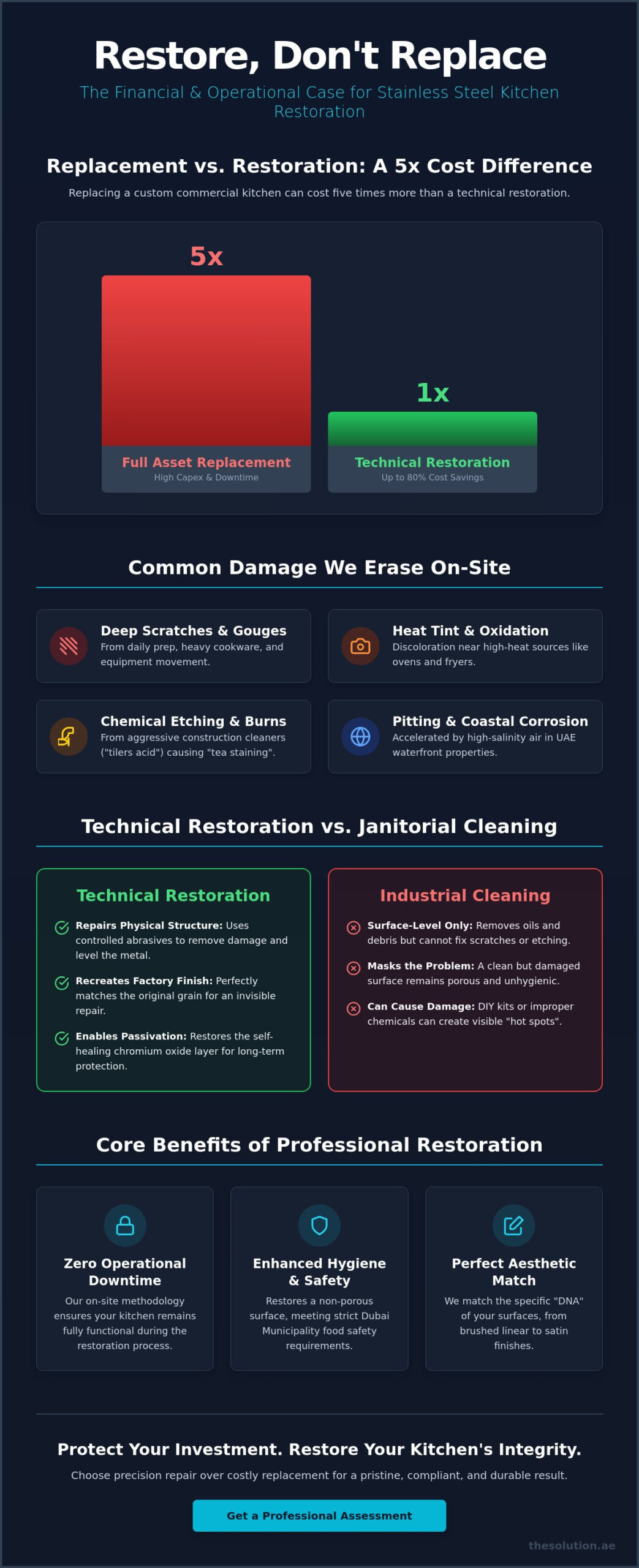
While stainless steel is chosen for its resilience, it remains susceptible to specific forms of degradation in the UAE’s demanding environment. Mechanical scratches from heavy cookware and dragging equipment are the most frequent issues in high-volume kitchens. However, environmental factors play an equally significant role. In Dubai, high-salinity coastal air accelerates pitting and corrosion, especially on surfaces that aren’t regularly passivated through professional maintenance.
Common damage profiles include:
- Deep physical scratches from daily prep work and equipment movement.
- Heat tint and oxidation near industrial fryers, hobs, and ovens.
- Pitting caused by atmospheric salt exposure in waterfront properties.
- Impact damage and dents from high-traffic commercial operations.
If you notice these issues, a professional assessment for stainless steel restoration for kitchens can determine the depth of the damage before it becomes a permanent structural failure.
The Construction Handover Problem
New kitchen installations in Dubai are often damaged before the first meal is even cooked. During the final stages of construction, “tilers acid” or hydrochloric acid is frequently used to clean grout. If these aggressive chemicals come into contact with stainless steel, they cause immediate etching and chemical burns. This leads to “tea staining,” a brown, rust-like discoloration that suggests the protective chromium layer has failed. Construction dust and ambient moisture also trap contaminants against the surface, leading to premature oxidation that requires technical intervention to reverse.
Abrasive Wear and Hygiene Risks
Surface damage is more than just an aesthetic concern. Deep scratches and pitting create microscopic valleys where bacteria can thrive, protected from standard sanitization sprays. This compromises food safety standards and can lead to failures during HACCP inspections. Random-orbital scuffs from improper cleaning tools also destroy the directional grain, making the surface harder to clean. Over time, ignoring minor pitting allows corrosion to penetrate deeper into the metal, eventually leading to holes and the total loss of structural integrity.
The Technical Process: How We Restore Kitchen Surfaces On-Site
Technical restoration is a systematic engineering process that goes far beyond simple buffing. It begins with a microscopic assessment of the damage depth and the original grain pattern of the metal. We must identify whether the surface features a standard #4 brushed finish, a satin texture, or a high-gloss mirror polish. This initial diagnosis determines the specific abrasive progression required to level the surface without compromising the structural thickness of the steel. Identifying the “DNA” of the original factory finish is the only way to ensure an invisible repair.
Once the assessment is complete, we perform a deep surface decontamination. This step removes carbon deposits, embedded oils, and microscopic debris that would otherwise foul the abrasives and cause uneven results. The core of stainless steel restoration for kitchens involves a controlled abrasive progression. We use a sequence of technical pads to carefully remove the damaged material. This leveling process continues until the scratches or chemical burns are eliminated, leaving a perfectly flat substrate ready for the final finishing stages.
The process concludes with a specialized passivation treatment. While we discussed the science of the chromium oxide layer earlier, this final step is the practical application that re-establishes that barrier. By treating the newly exposed metal, we ensure it’s protected against future oxidation and ready for immediate culinary use. This on-site methodology allows us to deliver factory-level results without the need for equipment removal or long-term operational downtime.
Grain Matching: The Signature of Technical Mastery
Recreating a factory grain by hand is the true mark of a master restorer. While machines provide speed, they often create “halos” or circular scuff marks that don’t match the linear finishes found on most bespoke kitchen fixtures. We utilize hand-guided technical blocks to ensure the grain remains straight and consistent across large splashbacks and seamless countertop transitions. This manual precision is vital when blending a repaired section into an existing undisturbed surface, ensuring the transition is undetectable even under harsh commercial lighting.
Safety and Dust Management in Active Kitchens
Maintaining a sterile environment is a priority when performing stainless steel restoration for kitchens. We use non-contaminating abrasives that are entirely free of iron particles. This is a critical distinction; using standard abrasives can leave iron fragments behind, which eventually cause rust spots on the stainless steel. Our teams employ HEPA-filtered dust extraction systems to capture metallic particles at the source. We also implement rigorous site protection protocols, using specialized barriers to shield surrounding cabinetry, natural stone, and sensitive electronic appliances from any debris.
The Economics of Restoration: Why UAE Businesses Choose Repair
Choosing repair over replacement is an intelligent financial decision for any facility manager. In a region where bespoke kitchen fit-outs represent a massive capital investment, professional stainless steel restoration for kitchens offers a pragmatic alternative. Restoration typically costs significantly less than full replacement. By opting to resurface rather than remove, businesses can save up to 80% on their project budgets. These savings are immediate and tangible, allowing for the reallocation of funds to other critical operational areas.
Operational downtime is the hidden killer of kitchen profitability. Replacing a central prep island or a custom splashback requires days of deconstruction, plumbing disconnection, and electrical work. Technical restoration occurs on-site. We work around your schedule to ensure zero disruption to your culinary service. This allows commercial facilities to maintain their revenue streams while simultaneously upgrading their physical environment. It’s a high-impact intervention with a low-impact footprint on your daily operations.
Sustainability has moved from a corporate buzzword to a regulatory priority in the UAE. Manufacturing new stainless steel is energy-intensive and carries a high carbon footprint. By extending the life of your existing assets, you directly align your facility with UAE sustainability goals for 2026. It’s a measurable contribution to ESG targets that also happens to protect your bottom line. Asset life extension through technical resurfacing adds years of service to expensive, bespoke installations that would otherwise be destined for a landfill.
ROI for Facilities and Property Managers
Facility managers must look beyond the sticker price of new equipment. You have to factor in the hidden costs of disposal fees, site preparation, and the potential damage to surrounding stone or cabinetry during a tear-out. Maintaining a “five-star” aesthetic is essential for Dubai’s luxury hospitality sector, where even minor scratches can lead to negative guest feedback. While replacing a custom commercial bench involves a logistical nightmare of lead times and contractor coordination, on-site repair is a streamlined process that delivers identical visual results.
Restoration as a Strategic Asset Tool
Flawless stainless steel directly impacts property valuation and tenant satisfaction in luxury residential units. Regular restoration prevents the accumulation of damage that eventually necessitates a total asset write-off. This shifts your maintenance strategy from reactive capital expenditure (CAPEX) to manageable operational costs. This proactive approach ensures your surfaces remain hygienic and visually perfect without the need for large-scale budget approvals. To secure these financial advantages for your facility, you can book a technical assessment for stainless steel restoration today.
The Solution: Expert Stainless Steel Restoration in Dubai
The Solution provides specialized expertise in stainless steel finish restoration across the United Arab Emirates. We understand that in high-stakes environments like luxury hospitality and commercial real estate, a damaged surface isn’t just an eyesore; it’s a liability. Our commitment to the highest technical standards ensures that every project meets the rigorous hygiene and aesthetic requirements of the Dubai market. This reliability is why major B2B clients consistently trust our hard surface repair services for their most complex restoration challenges. We handle everything from minor scuffs to deep chemical burns with surgical precision.
Our service portfolio is designed to meet the specific needs of the construction handover, hospitality, and luxury residential sectors. During the final stages of a build, we often step in to rectify damage caused by other trades, ensuring that the kitchen meets the developer’s exacting standards. In the hospitality sector, we provide the rapid, on-site interventions necessary to maintain five-star ratings without closing down busy kitchens. For luxury homeowners, we offer a way to preserve expensive custom fixtures that would be nearly impossible to replace without major structural work. Choosing stainless steel restoration for kitchens through our team means choosing a partner that values technical mastery as much as you value your assets.
Our Approach to Commercial Kitchen Challenges
We specialize in managing high-profile restoration projects for hotels, Michelin-starred restaurants, and corporate facilities. Our technicians undergo rigorous training in advanced abrasive technology and manual grain matching. This ensures they can handle any finish, from brushed satin to mirror-polish. We’ve successfully completed numerous projects involving high-traffic kitchen panels and elevator doors, where maintaining a uniform appearance is critical. These case studies prove that even the most visible and heavily used surfaces can be returned to a factory-fresh state without the disruption of a full replacement. We don’t just fix the damage; we restore the professional image of your facility.
Request a Technical Assessment
Every kitchen environment is unique. We provide bespoke quotes based on a comprehensive technical assessment of your specific damage and material grade. Our service coverage extends across Dubai and the wider UAE, ensuring that expert help is available wherever your facility is located. If you’re ready to restore your kitchen’s factory finish while achieving significant cost savings, contact The Solution for a professional consultation today. Our team will provide a clear, technical roadmap for your stainless steel restoration for kitchens project. Don’t let surface degradation compromise your operations when a high-precision, cost-effective solution is a phone call away.
Secure Your Kitchen Assets Through Technical Restoration
Choosing professional stainless steel restoration for kitchens ensures your surfaces remain visually perfect and compliant with food safety regulations. Our specialized mastery in technical resurfacing delivers results that match the original factory finish exactly, providing a significant financial advantage for your facility. It’s an intelligent decision that aligns fiscal responsibility with premium quality standards. Request a Technical Restoration Quote to discover how technical mastery can transform your degraded surfaces today. We’re ready to help you extend the life of your kitchen assets with confidence and precision.
Frequently Asked Questions
Can deep scratches in a commercial stainless steel sink be completely removed?
Deep physical scratches can be completely removed from commercial stainless steel sinks through a controlled abrasive progression. Our technicians level the metal to the depth of the scratch and then recreate the original finish. This process restores the smooth, non-porous surface required for hygiene compliance without compromising the sink’s structural integrity or thickness. It’s a precise technical intervention that returns the asset to its original factory state.
How long does the restoration process take for a standard kitchen countertop?
A standard kitchen countertop restoration typically takes between four to eight hours to complete on-site. The exact duration depends on the depth of the damage and the total surface area being treated. Because we perform the work in situ, your kitchen remains functional immediately before and after the process. This avoids the days of operational downtime required for a full replacement and reconnection of plumbing fixtures.
Is the stainless steel restoration process food-safe for commercial use?
Yes, the stainless steel restoration for kitchens process is entirely food-safe and aligns with HACCP principles. By removing deep scratches and pits, we eliminate the microscopic valleys where bacteria accumulate. The final passivation step ensures the chromium oxide layer is fully restored, leaving a non-toxic, non-absorbent surface ready for commercial food preparation and rigorous daily sanitization protocols.
What is the difference between brushed and polished stainless steel repair?
Brushed stainless steel repair focuses on precise linear grain matching to ensure a seamless blend with the existing texture. Polished or mirrored finishes require a different technical progression involving finer abrasives and high-gloss buffing compounds. Each finish requires a specific abrasive sequence. We identify the original factory “DNA” of the metal to ensure the repaired area is visually indistinguishable from the surrounding undisturbed surface.
Why should I avoid using DIY scratch removal kits on my appliances?
You should avoid DIY scratch removal kits because they often lack the technical precision required for high-grade commercial steel. These kits frequently create “hot spots” or uneven patches that don’t match the original factory grain. Inconsistent hand pressure and low-quality abrasive pads can cause permanent visual distortion. This often makes a professional restoration more difficult and time-consuming to execute correctly later.
How much can I save by choosing restoration over replacement in Dubai?
Choosing restoration over replacement in Dubai typically results in savings of up to 80% of the total cost of a new installation. These savings come from avoiding the high expense of custom fabrication, international shipping, and the labor required for demolition and site preparation. It’s a pragmatic financial decision that preserves your capital while delivering a result that looks identical to a new installation.
Can you restore stainless steel that has been damaged by construction acid?
We can successfully restore stainless steel surfaces damaged by “tilers acid” or other aggressive construction cleaning agents. These chemicals cause deep etching and tea staining that standard cleaning cannot remove. Our technical process strips away the chemically altered layer of metal and re-establishes the protective passive layer. This effectively reverses the chemical burn and prevents future corrosion from taking hold in the damaged area.
Does the restoration process create a lot of dust or mess in the kitchen?
The restoration process is designed to be clean and non-disruptive for active kitchen environments. We utilize HEPA-filtered dust extraction systems that capture metallic particles directly at the source. Our technicians also implement comprehensive site protection protocols, covering surrounding appliances, natural stone, and cabinetry. This ensures your kitchen remains sterile and ready for use immediately after our team completes the technical work.


