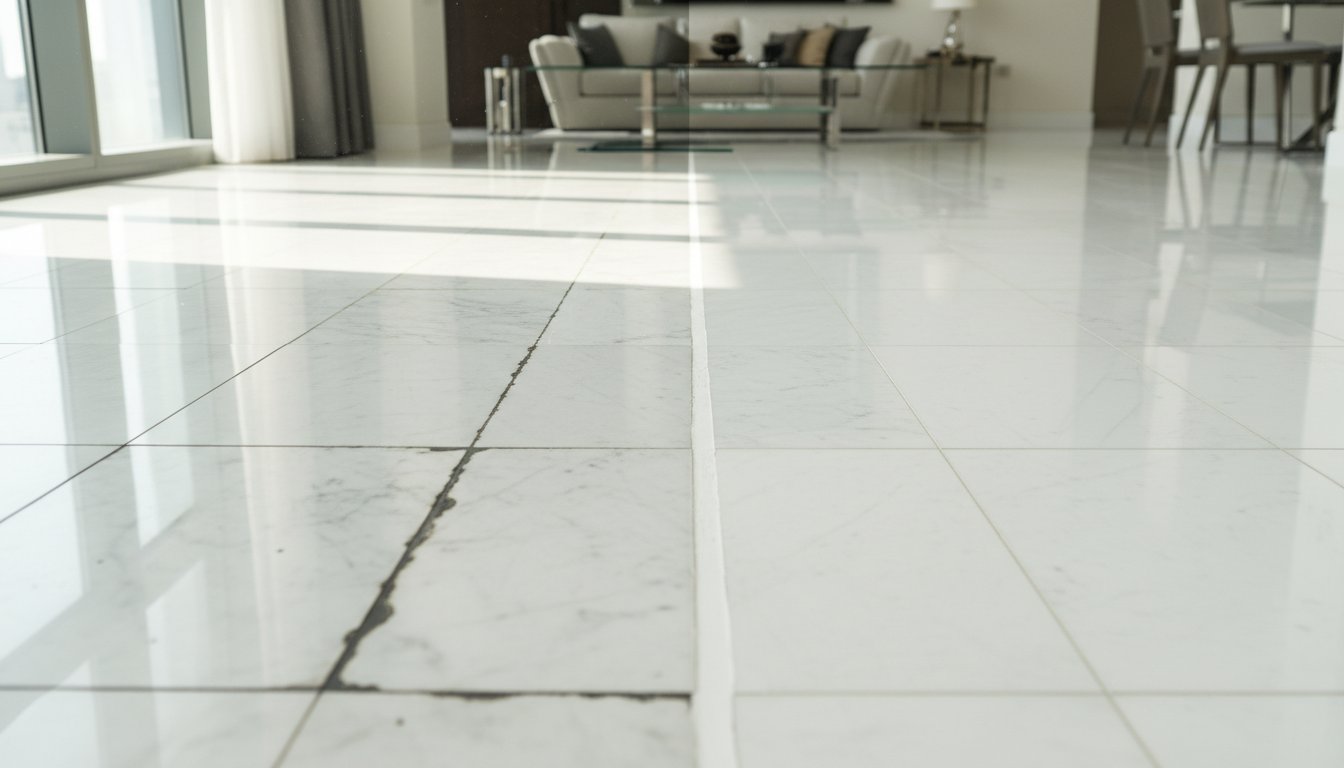
The finest tiles can be undermined by stained, cracked, or discoloured grout, diminishing the appearance of even the most premium surfaces. Beyond aesthetics, failing tile grout compromises the integrity of your installation, creating a pathway for water damage-a potentially costly issue for any property owner in the UAE. This deterioration not only affects the look of your commercial or residential space but also threatens the significant investment you’ve made in your tilework.
This guide delivers the essential knowledge required to rectify these issues effectively. We will examine the critical differences between grout types, from traditional cementitious to high-performance epoxy, ensuring you can make an informed selection. You will also learn to identify common problems like chronic staining and structural cracking, and gain a clear understanding of when a professional repair service provides a more durable and cost-effective outcome than a temporary DIY fix, ultimately restoring and protecting your valuable surfaces.
Key Takeaways
- Understand how selecting the correct grout type for specific areas-from high-traffic commercial floors to wet rooms-is a critical first step in asset protection.
- Learn to accurately diagnose the underlying causes of common grout failures like cracking and staining to avoid ineffective, costly repairs.
- Develop a clear framework to determine when your tile grout requires surface-level cleaning, specialist repair, or a full replacement to maintain property value.
- Evaluate when professional restoration is the most financially sound decision, protecting your investment and preventing the recurring costs associated with DIY fixes.
What is Tile Grout and Why is it Crucial for Your Surfaces?
In any tiled installation, from a commercial kitchen in Dubai to a luxury hotel bathroom, the material filling the gaps between each tile is as important as the tiles themselves. This material is tile grout. While it may seem like a minor detail, grout performs critical functions that protect the integrity and value of your property. For a technical overview, you can explore this resource on What is Tile Grout, but its practical role is twofold: providing essential structural support and defining the overall aesthetic of the surface.
Well-maintained grout lines create a clean, uniform, and professional finish, enhancing the appearance of even the most modest tiles. Conversely, grout that is cracked, stained, or discoloured can make premium, high-cost tiling look aged and poorly maintained. This single element can significantly detract from a property’s appeal and perceived value, turning a significant investment into an eyesore.
The Functional Role of Grout
Beyond aesthetics, grout serves several vital structural purposes. Its primary functions are to provide rigidity and protection to the entire tiled surface. These functions include:
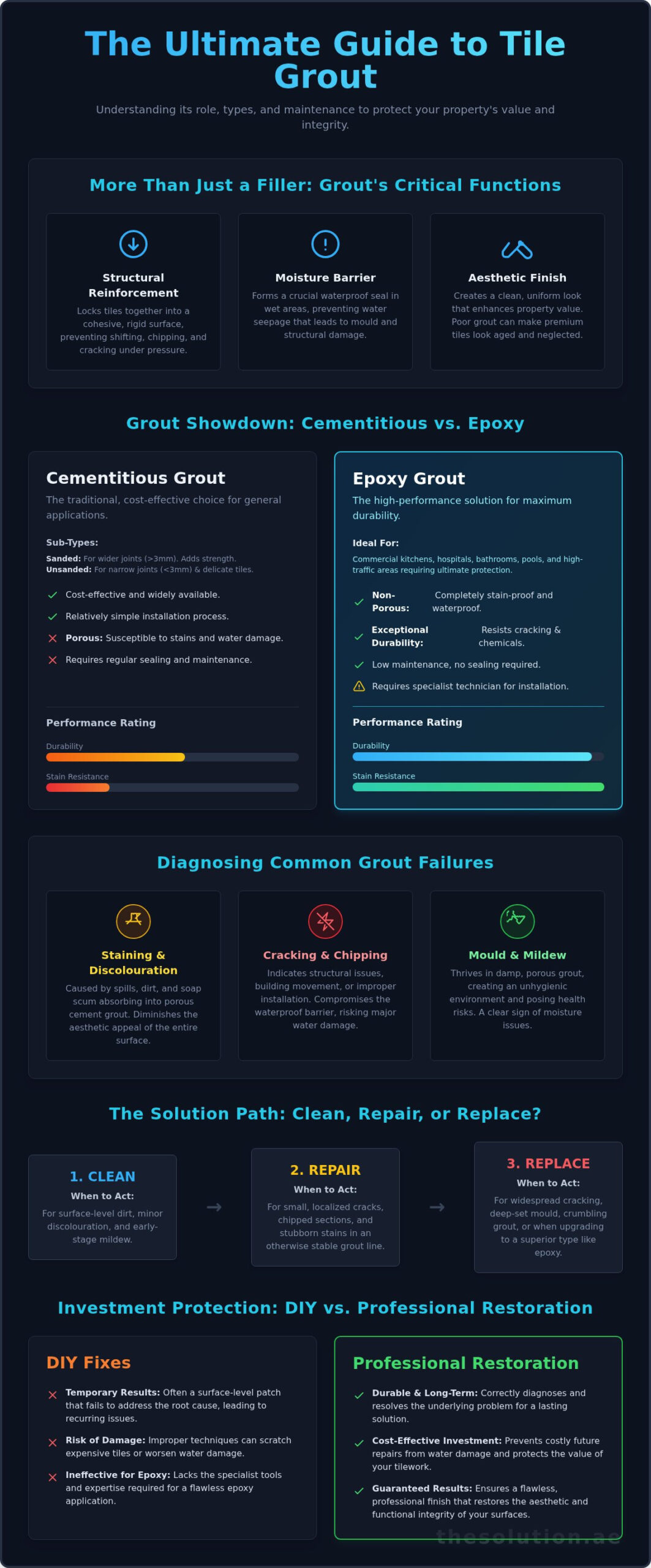
- Structural Reinforcement: Grout locks individual tiles together, creating a single, cohesive surface. This prevents tiles from shifting, chipping at the edges, or cracking under pressure from foot traffic or building movement.
- Moisture Barrier: In wet areas such as bathrooms, kitchens, and swimming pools, properly sealed grout forms a waterproof barrier. This seal is crucial for preventing water from seeping behind the tiles, which can lead to mould growth and costly structural damage.
- Compensating for Irregularities: Tiles are rarely perfectly uniform in size. Grout expertly fills minor variations in spacing, ensuring a visually consistent and level finish across the entire installation.
The Aesthetic Impact on Property Value
The visual condition of your grout has a direct impact on how a space is perceived. In the competitive UAE property market, details matter. Clean, crisp grout lines convey a sense of hygiene and meticulous maintenance, elevating the look of the entire room. In contrast, discoloured or damaged grout immediately signals neglect and can diminish a property’s appeal to potential tenants or buyers. Furthermore, grout colour itself is a key design element; it can be chosen to blend seamlessly with the tiles for a monolithic look or to contrast sharply, creating a bold, graphic pattern that defines the style of the space.
Types of Grout: A Comparison for Durability and Performance
Selecting the correct grout is not a matter of aesthetics alone; it is a critical decision that directly impacts the longevity and maintenance requirements of your tiled surfaces. The performance of any tile grout is determined by its composition and its suitability for the environment. High-moisture areas like bathrooms and demanding commercial spaces require a different solution than a low-traffic residential floor. Understanding the primary categories is essential for ensuring a durable, cost-effective result.
Cementitious Grout (Sanded vs. Unsanded)
This is the traditional and most widely used grout in the construction industry. It is a Portland cement-based product available in two primary forms:
- Sanded Grout: Contains fine sand, which adds strength and prevents shrinkage. It is specified for grout joints wider than 3mm.
- Unsanded Grout: A smoother mixture without sand, used for delicate tiles like polished marble and for very narrow joints (under 3mm) to prevent scratching.
While cost-effective and relatively simple to install, its primary drawback is its porous nature. This makes it highly susceptible to staining, mould growth, and water penetration if not sealed correctly and maintained regularly.
Epoxy Grout: The Ultimate in Durability
For environments demanding maximum performance, epoxy grout is the superior solution. Composed of epoxy resins and a hardener, this grout is fundamentally different from its cement-based counterpart. Its key benefits are significant:
- Non-Porous: It does not absorb water or liquids, making it completely stain-proof.
- Chemical Resistance: It withstands harsh cleaning chemicals without degrading.
- Exceptional Durability: It resists cracking, shrinking, and chipping, providing a long-term, stable finish.
These properties make it the ideal specification for commercial kitchens, hospitals, laboratories, and high-traffic public areas common in the UAE. However, its rapid curing time and unforgiving application process demand the proficient use of specialist technicians to ensure a flawless installation.
Other Speciality Grouts
While cementitious and epoxy grouts cover over 99% of all applications, highly specialised options like urethane and furan grouts exist. These are engineered for specific industrial settings, such as chemical processing plants or dairies, where extreme thermal shock and chemical resistance are paramount. For virtually all commercial and residential projects, the choice lies between standard cementitious and high-performance epoxy.
Identifying Common Grout Problems in Commercial and Residential Settings
For facility managers and homeowners throughout the UAE, deteriorating grout is a frequent and concerning issue. While often dismissed as a simple aesthetic flaw, grout failure is a clear indicator of underlying problems that can lead to significant structural damage and costly repairs. Understanding these common issues is the first step toward effective remediation and long-term protection of your property.
Staining and Discoloration
The most visible grout problem is persistent staining. Standard cement-based grout is porous, acting like a sponge for spills, dirt, and moisture. This absorption leads to deep-set discoloration that conventional cleaning products cannot rectify. In a commercial setting like a hotel lobby or restaurant, stained tile grout creates an immediate impression of poor hygiene and lack of maintenance, directly impacting brand reputation. For homeowners, it results in a perpetually unclean appearance in kitchens and bathrooms.
Image: Deep-set staining in porous grout, a common issue in high-traffic areas.
Cracking, Shrinking, and Crumbling
Structural grout failure-manifesting as cracks, gaps, or crumbling-is a critical issue that demands immediate attention. The primary causes include:
- Improper Installation: An incorrect water-to-powder ratio during mixing weakens the grout’s final structure.
- Building Movement: Minor shifts and settlement in the building’s foundation can stress grout lines beyond their tolerance.
- Age and Degradation: Over time, grout naturally becomes brittle and loses its integrity.
The most significant danger of cracked grout is the loss of its waterproof seal. This breach allows water to seep behind tiles, leading to substrate rot, tile delamination, and extensive water damage that is far more expensive to repair than the grout itself.
Image: Cracked grout compromising the waterproof seal and risking water damage.
Mold, Mildew, and Efflorescence
In the humid climate of the UAE, porous grout in wet areas like showers, spas, and pool surrounds is an ideal breeding ground for mold and mildew. Beyond being unsightly, this poses a significant health and hygiene risk. A related issue is efflorescence-a white, powdery residue that appears on the grout surface. This is not dirt, but rather salt deposits left behind as moisture moves through the grout and evaporates. The presence of efflorescence is a definitive sign of an ongoing moisture problem behind the tiled surface, which must be professionally addressed.
Image: Efflorescence and mold indicating a persistent moisture issue within the tile installation.
Grout Maintenance: When to Clean, Repair, or Replace
Discoloured or damaged grout compromises the appearance and integrity of your tiled surfaces. The correct course of action-cleaning, repair, or full replacement-depends on the severity of the issue. Distinguishing between a surface-level stain and a structural failure is critical to selecting the most efficient and cost-effective solution. Professional restoration often presents a superior alternative to a complete and costly re-tiling project.
Determining the right approach requires a clear assessment of the damage:
- Cleaning: For surface-level discolouration, mildew, and grime.
- Repair: For isolated cracks, chips, or small sections of missing grout.
- Replacement: For widespread, deep cracking, crumbling, or systemic failure.
Professional Cleaning and Sealing
While DIY cleaning can manage minor surface dirt, it rarely rectifies deep-set stains or mould growth common in the UAE’s humid climate. Our professional techniques penetrate the porous surface of the grout to extract embedded contaminants. Following a deep clean, applying a high-quality grout sealer is essential. This creates a protective barrier, preventing future moisture intrusion and staining, thereby extending the life of your installation.
Targeted Grout Repair
For isolated areas of damage, such as a few cracked lines in a shower or a chipped section on a kitchen floor, targeted repair is the most logical solution. This process involves carefully removing only the damaged section before skilfully applying new, perfectly mixed grout. The primary challenge is achieving a seamless colour match with the surrounding, aged grout-a task that requires a technician’s precision and experience.
Full Grout Replacement (Regrouting)
When damage is widespread and the tile grout is crumbling or failing systemically, a full replacement is necessary. This intensive process, known as regrouting, involves the mechanical removal of all existing grout from the joints. Our technicians then install new, high-performance grout, completely renewing the look and structural integrity of the entire surface. This is a highly skilled task that restores the tiled area without the significant expense and disruption of a full replacement.
Unsure what your surface needs? Get a professional assessment from our experts.
Why Professional Grout Restoration Outperforms DIY
For property and facility managers in the UAE, maintaining the integrity and appearance of tiled surfaces is a critical component of asset management. While DIY solutions may seem like a quick fix for cracked or stained grout, they often lead to subpar results and recurring issues. Engaging a professional service is not merely a repair; it is a strategic investment in the longevity and value of your property. This approach mitigates risk, ensures a superior outcome, and delivers significant long-term financial benefits.
Cost-Effectiveness: Restoration vs. Full Retiling
The decision to replace an entire tiled area due to failing grout is a costly endeavor. A full retiling project in a commercial space can run into tens of thousands of dirhams, factoring in new tiles, labour, material disposal, and significant operational downtime. In contrast, professional grout restoration preserves your existing tiles, rectifying the problem at a fraction of the cost. Savings of 70-80% are standard, making it the most financially prudent choice for asset preservation.
Superior Materials and Techniques
A professional finish is achieved through the proficient use of commercial-grade materials and specialized equipment. Unlike off-the-shelf products, our technicians utilize advanced sealing agents and industrial-strength epoxy grout for maximum durability and resistance to stains and moisture. We employ precision tools to remove old, damaged tile grout without harming the surrounding ceramic, ensuring a clean slate for a flawless application. This technical mastery guarantees a result that DIY methods simply cannot replicate.
A Flawless and Lasting Finish
The difference between an amateur and a professional repair is immediately visible in the final result. Our highly skilled technicians ensure perfectly consistent colour and smooth, uniform grout lines across vast surfaces-a task that is notoriously difficult in DIY attempts. The process eliminates the risk of scratching or chipping valuable tiles, restoring the entire surface to a like-new condition. This meticulous attention to detail protects your investment and upholds the high standards of your facility.
Don’t compromise on the quality and durability of your tiled surfaces. Restore your tiled surfaces to perfection. Discover our ceramic and tile repair services.
Elevate Your Property with Expert Grout Restoration
As this guide has detailed, grout is a critical component for the longevity and aesthetic of any tiled surface. Identifying signs of degradation early and understanding the limitations of DIY fixes are essential for protecting your investment. The integrity of your grout directly impacts the overall presentation and durability of your floors and walls, making professional attention a pragmatic necessity, not a luxury.
For commercial and hospitality sectors across the UAE, rectifying damaged tile grout is a matter of operational excellence. The Solution offers a specialist, on-site restoration service that serves as a cost-effective alternative to full replacement, saving clients up to 80% on potential retiling costs in AED. Our highly trained technicians use industry-leading materials to deliver seamless, lasting results with minimal disruption.
Choose the intelligent, efficient path to flawless surfaces. Request a no-obligation quote for your grout restoration project and let our experts restore the impeccable finish your property deserves.
Frequently Asked Questions About Tile Grout
Can you put new grout on top of old grout?
Applying new grout directly over old, failing grout is not a recommended or effective solution. This method creates a weak, superficial bond that is prone to chipping and cracking, failing to address the root cause of the damage. For a durable and professional result, our technicians remove at least two-thirds of the old material. This ensures the new tile grout application has sufficient depth to adhere correctly, providing a stable and long-lasting finish that restores the integrity of the surface.
What is the difference between grout repair and regrouting?
Grout repair is a targeted process designed to rectify isolated issues, such as minor cracks, chips, or stains in a specific section of your tiling. It is a precise and cost-effective fix for localized damage. In contrast, regrouting is a comprehensive restoration service. It involves the complete removal of all existing grout from a tiled area and its replacement with a new, professional application. Regrouting is the correct solution for widespread failure, discolouration, or mould growth.
How long does professional epoxy grout last compared to cement grout?
Epoxy grout offers significantly superior longevity compared to traditional cement-based grout. While standard cement grout may last 5-10 years and requires periodic sealing to resist moisture, epoxy grout is a non-porous, highly durable solution that can last 15 years or more with minimal maintenance. Its inherent resistance to stains, chemicals, and water makes it an intelligent long-term investment, particularly for high-traffic or wet areas common in the UAE climate, providing exceptional value over its lifespan.
How do you prevent tile grout from cracking in the future?
Preventing future cracking relies on precise installation techniques and correct material selection. Key factors include ensuring the underlying surface is completely stable to prevent flex, using a proper grout-to-water ratio for optimal strength, and allowing the grout to cure fully before use. Furthermore, using a flexible sealant in corners and expansion joints is critical to accommodate minor structural movements. Professional installation by skilled technicians is the most reliable way to ensure long-term durability and performance.
Is professional grout cleaning and sealing worth the cost?
Yes, professional cleaning and sealing is a sound financial decision for maintaining the longevity and appearance of your tiled surfaces. Technicians use specialized equipment to remove deep-seated dirt that household cleaners cannot. The subsequent application of a high-grade sealant creates a barrier against moisture and stains. This preventative service, often costing between 300 د.إ and 800 د.إ for a standard room, is significantly more affordable than rectifying damage or undertaking a full regrouting project later.
How can I tell if my crumbling grout has caused water damage?
Crumbling grout can compromise the waterproof integrity of a tiled surface, leading to serious issues. Key indicators of water damage include loose or lifting tiles, a persistent musty odour, or discolouration and softening of adjacent walls. You may also notice water stains on the ceiling of the floor below. If any of these signs are present, it is crucial to seek a professional damage assessment immediately to rectify the problem and prevent more extensive structural repairs.


