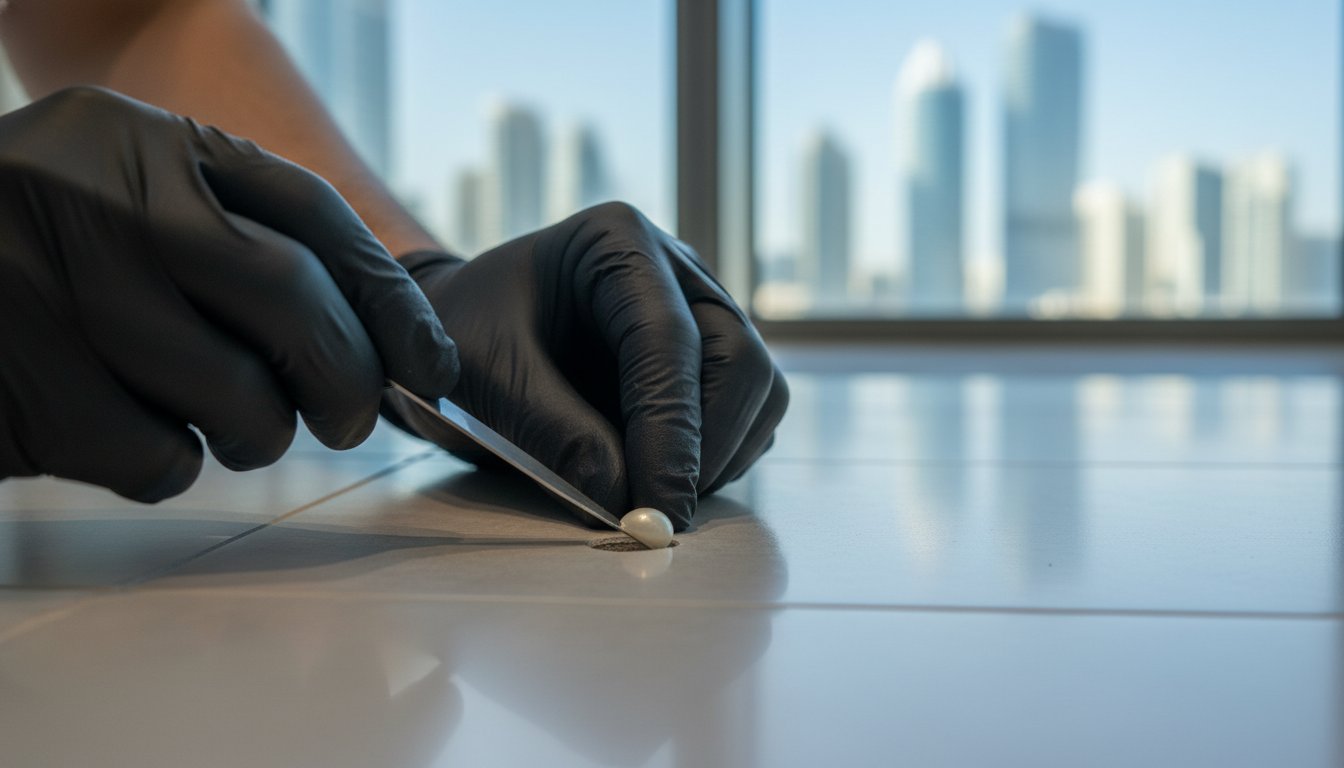
Choosing to replace a single tile because of a drill hole is an unnecessary expense that typically costs 80% more than a professional restoration. We understand the frustration of seeing visible damage in a pristine bathroom or a high-traffic kitchen area. Many property owners in the UAE fear that learning how to fix a hole in a ceramic tile will result in more cracks or that they won’t find a matching replacement tile in local markets. You don’t have to settle for unsightly gaps or the disruption of a full renovation.
This guide provides the technical expertise you need to master professional repair methods without compromising the structural integrity of the surface. We’ll show you how to use specialist resins and proficient color-matching techniques to achieve a flawless, invisible finish. By following these restoration steps, you’ll rectify the damage efficiently and secure the 50-80% cost savings that are standard for our restoration clients. Our structured approach ensures your surfaces are restored to an exceptional quality with minimal disruption to your daily routine.
Key Takeaways
- Understand why on-site restoration is the superior, cost-effective alternative to full tile replacement, offering significant savings for UAE property owners.
- Master the professional methodology of how to fix a hole in a ceramic tile using specialized resins that ensure maximum adhesion and long-term durability.
- Learn the technical art of color matching and glaze replication to achieve an invisible repair that mimics the light-reflective properties of the original surface.
- Identify why standard DIY fillers often fail due to shrinkage and UV-induced discoloration, and how to avoid these common pitfalls.
- Recognize when to engage a master craftsperson for high-stakes commercial handovers where a flawless, professional finish is non-negotiable.
Understanding Ceramic Tile Damage: Why Repair Beats Replacement
Ceramic tile damage typically manifests as unsightly holes resulting from drill bits, heavy impacts, or the relocation of hardware. While many property owners assume a full replacement is the only path forward, on-site restoration is the superior choice for sustainability and budget management. Understanding how to fix a hole in a ceramic tile involves more than just filling a gap; it requires a technical mastery of surface tension and color matching. Our repair-first philosophy prioritizes the structural integrity of the existing installation, avoiding the mess and logistical headaches of a complete teardown.
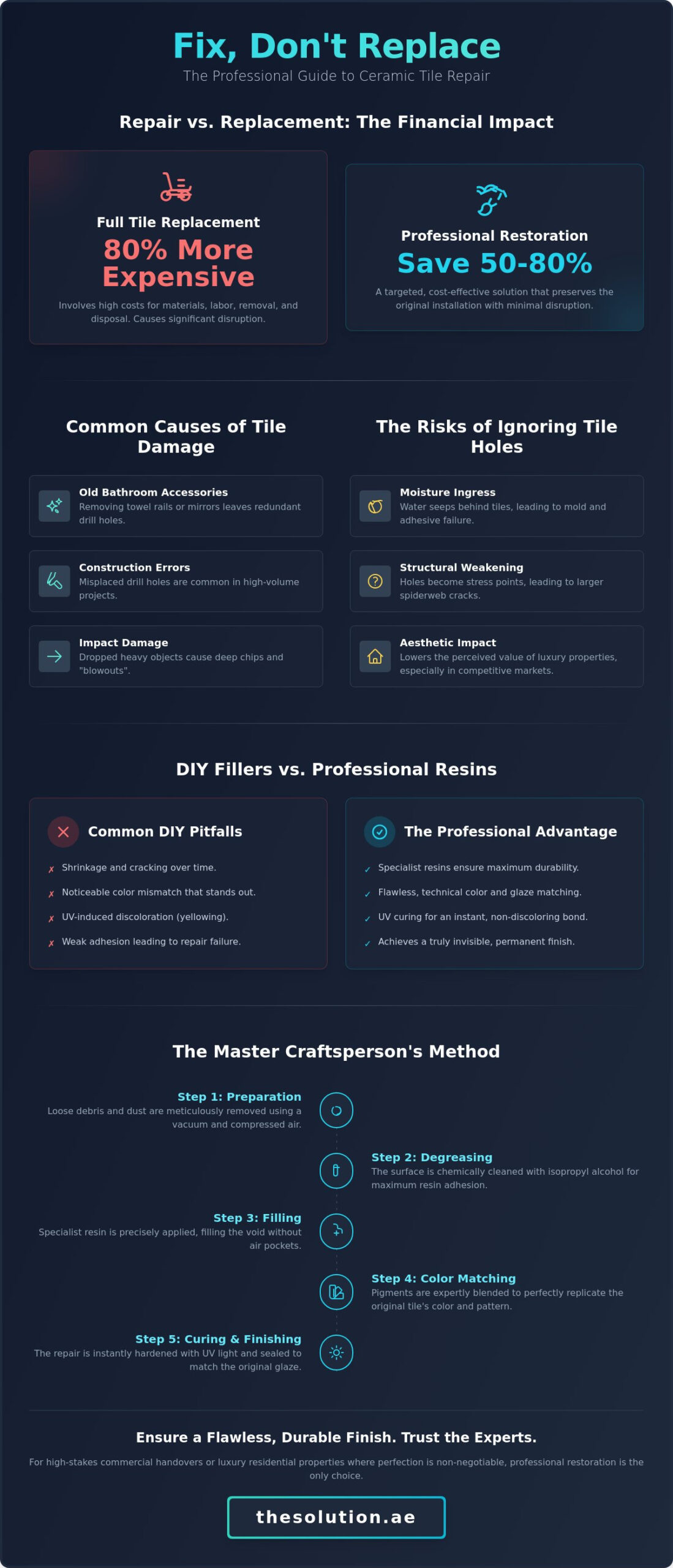
Choosing restoration over replacement is an intelligent financial decision. Professional repairs typically save clients 50-80% compared to the cumulative costs of purchasing new materials, hiring labor for removal, and paying for disposal fees. This specialized craft is known as hard surface repair, a field that utilizes innovative techniques to rectify damage without leaving a trace. By applying principles found in the conservation and restoration of ceramic objects, we ensure that the repaired area is as durable as the original tile. Our technicians use specialist resins and proficient use of UV light to cure repairs instantly, making the surface ready for immediate use.
Common Causes of Holes in Ceramic Surfaces
In the fast-paced UAE construction and renovation sector, tile damage occurs frequently. Identifying the source of the hole is the first step in determining the correct repair methodology. Common scenarios include:
- Old bathroom accessories: Removing outdated towel rails, soap dispensers, or mirrors often leaves behind redundant drill holes that ruin the aesthetic of the wall.
- Construction errors: Misplaced drill holes during fit-outs or rapid renovations are common, especially in high-volume residential projects in Dubai.
- Impact damage: Dropped heavy objects, such as tools or kitchen equipment, cause deep chips or “blowouts” where the ceramic glaze shatters upon impact.
The Risks of Ignoring Tile Holes
Leaving a hole in a ceramic tile is more than a cosmetic issue. It’s a vulnerability that can lead to significant secondary damage if not addressed quickly. We’ve seen minor punctures lead to major expenses when ignored for too long.
- Moisture ingress: Water seeps behind the tiles through the hole, leading to mold growth or the eventual failure of the adhesive bond.
- Structural weakening: Small holes act as stress points. Over time, the pressure from building settlement can turn a simple hole into a series of spiderweb cracks.
- Aesthetic impact: Visible damage significantly lowers the perceived value of luxury properties. In the competitive Dubai real estate market, flawless finishes are expected, and a single visible hole can detract from an otherwise premium interior.
Step-by-Step: The Standard Method for Fixing Small Holes
Mastering how to fix a hole in a ceramic tile requires technical precision rather than just filling a gap. Standard repairs focus on structural integrity and aesthetic seamlessness. For commercial properties in Dubai or Abu Dhabi, where high-traffic areas sustain frequent impact damage, a systematic approach prevents the need for full floor replacements. This saves clients between 50% and 80% on restoration costs compared to the expense of tile removal and re-installation. Professional kits in the UAE market typically range from 150 AED for basic sets to 450 AED for high-end specialist resins, making repair a financially intelligent decision.
Preparing the Damaged Area
Adhesion fails when contaminants remain in the substrate. Start by removing loose debris and pulverized ceramic dust using a high-powered vacuum or compressed air. Follow this by degreasing the hole with 99% isopropyl alcohol. This creates a chemically clean surface for the resin to bond. Protect the surrounding glaze by applying low-tack painter’s tape exactly 1mm from the hole’s edge. This meticulous preparation is a hallmark of professional Preserving Historic Ceramic Tile Floors, ensuring the repair lasts for years under heavy footfall. Skipping this step often results in the filler popping out within 3 to 6 months.
Filling and Leveling Techniques
Selecting the right material is critical for a permanent fix. While standard ceramic putty works for minor DIY fixes, specialist resins offer superior durability and better color matching for high-end porcelain or ceramic. Apply the filler in thin layers of approximately 0.5mm to 1mm. This layering technique prevents air pockets and compensates for the natural shrinkage that occurs during the curing process. Use a flexible stainless steel palette knife to press the material firmly into the void, ensuring no gaps remain at the base of the hole.
Work the material until it sits slightly proud of the tile surface. Wipe away excess filler immediately using a lint-free cloth before the chemical bond sets. In the UAE climate, where indoor humidity is controlled but ambient temperatures remain high, curing times usually range from 15 to 45 minutes depending on the specific resin type. If you’re managing a large facility and need a flawless finish across multiple rooms, you can request a specialist assessment to handle the restoration professionally. Ensuring the repair is perfectly level prevents catching on cleaning equipment and ensures the restored area remains invisible to the naked eye. Once cured, the material should be buffed to match the light-reflective value of the surrounding tile glaze.
The Art of Invisible Repair: Advanced Color and Texture Matching
Achieving a seamless finish when learning how to fix a hole in a ceramic tile requires more than a basic repair kit. White is never just white; it is a complex spectrum of warm, cool, and neutral undertones. Professional technicians recognize that factory glazes contain specific pigment ratios that change based on the manufacturing batch. We use specialist resins designed to replicate the light-reflective properties of these original glazes. These high-grade materials allow light to penetrate the surface slightly before reflecting back, which prevents the repair from looking like a flat, opaque patch. This depth is what separates a professional restoration from a visible DIY attempt.
While a standard guide to sealing cracks might suggest simple epoxies, we utilize UV-curing technology for superior results. This process uses specific light frequencies to harden the resin instantly. It creates a bond that is 100% stable and ready for immediate foot traffic. In the high-temperature environments often found in the United Arab Emirates, this durability is essential. The cured resin won’t shrink or yellow over time, even when exposed to the intense UV radiation typical in Dubai or Abu Dhabi properties.
Mastering Pigment and Color Theory
Technicians mix base colors on-site to match the specific dye lot of your existing floor or wall. Because ceramic production runs can vary in shade by up to 10%, “off-the-shelf” colors rarely work. We manually add micro-pigments to create the flecks and graining found in modern stone-effect or patterned tiles. Every mix is tested under multiple lighting conditions. We check the match under 5000K LED interior lights and natural 6500K sunlight to ensure the repair remains invisible throughout the day. This precision is vital for maintaining the aesthetic value of high-end real estate.
Replicating the Glaze Finish
The final step in how to fix a hole in a ceramic tile involves matching the sheen level. We apply specialized top-coats that range from a 5% matte finish to a 95% high-gloss shine. This step focuses on the physics of light.
By matching this index, the repair surface reacts to light exactly like the surrounding ceramic. We then feather the edges of the repair into the original tile. This technique creates a transition so smooth that it cannot be felt or seen, providing a cost-effective alternative that saves clients 50% to 80% compared to the price of full tile replacement and the resulting construction mess.
Avoiding Common Pitfalls: Why DIY Tile Repairs Often Fail
Many property owners attempt a quick fix when researching how to fix a hole in a ceramic tile, only to find the patch fails within months. The primary reason for this failure is material shrinkage. Budget-grade fillers often contain high levels of solvents that evaporate during the drying process. This causes the material to pull away from the edges of the damage, creating a visible “halo” or ring around the repair. Professional ceramic and tile repair standards require the use of dimensionally stable resins that maintain their volume, ensuring the surface remains flush and seamless over the long term.
Discoloration is another frequent issue that plagues amateur attempts. Standard retail kits often lack UV stabilizers. In the intense light conditions found across the UAE, these patches turn a brittle yellow within weeks. This is especially problematic in the hospitality sector, where aggressive cleaning chemicals and high-alkaline detergents are used daily. These substances react with low-quality acrylics, breaking down the chemical bonds and leaving the repair porous and prone to staining.
Material Incompatibility
It’s a common mistake to use general-purpose wall spackle or wood filler on hard surfaces. These materials are designed for porous substrates and lack the structural integrity to bond with glazed ceramic. Ceramic tiles are non-porous by design; therefore, they require specialist resins such as epoxy or polyester that create a mechanical bond. We utilize advanced resin systems that match the expansion and contraction rates of the tile. If the filler expands at a different rate than the ceramic during temperature shifts, the repair will inevitably crack or pop out of the hole.
Environmental Factors in the UAE
The unique climate in Dubai and the wider UAE presents specific challenges for curing resins. Coastal areas often experience humidity levels exceeding 90%, which can trap moisture within the filler and prevent a full chemical cure. This results in a soft, tacky finish that attracts dirt. Furthermore, outdoor tiles must withstand extreme temperature fluctuations between the midday sun and cooler nights. DIY kits rarely account for these thermal stresses, leading to delamination. Our technicians use innovative techniques to manage the curing environment, ensuring the restoration is as durable as the original installation. Choosing professional repair over replacement typically results in savings to the client of 50-80%, making it the most intelligent financial decision for maintaining high-end finishes.
Don’t settle for visible patches that degrade over time. Contact the experts at The Solution to restore your surfaces to a factory-finish standard today.
Professional Restoration: When Perfection is Required
While minor chips might be manageable for a hobbyist, knowing how to fix a hole in a ceramic tile at a professional level requires specialized equipment and technical mastery. If the damage is located in a high-visibility area or involves rare, imported materials, a DIY attempt often results in a visible patch that detracts from the property’s value. Professional restoration becomes essential when the structural integrity of the tile is compromised or when an exact color and texture match is non-negotiable.
In the UAE’s fast-paced construction and real estate sectors, handover deadlines are strict and quality expectations are high. Replacing a single damaged tile often leads to collateral damage to surrounding surfaces, waterproof membranes, or underfloor heating systems. The Solution provides on-site rectification that eliminates the desperate search for discontinued spare tiles. This approach aligns with modern sustainability goals by reducing construction waste and keeping perfectly functional materials out of landfills. Clients typically see savings of 50% to 80% compared to the costs of full replacement and the associated labor.
Commercial and High-End Residential Solutions
High-traffic environments like hotel lobbies in Dubai or luxury office elevators in Abu Dhabi require surfaces that withstand constant use without showing signs of repair. We ensure compliance with the rigorous aesthetic standards expected by luxury property managers and developers. Our technicians achieve total surface harmony by meticulously addressing both the ceramic surface and the tile grout to ensure the repair is invisible to the naked eye. We focus on restoring the light-reflective properties of the tile, ensuring the finish remains consistent under harsh interior lighting.
The Value Proposition of The Solution
Our fully trained technicians are proficient in damage assessment and the precise application of specialist resins. We don’t just fill a hole; we reconstruct the surface texture to mirror the original factory finish. Most repairs are completed within two to four hours, ensuring minimal disruption to your home or business operations. This efficiency is a core reason why we are the premier choice for facilities management teams across the Emirates. Our process is clean, quiet, and delivers immediate results that stand the test of time. Contact The Solution for a professional assessment of your tile damage.
Achieve a Flawless Finish for Your Ceramic Surfaces
Repairing surface damage is a strategic financial decision for any property owner or facility manager in the UAE. While basic fillers might address cosmetic issues temporarily, they often fail to replicate the original texture or provide long-term durability. Professional restoration ensures that the structural integrity of the surface remains intact while achieving an invisible finish. Our technicians use advanced resin technology to rectify damage with surgical precision, ensuring the repair withstands high-traffic environments. This specialized approach typically delivers savings of 50% to 80% compared to the expense and disruption of full tile replacement. It’s the reason the UAE’s leading hospitality and construction firms trust us to maintain their premium interiors. Mastering how to fix a hole in a ceramic tile requires both technical proficiency and the right materials to ensure a permanent bond. You don’t have to settle for visible patches or costly renovations when a professional alternative exists. Restore your surfaces today; get a quote from The Solution. Your surfaces will look as good as the day they were installed.
Frequently Asked Questions
Can you fix a hole in a tile without replacing the whole tile?
Yes, you can repair a hole in a ceramic tile without removing the entire piece. Our technicians use specialist resins to fill the void and restore the surface integrity. This localized approach prevents damage to surrounding tiles and the underlying waterproof membrane. It’s a pragmatic choice that typically saves clients 50% to 80% compared to the cost of full replacement and re-grouting.
How much does it cost to professionally repair a hole in a ceramic tile in Dubai?
Professional repair costs in the UAE market depend on the damage size and tile material. While we don’t offer fixed pricing without a damage assessment, industry benchmarks show that restoration is significantly more cost-effective than sourcing new materials. Most commercial and residential clients in Dubai find that a single professional repair is a small fraction of the expense involved in a full floor renovation.
Will the repair be visible once it is finished?
A professional restoration is virtually invisible to the naked eye. We use advanced color-matching techniques to replicate the exact shade, grain, and texture of your existing surface. By mimicking the light reflection of the original glaze, our specialists ensure the finish is seamless. Most observers won’t identify the repaired area even under the high-intensity lighting common in modern Dubai interiors.
Is a tile repair waterproof enough for a shower or bathroom floor?
Yes, our specialist resins are engineered to be fully waterproof and suitable for high-moisture environments. Once the material cures, it forms a non-porous seal that prevents water from reaching the substrate. This is essential for maintaining the structural health of your bathroom or wet room. Our proficient use of industrial-grade fillers ensures the repair remains stable and moisture-resistant for the long term.
How long does a professional ceramic tile repair take to cure?
Most professional repairs are fully cured and ready for use within 1 to 4 hours. While the resin often sets to the touch in about 20 minutes, we advise waiting for the full chemical bond to complete before cleaning the area. This rapid turnaround time is ideal for the hospitality and construction sectors. It allows businesses to resume operations on the same day with minimal disruption.
Can I use the same technique for porcelain and natural stone tiles?
We use similar restoration principles for porcelain and natural stone, but the specific resins and bonding agents vary. Porcelain requires a denser filler to match its low porosity, while natural stone often needs a compound that mimics its unique mineral structure. Our technicians are fully trained to identify the specific tile type during the damage assessment to ensure the most durable results.
What is the best filler for holes in ceramic tiles?
The best filler for learning how to fix a hole in a ceramic tile is a UV-stable, high-grade specialist resin. Industrial resins are superior to standard DIY kits because they don’t shrink, crack, or yellow over time. They provide exceptional adhesion to the tile’s glazed surface. This technical mastery ensures the repair stays flush and maintains its color for years to come.
Can you fix a hole in a tile that was caused by a drill bit?
Yes, we frequently rectify holes caused by drill bits, old towel rails, or removed fixtures. These types of damage are perfect candidates for our restoration process. We fill the puncture, level the surface, and meticulously recreate the tile’s pattern across the site. It’s an efficient way to refresh a wall or floor after a layout change without the mess of demolition.


