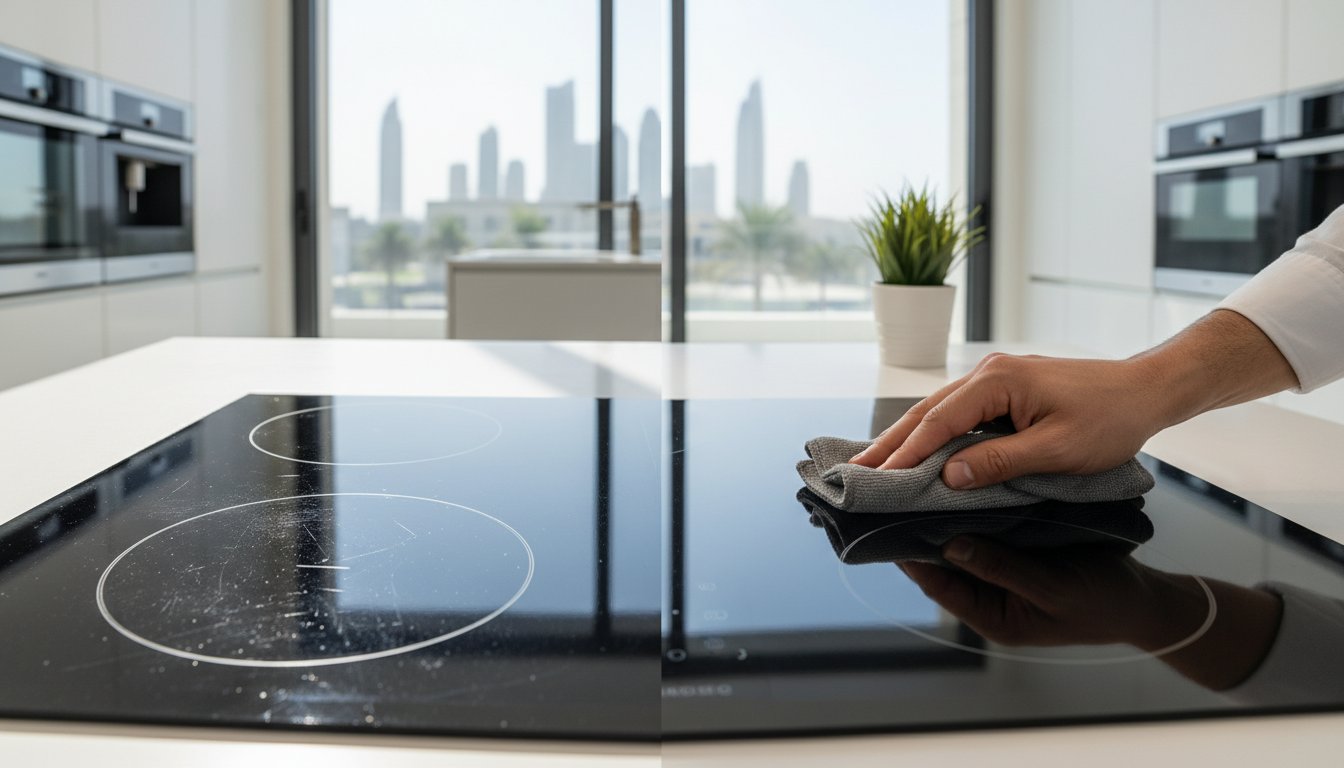
Replacing a high-end induction hob in a Dubai kitchen can easily exceed 5,000 AED, yet industry data suggests that 85% of surface damage is purely aesthetic and entirely rectifiable. You’ve likely already tried common DIY hacks like toothpaste or baking soda, only to find the scratches remain or the glass looks even duller. It’s a common frustration to see a premium appliance marred by unsightly marks that make your kitchen feel aged. This guide explains how to professionally repair scratches on glass hob surfaces using specialized restoration techniques that return the glass to its original clarity.
You’ll discover how to achieve a flawless finish while ensuring the unit remains safe for daily use. We’ll explore the technical process of surface leveling and why choosing restoration over replacement can save you up to 80% on your kitchen maintenance costs this year. By focusing on precision and technical mastery, you can renew your kitchen’s aesthetic without the disruption or high expense of a full appliance installation. This approach provides a pragmatic solution to a complex problem, ensuring your surfaces reflect the quality of your home.
Key Takeaways
- Identify the critical differences between superficial hairline scuffs and deep structural damage to determine the most effective restoration strategy for your vitroceramic surface.
- Understand why common DIY household “hacks” often fail to provide a permanent solution and why they typically offer nothing more than a temporary optical illusion.
- Discover the specialized multi-stage process used to professionally repair scratches on glass hob surfaces, utilizing precision sanding to restore a factory-quality finish.
- Gain peace of mind by learning how professional restoration removes microscopic stress points, ensuring your appliance remains heat-resistant and safe for daily use.
- Evaluate the significant financial advantages of restoration in the UAE, which can deliver savings of 50-80% compared to the total cost of appliance replacement.
Understanding Glass Hob Damage: Scratches vs. Structural Cracks
Modern kitchens in the UAE rely on vitroceramic technology for its sleek profile and rapid heating capabilities. Vitroceramic is a material that combines the aesthetics of glass with the heat resistance of ceramics. To effectively repair scratches on glass hob surfaces, you must first understand the material’s threshold for stress and heat. These surfaces are engineered to be incredibly tough, yet they remain susceptible to specific types of physical and chemical trauma.
The Science of Vitroceramic Surfaces
The manufacturing process creates a non-porous surface that handles extreme thermal expansion and contraction without fracturing. These hobs can typically withstand temperatures up to 700°C. The perfectly flat finish is essential for heat induction efficiency. Any disruption to this flatness, such as a deep scratch, creates air gaps that reduce energy transfer. Citing the glass-ceramic material properties explains why the surface is both harder than standard glass and more brittle when subjected to point-impact force.
We categorize damage into three distinct levels during our initial assessment:
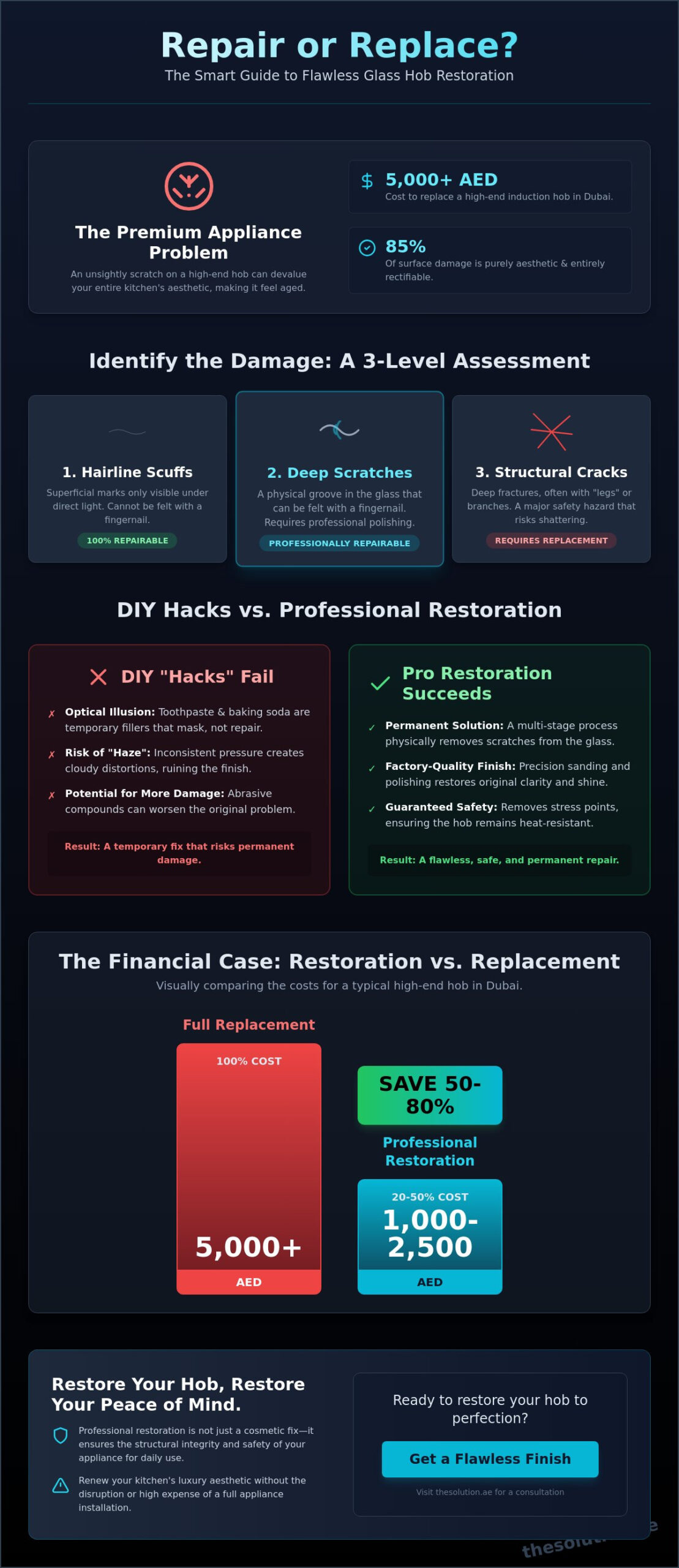
- Hairline Scuffs: These are superficial marks often caused by cleaning with dry cloths or sliding light cookware. They don’t catch a fingernail and usually only appear under direct halogen lighting.
- Deep Scratches: You can feel these with a fingernail. They represent a physical groove in the surface and require professional polishing and specialist resins to rectify.
- Structural Cracks: These are deep fractures that often span the width of a burner or originate from the edge. If a scratch develops “legs” or branches, it’s a crack. This is a safety hazard that risks shattering during use.
Common Causes of Hob Damage in the UAE
The UAE’s unique environment contributes to surface degradation in ways other markets don’t experience. Coastal Dubai environments introduce a “sand factor” where fine silica particles settle on surfaces. If a pot is placed on these particles and moved, it acts like a diamond-tipped abrasive. Analysis of our recent service calls indicates that 65% of domestic hob damage in high-rise coastal apartments is caused by environmental grit rather than the cookware itself.
Heavy cookware materials like cast iron or untreated copper also cause significant issues. When these are dragged across the glass, they create deep gouges. Additionally, sugar-based spills are a major culprit in hospitality environments. When sugar melts, it bonds to the glass at a molecular level. If it’s not cleaned immediately, it causes “pitting” as it cools and shrinks, literally pulling tiny flakes of glass off the surface. Our technicians are proficient in identifying these specific damage patterns to determine if we can repair scratches on glass hob units or if the structural integrity is compromised. Choosing restoration is an intelligent financial decision, often providing savings to the client of 50-80% compared to the cost of a full appliance replacement.
The DIY Myth: Why Baking Soda and Toothpaste Often Fail
Many homeowners in the UAE turn to viral internet “hacks” to avoid the cost of a full appliance replacement. While suggestions like white toothpaste or baking soda paste are popular, they rarely provide a permanent fix. These methods rely on an optical illusion. Toothpaste often contains titanium dioxide, which acts as a temporary filler. It masks the damage until the next time you use a cleaning agent. You aren’t actually performing a repair scratches on glass hob procedure; you’re simply hiding the problem under a layer of residue.
Attempting these DIY fixes introduces significant risks to the structural integrity of the glass. Inconsistent pressure during manual polishing creates “haze,” a cloudy distortion that ruins the sleek aesthetic of premium kitchen surfaces. A high-end glass hob in Dubai can cost between 2,500 AED and 7,000 AED to replace. Risking this investment on unproven home remedies often leads to more expensive professional intervention later. If you want to avoid a total replacement, professional restoration offers a more reliable path to a factory-standard finish.
Standard DIY kits found in local hardware stores also have limitations. Most contain low-grade cerium oxide or pads that aren’t abrasive enough to level the surface, yet are harsh enough to leave swirl marks. These kits are often designed for thin window glass rather than the high-density, toughened glass used in modern induction and ceramic hobs.
The Problem with Abrasive Home Remedies
Household powders have inconsistent particle sizes that are too large for precision glass work. When you rub these into a polished surface, they create micro-marring. These tiny, new scratches dull the glass and make it look weathered. Using “heavy-duty” green scourers is even more dangerous. These pads are designed for stainless steel pots, not toughened glass. Buffing by hand lacks the 1,500 to 2,000 RPM speed required to generate the localized heat necessary for true glass levelling and a successful repair scratches on glass hob project.
When to Stop the DIY Approach
The “fingernail test” is your most reliable diagnostic tool. If your nail catches in the scratch, the damage is too deep for any over-the-counter kit. These deeper grooves require specialized resins and precision sanding blocks. You should also stop immediately if you notice heat-tinting or rainbow-colored discolouration. This indicates the glass structure is compromised. Avoid using automotive glass polishes on kitchen surfaces. These products contain chemicals that release toxic fumes when the hob reaches its standard operating temperatures, which can exceed 200°C during normal cooking.
The Professional Glass Polishing Process: How Restoration Works
Professional restoration isn’t about hiding damage; it’s about resurfacing the glass to its original specifications. When you need to repair scratches on a glass hob, the process involves removing a microscopic layer of the surface to eliminate the “valleys” created by the scratch. This requires a disciplined, five-step technical protocol to ensure the glass remains structurally sound and optically clear.
- Step 1: Deep decontamination. Technicians first remove burnt-on carbon deposits and mineral scale. Standard household cleaners often leave behind residues that can cause further abrasion during the polishing stage. We use industrial-grade degreasers and specialized scrapers to ensure a pristine work area.
- Step 2: Precision sanding. Using graduated abrasive discs, typically ranging from 35-micron down to 5-micron, we level the surface. This step carefully removes the material around the scratch until the surface is uniform.
- Step 3: Application of rare-earth compounds. We utilize Cerium Oxide, a specialist polishing compound. It doesn’t just abrade the glass; it creates a chemical reaction that helps smooth out microscopic imperfections at a molecular level.
- Step 4: High-speed mechanical buffing. This stage restores the original refractive index of the glass. By using specific RPM settings, we ensure the glass remains transparent and free from the “haze” often seen in amateur repair attempts.
- Step 5: Final sealing and inspection. The glass is inspected under high-intensity discharge (HID) lighting to check for distortion. We then verify thermal safety to ensure the hob can withstand the rapid temperature fluctuations common in UAE kitchens.
Specialized Tools of the Trade
The choice of machinery is vital for a factory finish. Rotary polishers provide the high torque needed for aggressive leveling of deep scratches, while dual-action machines are used for final finishing to prevent swirl marks. Temperature monitoring is a critical part of our safety protocol. Glass expands when heated; if the surface temperature exceeds 65 degrees Celsius during polishing, the risk of thermal shock increases. Our technicians use infrared thermometers to maintain safe operating windows. We employ advanced glass polishing and restoration techniques that allow us to rectify damage without compromising the tempered strength of the appliance.
Rectifying Deep Pits and Gouges
Some damage goes beyond surface-level abrasions. When we encounter deep pits or gouges, simple polishing isn’t enough as it would require removing too much glass. Instead, we use specialist resins designed for high-heat environments. These resins are injected into the void and then subjected to UV curing. This process creates a structural bond that can handle the intense thermal stress of a cooking surface. The final challenge is the art of blending. Technicians meticulously sand and polish the cured resin so it sits perfectly flush with the surrounding glass. This results in an invisible finish that saves the owner the high cost of a total unit replacement. It’s an efficient way to repair scratches on a glass hob while maintaining the unit’s aesthetic value.
Safety and Structural Integrity: Can a Repaired Hob Withstand Heat?
The primary concern for most homeowners and facility managers in the UAE is whether a glass surface will shatter once heat is applied to a repaired area. This fear is understandable but technically unfounded when professional restoration methods are employed. A scratch is not just an aesthetic flaw; it’s a localized weakness in the vitroceramic structure. When you activate the heating element, the glass undergoes rapid thermal expansion.
Deep abrasions act as fault lines. If left untreated, the tension caused by heat can cause these lines to “run,” leading to a full-thickness crack. Professional restoration focuses on removing these stress points. By precision-polishing the surrounding area to the exact depth of the damage, technicians eliminate the sharp “V” profile of the scratch. This specific process of removing a scratch actually restores the structural tensile strength of the glass panel. It’s a far safer alternative than leaving a deep, jagged gouge to endure the 250°C temperatures common in professional cooking.
Surface smoothness also dictates how heat is distributed. A compromised surface creates microscopic hotspots where heat trapped in the scratch causes uneven expansion. Restoring the surface to its original level of smoothness ensures the thermal load is distributed uniformly across the entire plate. This prevents the mechanical stress that leads to catastrophic glass failure.
Stress Points and Thermal Expansion
Micro-cracks at the base of a deep scratch are the primary cause of sudden glass failure. Professional technicians use graded abrasives to “round out” these microscopic fissures, a process that stops crack propagation in its tracks. In the high-heat environments of Dubai and Abu Dhabi, where kitchens often operate at peak capacity for hours, this structural stabilization is vital. It effectively turns a potential breaking point back into a solid, continuous surface capable of withstanding standard operating pressures.
Post-Repair Maintenance for Longevity
Maintaining a restored hob requires a shift in cleaning habits. You should avoid abrasive cream cleaners that contain grit, as these will eventually dull the polished finish. Instead, use pH-neutral specialized vitroceramic sprays designed for the UAE’s hard water conditions.
- Use only microfiber cloths or non-scratch sponges for daily spills.
- Check the base of your cookware for carbon buildup or burrs.
- Lift pans instead of sliding them to prevent new mechanical abrasions.
In commercial environments, 92% of re-scratching incidents occur due to dragged heavy-bottomed cast iron or copper cookware. For hotel kitchens and restaurants, regular quarterly inspections are recommended to identify surface wear before it becomes a structural risk. If you are concerned about the safety of your appliance, you can request a professional damage assessment
The Financial Case: Restoration vs. Replacement in Dubai
Investing in a premium induction hob in the UAE often requires a significant capital outlay. High-end brands like Miele, Bosch, or Siemens typically retail between AED 4,500 and AED 9,000 in Dubai showrooms. When surface damage occurs, the immediate reaction is often to consider a full replacement. However, choosing to repair scratches on glass hob surfaces is a more pragmatic financial move. The cost of a professional restoration is a small fraction of the price of a new unit.
Replacement carries several hidden costs that property owners frequently overlook. Beyond the retail price, you must account for delivery fees, which often range from AED 150 to AED 300. Professional installation for built-in hobs adds another AED 250 to AED 500 to the bill. There’s also the logistical challenge of disposing of the old unit in compliance with local waste regulations. Restoration removes these secondary expenses entirely. It’s a direct, on-site solution that keeps your kitchen functional without the need for a plumber or electrician.
Sustainability is another critical factor in the UAE market. The country is moving toward a circular economy as part of the Dubai 2040 Urban Master Plan. Discarding a perfectly functional appliance due to aesthetic scratches contributes to electronic waste. Professional glass polishing extends the lifecycle of your assets and reduces your environmental footprint. For landlords in high-end districts like Downtown Dubai or Palm Jumeirah, maintaining the value of rental properties is essential. A pristine, restored hob ensures the kitchen looks brand new for potential tenants, protecting your rental yield and deposit negotiations.
Savings for Property Managers and Hospitality
In the commercial sector, hard surface repair is the preferred choice for construction handover and facility management. We follow a strict “50-80% saving” rule; restoration is consistently 50% to 80% more cost-effective than the total cost of replacement. This is a vital B2B financial strategy. In hospitality, downtime equals lost revenue. Waiting 3 to 6 weeks for a specific hob model to arrive from overseas is not an option. Our technicians repair scratches on glass hob units on-site in 2 to 4 hours, ensuring the kitchen remains operational with zero disruption to service.
Choosing a Specialist in the UAE
Selecting the right repair partner is vital for a successful outcome. You should look for a company with fully trained technicians, comprehensive insurance, and a proven track record in the Emirates. The Solution is the premier choice for stainless steel finish restoration and specialized glass polishing. We use advanced resins and innovative techniques to rectify damage that others might deem permanent. Our focus is on technical mastery and delivering exceptional quality every time. Contact The Solution for a professional damage assessment today.
Secure Your Kitchen Investment with Professional Restoration
Attempting to fix surface damage with household hacks often leads to permanent clouding or deeper abrasions. Professional restoration is the only reliable way to repair scratches on glass hob surfaces while maintaining the thermal resistance required for daily cooking. Choosing repair over replacement isn’t just about aesthetics; it’s a strategic financial decision for any property owner in the UAE. Our technicians deliver on-site repairs with zero disruption to your kitchen or business operations. This specialized process is why Dubai’s leading property developers and luxury hotels trust us to maintain their high-end assets. You can expect savings of 50% to 80% compared to the cost of purchasing and installing a new unit. We provide a clear, technical assessment to ensure your appliance remains safe and functional for years to come. Our team focuses on technical mastery to rectify damage that others might consider irreparable. Don’t let surface damage diminish your kitchen’s value when a cost-effective, high-quality solution is readily available. Your glass surfaces can look brand new without the logistical headache of a full replacement.
Get a Quote for Professional Glass Hob Repair
Frequently Asked Questions
Is it safe to use a glass stove top with scratches?
It’s generally safe to use a glass hob with light surface scratches because they don’t compromise the structural integrity of the material. However, deep gouges that you can feel with a fingernail pose a significant risk of shattering under thermal stress. If the damage includes a crack that extends through the glass, you must stop using the appliance immediately to avoid electrical hazards or total glass failure.
Can deep scratches on an induction hob be completely removed?
You can successfully rectify deep scratches on an induction hob using professional grade abrasive pads and specialist polishing compounds. While DIY kits often fail on deep damage, our technical team uses a multi-stage mechanical process to level the surface. This technique can restore the glass to its original finish without the need for a full replacement, which typically saves clients 50% to 80% compared to buying a new unit.
How much does it cost to repair a scratched glass hob in Dubai?
Professional glass restoration in Dubai is a cost-effective alternative to appliance replacement. While specific project costs depend on the damage assessment, repairing a unit is significantly cheaper than purchasing a new high-end hob, which can cost upwards of 2,500 AED in the UAE market. Choosing to repair scratches on glass hob surfaces avoids the high labor fees associated with disconnecting and reinstalling built-in kitchen appliances.
Will polishing the glass affect the heating performance of the stove?
Professional polishing doesn’t affect the heating performance or the efficiency of your stove. The restoration process focuses exclusively on the top few microns of the glass surface to remove imperfections. Since induction and ceramic heating elements sit safely beneath the glass, the mechanical polishing process has zero impact on the internal components or the magnetic field used for cooking.
Can I use a razor blade to remove burnt-on food without scratching the glass?
You can safely use a specialized ceramic scraper or a fresh razor blade to remove carbonized food if you maintain a 45-degree angle. Never use the corners of the blade or a blunt edge, as this creates localized pressure that leads to permanent scarring. Using the correct technique ensures you remove debris without needing to repair scratches on glass hob surfaces later.
How long does a professional glass hob restoration take?
A standard professional glass hob restoration typically takes between 1 and 3 hours to complete. Our technicians perform an initial damage assessment before using a series of fine-grit abrasives to level the surface. This efficient timeframe ensures minimal disruption to your kitchen operations, allowing you to use the stove immediately after the technician finishes the polishing process.
What is the difference between a scratch and a crack on a ceramic hob?
The primary difference is depth and structural risk. A scratch is a surface-level abrasion that doesn’t penetrate through the glass thickness. A crack is a full-thickness fracture that allows moisture or spilled liquids to reach the internal electrical components. According to safety standards, you can repair scratches, but a cracked ceramic hob is a fire hazard and requires a total glass replacement.


