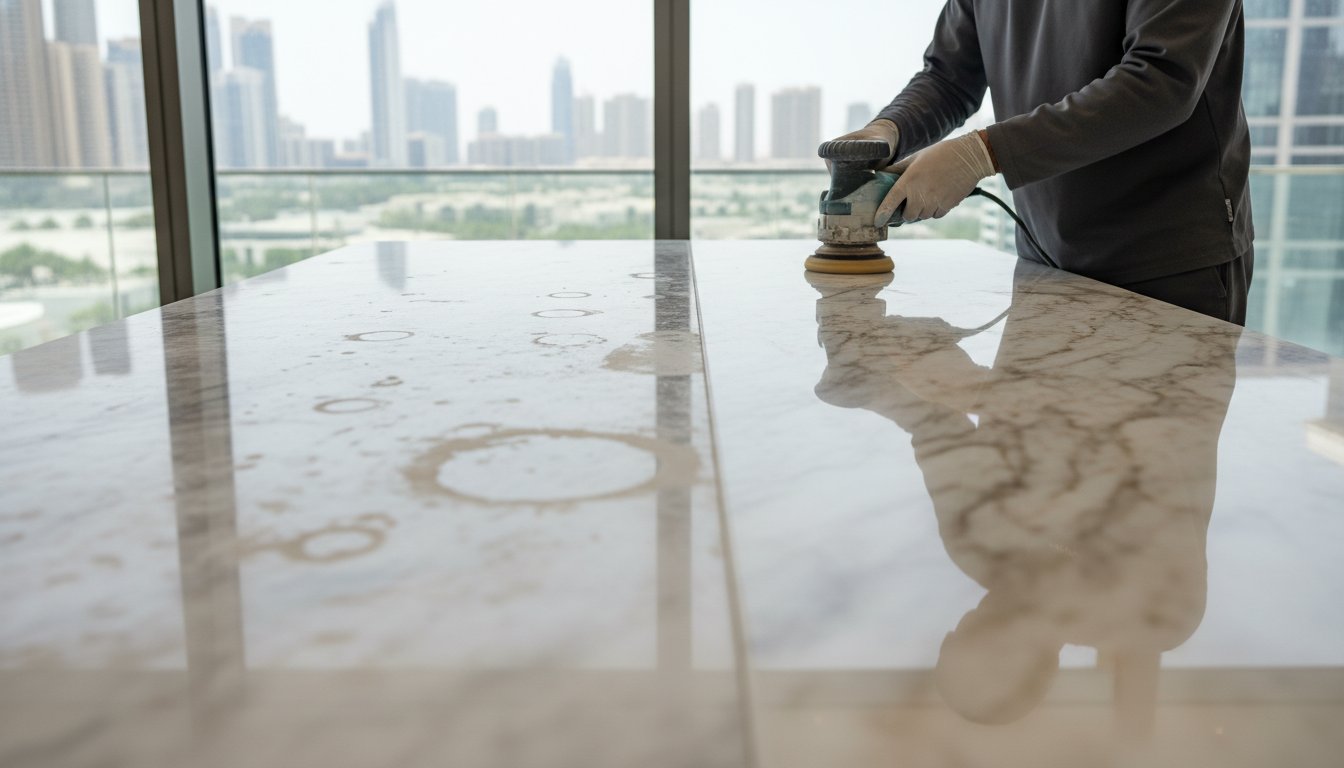
The “stain” on your marble countertop isn’t actually a stain at all, and treating it like one could permanently damage the stone’s structural integrity. You’ve likely noticed dull, white rings or cloudy patches that refuse to budge, regardless of how much specialized cleaner you apply. It’s frustrating to watch a significant investment in luxury stone lose its luster to a simple acidic spill or glass ring.
We understand that maintaining high-end surfaces in a commercial or residential setting is a matter of both pride and property value. This guide provides the technical clarity required for professional marble etching repair dubai, ensuring you can restore a factory-level finish through precise resurfacing rather than costly replacement. We’ll show you how to save capital while achieving a flawless result that meets the highest industry standards.
You’ll learn the difference between surface marks and deep chemical corrosion, the multi-step diamond honing techniques used by master craftspeople, and the essential Dubai Municipality permit requirements. We also cover the impact of the Al Sa’fat 2.0 Silver sustainability framework on restoration projects in 2026, helping you navigate the regulatory landscape while protecting your architectural assets.
Key Takeaways
- Identify the critical difference between surface stains and chemical etching to avoid ineffective cleaning methods that can worsen stone damage.
- Learn how specialized marble etching repair dubai utilizes technical diamond honing to resurface stone, restoring a factory-level finish without replacing the slab.
- Understand the financial logic of technical restoration, which eliminates the demolition costs and procurement delays typically found in full stone replacement.
- Gain insights into the calcite-acid reaction and how porosity influences the depth of damage in travertine, limestone, and marble surfaces.
- Discover the professional assessment process, including pH testing, used to determine the exact restoration steps required for high-traffic commercial stone.
Understanding Marble Etching: Why Your Stone Lost Its Shine
Marble surfaces provide an unmatched aesthetic for Dubai’s luxury properties, but they are chemically vulnerable. To understand why your stone has lost its luster, you must first understand What is Marble at a molecular level. It is a metamorphic rock composed mainly of recrystallized carbonate minerals, most commonly calcite. When an acidic substance touches this calcite, it triggers an immediate chemical reaction that dissolves the stone’s surface. This process is called etching. It isn’t a surface mark that can be wiped away; it’s a physical change in the stone’s structure.
You can identify etching by its distinct visual characteristics. It typically appears as dull, cloudy spots or “water rings” that are most visible when light hits the surface at an angle. In severe cases, the stone may feel rough or pitted to the touch. Because etching is a form of physical corrosion, standard marble cleaners and polishes will fail to remove these marks. These products are designed to remove surface dirt, but they cannot replace the stone material that has been chemically eaten away. Restoring the surface requires a technical process of re-surfacing to level the stone back to its original state.
Etch vs. Stain: The Critical Difference
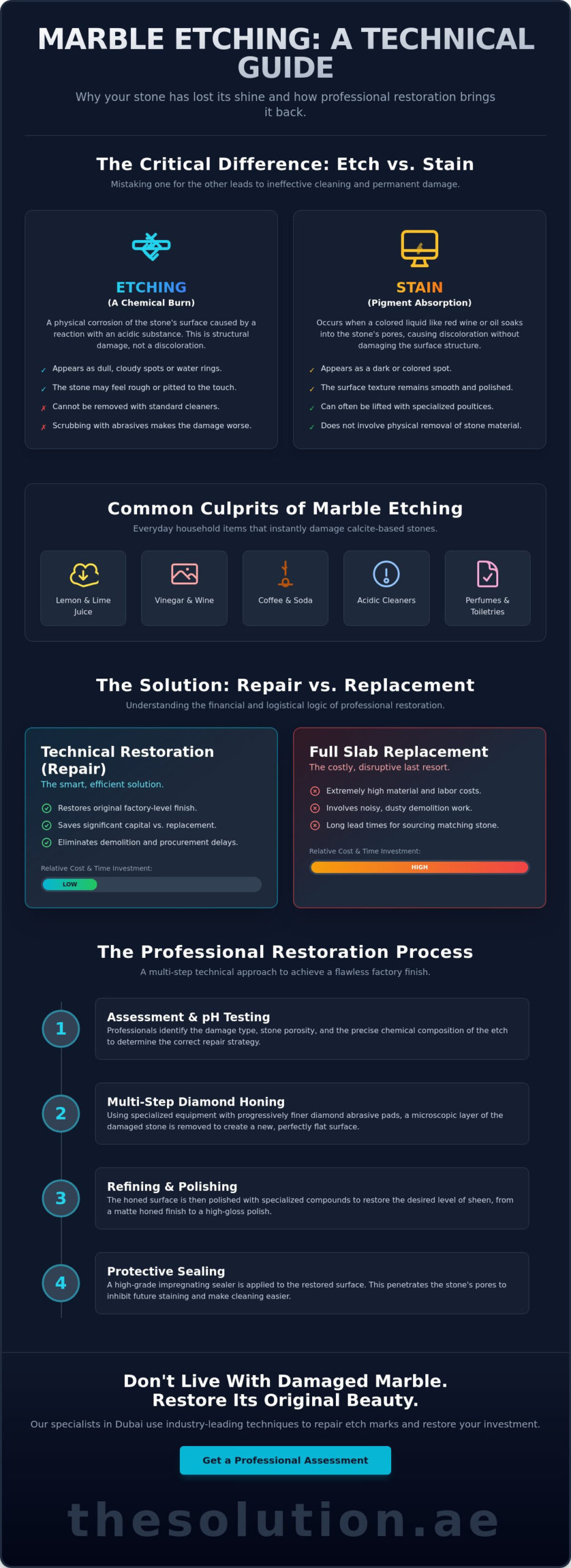
Most property managers mistake etching for a stain, which leads to incorrect and often damaging treatment attempts. A stain occurs when a pigment, such as red wine, oil, or ink, is absorbed into the stone’s pores, causing discoloration. Etching is a “chemical burn” that physically removes the top layer of the marble. This distinction is vital for successful marble etching repair dubai. If you attempt to scrub an etch mark with abrasive pads or acidic “deep cleaners,” you’ll only increase the surface area of the damage. Scrubbing makes the dull spot larger and more pronounced because you are essentially grinding away more of the calcite structure.
Common Household Acids That Cause Etching
In high-end Dubai kitchens and bathrooms, the culprits are often everyday items that seem harmless. The following substances are the primary causes of surface damage:
- Kitchen Acids: Lemon juice, lime, vinegar, and coffee contain high acid levels that react instantly with marble countertops.
- Industrial Cleaners: Many “all-purpose” commercial cleaners are too acidic for natural stone and will strip the factory finish within seconds.
- Bathroom Products: Perfumes, colognes, and certain toiletries can leave permanent etch marks on marble vanities and flooring.
Because the damage is structural, the only viable fix is professional diamond honing. This process carefully removes a microscopic layer of the damaged stone to reveal the fresh, unaffected material beneath. It’s a precise, technical solution that restores the factory-level shine without the massive expense and disruption of a full slab replacement.
The Science of Chemical Damage on Natural Stone in Dubai
Marble, travertine, and limestone are primarily composed of calcium carbonate, or calcite. When an acidic substance contacts these surfaces, a chemical reaction occurs that breaks the ionic bonds of the calcite crystals. This process is complex, and gaining an atomic level understanding of calcite dissolution reveals that the acid essentially dissolves the stone from the top down. Unlike a stain that sits within the pores, etching is a structural loss of the stone’s surface material. It’s a permanent alteration that changes how the surface interacts with light.
Porosity determines the speed and depth of this damage. In more porous stones like certain types of limestone, the acid can penetrate deeper into the substrate, making the etch mark more severe. Polished marble surfaces show this damage most prominently because the high-gloss finish relies on a perfectly flat surface to reflect light. Even a microscopic etch disrupts this reflection, creating the characteristic dull spot. In contrast, honed or matte finishes hide minor etching better because their surface is already diffused. However, in high-traffic commercial areas, these etched patches become magnets for dirt and grime. This leads to accelerated wear-and-tear that can eventually compromise the entire floor’s structural integrity.
The Hard Water Factor in the UAE
Dubai’s water supply is known for its high mineral content, which introduces unique challenges for stone maintenance. When hard water evaporates on a marble vanity or floor, it leaves behind calcium and magnesium deposits. These minerals can create a chemical synergy with acidic soap residues, forming stubborn “soap scum” that is actually a complex mineral-acid bond. This bond is difficult to remove without professional intervention. In these cases, marble etching repair dubai specialists must address both the mineral buildup and the underlying chemical corrosion. Protecting these surfaces requires high-grade floor restoration techniques and specialized sealants to prevent water from interacting with the stone’s chemistry.
Heat and Humidity: Accelerants of Surface Corrosion
Dubai’s climate plays a significant role in stone degradation. High indoor temperatures, common during cooling transitions or in sun-drenched lobbies, act as a catalyst for chemical reactions. Heat increases the kinetic energy of acidic molecules, allowing them to dissolve calcite faster than they would in cooler climates. Coastal humidity further complicates this by trapping moisture within the stone’s pores, leading to surface hazing. Maintaining strict indoor climate control and ensuring proper ventilation is vital for property managers who want to protect their architectural stone assets from premature corrosion.
Marble Etching Repair vs. Full Slab Replacement
Property owners in Dubai often fall into the “replacement trap” when faced with severe surface damage. They assume that deep etching requires a new slab, but this decision frequently triggers a cascade of unforeseen complications. Because natural stone is quarried in specific batches, finding a new slab that perfectly matches the veining and color tone of your existing installation is nearly impossible. Replacing a single etched vanity or floor tile often necessitates replacing the entire room’s stone to maintain aesthetic consistency. This makes marble etching repair dubai a far more logical and targeted intervention.
The hidden costs of replacement extend beyond the price of the stone itself. A full replacement involves invasive demolition, significant dust contamination, and potential plumbing or electrical re-routing for bathroom vanities and kitchen islands. These projects can sideline commercial operations or residential spaces for weeks. In contrast, technical restoration is an on-site process that addresses the damage directly. It eliminates the need for Dubai Municipality permits required for major renovations, which carry official fees and strict contractor registration rules. Choosing repair allows you to bypass the logistical nightmare of sourcing, shipping, and installing new stone while achieving the same factory-level finish.
Sustainability is another critical factor for modern UAE developments. With the mandatory Al Sa’fat 2.0 Silver sustainability requirements now in effect for 2026 building permits, the environmental impact of your property maintenance is under higher scrutiny. Repairing existing materials is inherently more sustainable than the carbon-intensive process of quarrying, processing, and transporting new marble from overseas. By opting for restoration, you align your property management with Dubai’s green building standards while preserving high-value architectural assets.
Financial Intelligence: The Case for Restoration
Restoration is an intelligent financial decision that preserves capital. While a full installation involves labor, materials, and disposal fees, technical resurfacing focuses solely on the affected area. This approach typically saves a substantial percentage of the total costs associated with replacement. Beyond the immediate savings, professional restoration maintains the long-term property value of luxury real estate. A masterfully restored floor is indistinguishable from a new one, ensuring that your investment remains protected. Most restoration projects are completed in a matter of hours, allowing for immediate return to service without the weeks of disruption required for construction.
When is Repair No Longer Possible?
While most etching is repairable, there are technical limits to what honing can achieve. If the stone has developed structural cracks that penetrate the entire thickness of the slab, or if previous aggressive grinding has left the material too thin, replacement may be the only safe option. Deep structural damage is different from surface corrosion. A master craftsperson must conduct a physical assessment to determine if the stone’s integrity is still intact. We prioritize an honest evaluation, ensuring that we only proceed with restoration when we can guarantee a result that meets our rigorous quality standards.
The Professional Restoration Process: How We Fix Etched Marble
Restoring a chemically damaged surface requires a systematic, multi-stage approach that goes far beyond topical cleaning. Our process begins with a technical assessment and pH testing of the stone substrate. This diagnostic step identifies the severity of the etch and ensures the stone’s structural integrity is sufficient for resurfacing. We map out the affected areas to determine the specific grit sequence required for the diamond honing phase. This precision ensures we only remove the minimum amount of material necessary to erase the corrosion and reveal the fresh stone beneath.
Once the assessment is complete, we move into the mechanical phase of marble etching repair dubai. This involves using specialized machinery and diamond-impregnated pads to grind away the etched layer. Following the honing, we apply chemical crystallization. This technical process involves a reaction between the stone’s calcium and a fluorosilicate compound, which creates a harder, more durable surface layer. This hardening is essential for high-traffic commercial floors that must withstand constant wear while maintaining a high-end aesthetic.
If your stone surfaces show signs of chemical corrosion or dullness, our master craftspeople can restore them on-site without the need for replacement. Request a professional floor restoration assessment to protect your property value and restore your stone’s original luster.
Diamond Honing and Grinding
The core of the restoration lies in progressive diamond honing. We use a series of pads with increasing grit levels to systematically smooth the stone. We start with a coarse grit to remove the physical “burn” of the etch and transition to finer grits to refine the surface. Our technicians utilize wet-honing techniques, which use water to lubricate the pads and trap stone particles. This prevents the release of hazardous silica dust, making the process safe for occupied residential and commercial environments. We maintain a perfectly level surface, avoiding the “waves” or dips often left by inexperienced operators.
Polishing and Sealing for Long-Term Protection
After honing, we perform sequential polishing to achieve your desired sheen level. Whether you require a subtle matte finish or a high-gloss mirror shine, we calibrate our polishing compounds to match the original factory specifications. To finalize the repair, we apply a high-grade impregnating sealer. It’s important to understand that sealing is a preventative measure, not a cure for etching. The sealer sits below the surface to block liquid absorption, but it cannot stop the chemical reaction of acids on the surface calcite. To maintain the result, we recommend the following:
- Use only pH-neutral cleaners specifically formulated for natural stone surfaces.
- Blot spills immediately rather than wiping, which can spread acidic substances across a larger area.
- Schedule regular professional assessments to identify minor wear before it requires deep grinding.
Specialist Marble Etching Repair in Dubai: The Solution’s Approach
The Solution operates with a clear mandate: to provide a technical alternative to the waste and expense of surface replacement. Our approach to marble etching repair dubai is rooted in an obsessive commitment to technical mastery. We don’t just polish stone; we perform high-precision hard surface repair that addresses the structural integrity of the material. This “Repair over Replacement” philosophy is a strategic financial decision for our clients. By restoring rather than replacing, UAE businesses avoid the exorbitant costs of new stone procurement and the logistical delays associated with major construction permits.
Our technicians undergo rigorous training to master the nuances of various stone types found across the Emirates. This includes specialized training in color matching and texture replication, ensuring that any repaired area blends seamlessly with the surrounding surface. We’ve applied these standards to high-profile projects in Downtown Dubai, Palm Jumeirah, and the DIFC. In these luxury environments, even a minor etch mark can compromise the entire design aesthetic. Our ability to integrate stone work with stainless steel finish restoration allows property managers to address multiple technical challenges through a single, specialized partner.
B2B Expertise for Dubai’s Hospitality Sector
Commercial environments require a high level of operational efficiency. We specialize in restoring hotel lobbies and restaurant countertops with minimal disruption. We understand that downtime equals lost revenue. For large-scale marble etching repair dubai in commercial towers, we deploy structured teams that work within tight windows to ensure surfaces are back in service by the next business day. Facilities managers across the UAE utilize our tailored maintenance contracts to keep their stone assets in factory-level condition year-round. This proactive approach prevents minor etches from becoming deep-seated structural issues that would otherwise require aggressive grinding.
Quality Assurance and Result Documentation
Reliability is built on transparency. We provide comprehensive result documentation for every project, offering visual proof of the restoration outcomes. Our process includes meticulous site protection. We use heavy-duty masking and containment systems to ensure that surrounding fixtures, such as glass or wood paneling, remain untouched during the honing process. This attention to detail defines our identity as a master craftsperson. If your property’s stone surfaces have lost their professional edge, contact The Solution for a professional marble assessment today to restore your investment with technical precision.
Protecting Your Architectural Assets in 2026
Etching is a chemical transformation of the stone’s surface, not a simple stain. Attempting to scrub away these marks often leads to further surface degradation and increased costs. Technical diamond honing remains the only viable solution for restoring the factory-level finish of your marble, travertine, or limestone. By choosing precise resurfacing over full replacement, you bypass unnecessary demolition and protect the long-term value of your property assets. Similarly, maintaining the mechanical integrity of your vehicle is just as important as your home; for instance, you can learn more about Car Suspension Repair to ensure your luxury transport matches the high standards of your interiors.
Our team provides high-precision marble etching repair dubai for luxury hotels, commercial towers, and private villas. We utilize specialized diamond-honing technology to deliver on-site results that meet the most rigorous architectural standards. Serving Dubai, Abu Dhabi, and the Northern Emirates, we offer a reliable partnership for complex technical challenges. Don’t let chemical corrosion diminish the aesthetic or financial value of your property. Get a Professional Quote for Marble Repair and restore your stone’s original luster today. Your surfaces deserve the expertise of a master craftsperson.
Frequently Asked Questions
Can I use a DIY kit to fix marble etching myself?
DIY kits are generally ineffective for etching because they rely on topical polishes rather than mechanical resurfacing. Etching is a physical change in the stone’s structure, not a surface stain. Using a retail kit often leads to uneven finishes or “halos” around the damage. Professional marble etching repair dubai requires sequential diamond-impregnated pads to level the stone properly. It’s safer to avoid retail products that might necessitate deeper grinding later.
How long does a professional marble etching repair take in a typical Dubai apartment?
Most residential projects are completed in a single working day. For a typical bathroom vanity or a small section of flooring, the process usually takes only a few hours. Larger open-plan areas might require more time depending on the severity of the chemical damage. We prioritize minimal disruption, ensuring your living space returns to service quickly. Our technicians work efficiently to meet the high standards expected in Dubai’s luxury property market.
Will the repaired area look different from the rest of my marble floor?
The restored area will be indistinguishable from the surrounding stone. We carefully calibrate our polishing sequence to match the original factory sheen, whether it’s a high-gloss mirror finish or a subtle matte. By blending the transition zones, we ensure the repair is invisible to the naked eye. This level of precision is why technical restoration is preferred over slab replacement in high-end Dubai interiors.
Does sealing my marble prevent future etching from acidic liquids?
Sealing is an essential preventative measure against absorption, but it doesn’t stop chemical etching. Sealers are designed to block liquids from entering the stone’s pores, preventing permanent stains. However, because etching is a reaction between acids and the stone’s calcium, the damage happens on the surface itself. Even a perfectly sealed floor will etch if it contacts acidic substances like lemon juice, vinegar, or harsh cleaners.
How much does marble etching repair cost in Dubai compared to replacement?
Restoration is a highly cost-effective alternative that saves a substantial portion of the capital required for replacement. When you replace a slab, you pay for new material, shipping, demolition, and the Dubai Municipality permit fees required for major renovations. Repairing the existing surface avoids these overheads entirely. It represents an intelligent financial decision for property owners who want to maintain luxury standards without the “replacement trap” expenses.
Is the marble restoration process messy or dusty for my home?
Our restoration process is virtually dust-free. We utilize wet-honing technology, which uses water as a lubricant and dust suppressant during the grinding phase. This prevents hazardous silica particles from entering your home’s air supply or HVAC system. We also implement rigorous site protection, including masking of adjacent surfaces like wood or glass. Your home remains clean and habitable throughout the duration of the repair.
What is the best way to clean marble to avoid etching in the future?
Can you fix deep etch marks on black marble or dark stone?
We successfully repair deep etch marks on black marble and other dark stones like Nero Marquina. Darker stones are more challenging because they show even microscopic scratches more clearly than lighter varieties. Our technicians use specific diamond sequences and specialized dark-stone compounds to prevent “ghosting” or cloudy patches. This ensures a deep, rich color and a flawless finish that matches the original architectural design.


