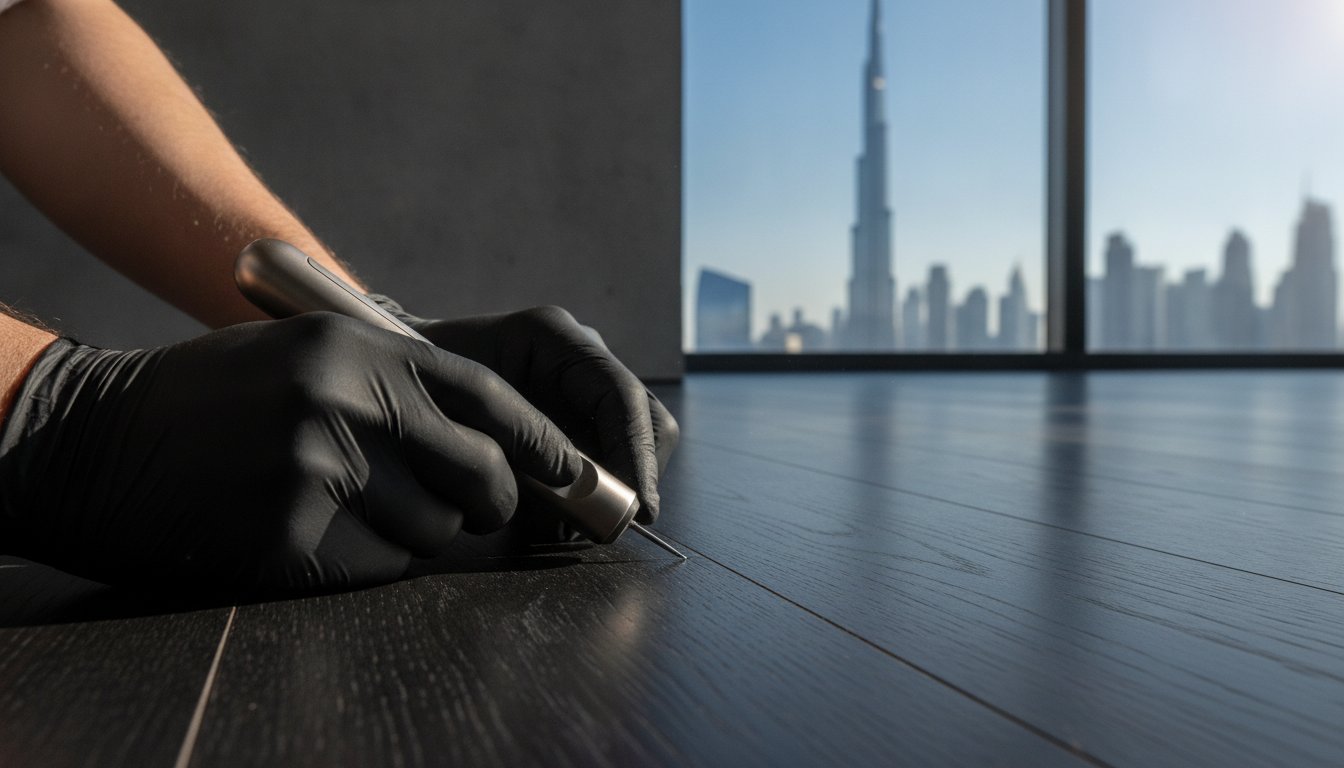
In the 2026 Dubai construction market, the difference between a profitable handover and a budget-draining snagging list often comes down to a single decision: whether you choose to replace or restore. You’re likely facing the pressure of rising material costs and the mounting frustration of delayed Handover Certificate (BOC) issuance due to minor surface imperfections. Subcontractor disputes over damage accountability only add to the friction when you’re racing toward a project deadline.
This guide shows you how to clear your snagging lists faster and protect your project margins by leveraging technical surface restoration instead of expensive, time-consuming replacements. We’ll explore strategic approaches to end of tenancy damage repair dubai, focusing on how specialized repairs for wood, metal, and glass ensure compliance with Dubai Municipality standards while significantly reducing procurement expenses. By shifting to a restoration-first mindset, you can secure a seamless project handover and eliminate the logistical headaches that typically stall final approvals.
Key Takeaways
- Learn how technical restoration saves up to 80% compared to full surface replacement, protecting your project margins against high 2026 material costs.
- Reduce handover delays by choosing 24-hour on-site repairs over 12-week procurement cycles for damaged glass, metal, and wood surfaces.
- Navigate the complexities of end of tenancy damage repair Dubai with a strategic triage system that categorizes defects by material and severity.
- Ensure compliance with strict Dubai Municipality and DDA standards using “invisible” repair techniques that match original color and texture perfectly.
- Clear your snagging lists faster and resolve subcontractor disputes through professional restoration services trusted by Tier 1 UAE contractors.
The Financial Impact of Surface Damage on End of Tenancy & Handover
Surface damage is a fiscal liability that directly threatens your project’s profitability. In the high-stakes Dubai real estate market, the distinction between a minor scuff and a structural surface chip is often the difference between a signed Handover Certificate (BOC) and a month of liquidated damages. Damage isn’t just an aesthetic issue; it’s a procurement trap. When you choose to replace a damaged component, you’re not just paying for the material. You’re absorbing the costs of specialized labor, disposal fees for the damaged item, and the potential for collateral damage to surrounding finished surfaces during the demolition phase.
The 2026 UAE construction market presents unique challenges. With the Producer Price Index for construction materials remaining at elevated levels, the cost of importing high-specification finishes has made traditional replacement strategies unsustainable. Choosing end of tenancy damage repair dubai professionals allows you to bypass these market volatilities. By restoring surfaces on-site, you protect your margins and avoid the 12-week lead times often associated with bespoke glass, stone, or metal architectural elements. This approach aligns with the governing landlord-tenant law principles that emphasize maintaining property standards without unnecessary waste or delay.
Common Damage Sources in the Final Fit-out Phase
Most surface defects occur when the site is at its most crowded. Subcontractor traffic is a primary culprit; heavy toolboxes and ladders frequently impact finished ceramic flooring or wood paneling. In Dubai’s specific climate, environmental etching is also a concern. Fine desert dust can settle on high-performance glass surfaces, and if cleaned improperly by general janitorial staff, it results in micro-scratching that fails consultant inspections. Last-minute MEP adjustments often lead to “collateral damage” where perfectly finished walls or ceilings are chipped to access hidden wiring or ductwork.
The True Cost of Snagging List Delays
Unresolved snags are the leading cause of delayed BOC issuance. For a Tier 1 contractor, every day a project remains unhanded is a day of mounting overheads. Financial penalties for late delivery in the UAE can be severe, often calculated as a percentage of the total contract value per day of delay. Beyond the immediate financial loss, there’s a significant psychological impact on the client. A “messy” snagging list full of visible chips and scratches erodes trust. It suggests a lack of meticulousness, leading consultants to look even closer at other aspects of the build. Professional restoration ensures that the first impression during a walk-through is one of technical mastery and completion.
Technical Restoration: Satisfying Strict Dubai Inspection Standards
Passing a consultant’s final walk-through requires more than just masking a defect. It demands an “as-new” finish that withstands scrutiny under high-intensity lighting. Technical restoration is a science that involves precise color matching, texture replication, and light reflection analysis. This level of detail is why our professional restoration processes are accepted by authorities like Dubai Municipality (DM) and the Dubai Development Authority (DDA). These bodies prioritize safety and quality; our methodology meets international ISO standards without the need for substrate removal. Adhering to Dubai Land Department regulations regarding property condition is easier when you have a partner capable of executing end of tenancy damage repair dubai on-site.
Our master craftspeople don’t just “fix” things; they restore the technical performance of the material. This is critical for meeting stringent consultant inspections where even a minor blemish can lead to a rejected snagging item. By focusing on the molecular level of the surface, we ensure that the repaired area behaves exactly like the original material in terms of durability and aesthetic finish. This technical mastery is what allows Tier 1 contractors to clear their lists and move toward final account settlements with confidence.
Glass and Mirror Restoration for High-Rises
Dubai’s skyline is defined by high-performance glass. Scratches or etching on tempered and laminated glass can lead to costly rejection during handover. We use precision polishing techniques to remove these defects without causing optical distortion or “lensing.” This process preserves the structural integrity of the glass while restoring its clarity. For a deeper look at our methodology, read our guide on glass polishing and restoration.
Stainless Steel and Architectural Metal Recovery
Brushed steel elevator doors and entrance cladding are high-traffic areas prone to deep scratches and oxidation. Replacement is rarely an option due to the complexity of the installation. Our master craftspeople specialize in re-graining architectural metalwork on-site. We match the original factory grain exactly, ensuring the repair is indistinguishable from the surrounding surface. For technical details on our metalwork processes, consult our stainless steel finish restoration guide.
Stone, Wood, and Ceramic Snagging Solutions
Luxury marble flooring and granite countertops are vulnerable to impact damage during the final fit-out. We repair chips and cracks by hand-tinting resins to match the natural veining of the stone. Similarly, we replicate wood grain patterns on damaged joinery using specialized artistic techniques. This approach is vital for end of tenancy damage repair dubai, where fast turnarounds are required to prepare units for new occupants. You can find more information in our ceramic and tile repair guide.
If you’re facing a challenging snagging list, our technical restoration experts can provide an on-site assessment to protect your project timeline.
Repair vs. Replacement: A Strategic Comparison for Dubai Developers
Choosing between restoration and replacement is a critical decision that impacts both the project timeline and the bottom line. For many developers, replacement is the default response to surface damage. However, in the current market, this approach is often a strategic liability. Replacement involves a complex chain of events: procurement, logistics, demolition, and re-installation. Each step introduces a point of failure. Technical restoration bypasses these risks by addressing the defect directly on-site, transforming a potential 12-week procurement delay into a 24-hour repair cycle.
Risk management is another vital factor. When you replace a single damaged glass panel or a section of stone flooring, you risk damaging the surrounding finished surfaces. Demolition is inherently chaotic. It creates dust, vibration, and mechanical stress that can lead to secondary snags. Professional end of tenancy damage repair dubai eliminates this “demolition ripple effect.” By keeping the original substrate intact, you maintain the structural integrity of the installation and ensure that adjacent finishes remain pristine for the final inspection.
- Sustainability Metrics: Restoration aligns with LEED certification requirements and the UAE Net Zero 2050 initiative by significantly reducing construction waste and the carbon footprint associated with manufacturing new materials.
- Logistical Efficiency: On-site repairs require minimal equipment and zero material transport, keeping the site clear for other finishing trades.
Lead Time and Procurement Risks in 2026
Supply chain volatility remains a significant hurdle for Dubai projects in 2026; to better navigate these international procurement and transport challenges, learn more about Maslak Shipping & Logistics LLC. Custom fixtures, such as bespoke architectural metalwork or high-specification glass, are nearly impossible to replace at the 11th hour. A missing or damaged custom element can halt the entire handover process. We recently executed a 48-hour turnaround for a luxury hotel lobby handover where three deep scratches on a custom-grain stainless steel pillar threatened to delay the opening. Instead of waiting months for a replacement, our master craftspeople restored the finish on-site, allowing the project to proceed on schedule.
Labor and Disposal Economics in the UAE
The economics of end of tenancy damage repair dubai are clear when you calculate the total cost of replacement. Beyond the material price, you must account for specialized labor to remove the item and the rising fees for construction waste management in Dubai. Landfill taxes and disposal logistics for bulky materials like stone and glass add hidden layers to your budget; for projects that require the removal of unwanted items, Junk Masters Dubai provides efficient site clearing services. A technical restoration costing 500 AED offers a superior ROI compared to a 5,000 AED replacement that involves demolition and procurement overheads. By choosing restoration, you convert a potential loss into a protected margin.
The Handover Snagging Checklist: Managing Surface Defects
Managing a snagging list requires a structured methodology to avoid the administrative chaos typical of the final fit-out phase. Effective end of tenancy damage repair dubai relies on a systematic approach to defect management. Instead of reacting to consultant comments, Tier 1 contractors use an internal checklist to identify and resolve issues before the official walk-through. This proactive stance ensures that the final inspection is a formality rather than a negotiation.
- Step 1: Conduct a pre-handover internal walk-through to identify all surface defects, from minor scuffs to structural chips.
- Step 2: Implement Damage Triage to categorize every defect by material type and the required level of technical intervention.
- Step 3: Assign clear accountability to specific subcontractors or internal finishing teams using digital snagging tools.
- Step 4: Engage a technical restoration specialist for high-value surfaces like architectural metal, glass, and luxury stone.
- Step 5: Perform a final validation of all repairs against the consultant’s original snagging list to ensure 100% compliance.
The Damage Triage Framework
Not all defects require the same response. Categorizing damage helps site managers allocate resources efficiently and protect project margins. We recommend a three-tier triage system:
- Grade A: Superficial Scuffs. These are minor marks that don’t penetrate the surface coating. They often require only specialized cleaning or light mechanical polishing.
- Grade B: Structural Chips and Deep Scratches. These defects require technical restoration. Our master craftspeople use on-site grain replication and color matching to achieve an invisible finish.
- Grade C: Irreparable Damage. This applies to surfaces with compromised structural integrity where restoration is technically impossible. Replacement is the last resort.
To streamline your handover process, you can book an on-site damage assessment with our technical team to categorize your snagging list today.
Subcontractor Accountability and Back-Charging
Protecting your budget during end of tenancy damage repair dubai requires rigorous documentation. Site engineers must use photographic evidence to record the condition of surfaces immediately after installation. This creates a clear timeline that identifies which trade was responsible for the damage. When a defect is identified, the repair cost can be back-charged to the responsible subcontractor with full transparency. This system encourages better site discipline and ensures that the main contractor doesn’t absorb the financial burden of third-party negligence. Direct communication between site engineers and our repair teams ensures that back-charging documentation is accurate and based on technical repair assessments rather than arbitrary estimates.
Securing Handover Approval with The Solution
Tier 1 contractors in the UAE don’t just require a repair service; they need a strategic partner who understands the high stakes of a 2026 project deadline. Our reputation is built on technical mastery and a results-oriented approach that prioritizes your project’s final account settlement. We treat every defect as a technical challenge that requires a precise, engineered solution. This commitment to “Master Craftsmanship” ensures that your surfaces meet the most stringent consultant standards, allowing you to secure handover approval without the need for repetitive inspections. We don’t just hide damage; we restore the material’s integrity.
Integration is where we provide the most value to site teams. We understand that the final weeks of a build are high-pressure environments with multiple trades overlapping in tight spaces. Our teams coordinate directly with your site engineers to minimize handover friction. This is particularly vital for end of tenancy damage repair dubai where the turnaround time between occupants is often measured in hours, not days. We operate with a level of reliability that turns a complex snagging list into a manageable, closed-out document. By choosing restoration, you’re also maintaining the long-term value of the asset, ensuring that the original high-specification finishes are preserved rather than replaced with inferior alternatives.
Our On-Site Repair Methodology
Our operational model is designed for the realities of a busy Dubai construction site. We deploy mobile repair units that are fully equipped to handle any hard surface challenge, from etched glass to oxidized architectural metal. We follow strict protocols to ensure minimal noise and dust, allowing our master craftspeople to work in active handover sites without disrupting other finishing trades. This meticulous approach is what differentiates our technical restoration from general maintenance. You can explore our full methodology in our hard surface repair pillar guide.
Request a Handover Snagging Assessment
Securing your project’s final approval starts with an accurate technical assessment. We provide immediate quotes for your snagging list, offering a clear financial and logistical comparison to replacement. Our teams provide comprehensive coverage across Dubai and the wider UAE, ensuring that no matter where your project is located, you have access to Tier 1 restoration expertise. Don’t let minor surface defects jeopardize your project margins or delay your BOC issuance. We’re ready to help you clear your list and move to the next phase of your development.
Contact The Solution for a Project Assessment and ensure your next handover is seamless and profitable.
Master Your Next Project Handover with Strategic Restoration
Mastering the final stages of a build in Dubai requires a shift from traditional procurement to technical restoration. By prioritizing on-site repairs, you can bypass the volatility of 2026 material costs and eliminate the 12-week lead times that often derail project schedules. This approach ensures that your surfaces meet the highest quality standards without the logistical disruption of demolition. It’s an intelligent financial decision that protects your margins and secures final account settlements faster.
Whether you’re managing a Tier 1 construction site or preparing a luxury unit for a new occupant, end of tenancy damage repair dubai must be treated as a technical challenge rather than a maintenance task. Our specialized on-site repairs for glass, metal, stone, and wood provide an “as-new” finish that satisfies the most meticulous consultant inspections. We’re specialized in UAE luxury material standards and trusted by leading developers to protect project margins through master craftsmanship.
Secure your project handover with professional surface restoration from The Solution. Take control of your snagging list today and experience a seamless, profitable handover process.
Frequently Asked Questions
What is the most common damage found during construction handover in Dubai?
Impact damage and environmental etching are the most frequent issues identified during final walk-throughs. High subcontractor traffic often leads to chipped ceramic tiles, dented metal cladding, and scratched wood joinery. Fine desert dust mixed with improper cleaning techniques frequently causes micro-scratching on high-performance glass panels. These defects are the primary reason for rejected snagging lists during the final inspection phase.
Can deep scratches in tempered glass be repaired without replacement?
Yes, deep scratches in tempered glass can be restored through precision mechanical polishing. This process removes the defect while maintaining the structural integrity and optical clarity of the pane. It is a highly technical procedure that eliminates the 12-week lead time often required for bespoke glass procurement in the 2026 Dubai market. This restoration approach ensures the glass remains compliant with safety standards.
How long does a typical on-site surface repair take to cure?
Most technical surface repairs are ready for handling or foot traffic within 1 to 4 hours. We use specialized UV-curing resins and high-performance coatings that reach functional hardness almost instantly. This rapid turnaround is essential for end of tenancy damage repair dubai, where units must be prepared for new tenants or consultant inspections without causing delays to the project timeline.
Do consultants usually accept repaired surfaces during snagging inspections?
Consultants accept professional restoration when the finish is “invisible” and matches the original material specifications exactly. Our master craftspeople replicate color, grain pattern, and light reflection to ensure the repair is indistinguishable from the surrounding surface. This technical excellence satisfies the strict standards of Dubai Municipality (DM) and the Dubai Development Authority (DDA), ensuring a smooth close-out of the snagging list.
Is on-site restoration cheaper than back-charging a subcontractor for replacement?
Restoration is significantly more cost-effective than the full replacement cycle. While you can back-charge a subcontractor for the material cost, you often absorb the hidden costs of project delays, disposal fees, and potential damage to adjacent finishes during demolition. On-site repair protects your project margins and avoids the administrative burden of managing long-lead procurement and complex site logistics.
Which materials are the most difficult to repair during the handover phase?
High-gloss surfaces and bespoke architectural metals with specific grain patterns require the highest level of technical expertise. Matching the light reflection on a high-gloss kitchen cabinet or re-graining a brushed stainless steel elevator door demands meticulous precision. Our specialized training ensures these complex materials are restored to factory standards on-site, even under the scrutiny of high-intensity site lighting.
Does The Solution provide warranties for construction handover repairs?
We stand behind the technical mastery and durability of every restoration we perform. While specific terms depend on the material type and its environmental exposure, we ensure all repairs meet the required performance standards for a successful handover. This commitment to reliability is why Tier 1 contractors trust us to resolve complex end of tenancy damage repair dubai challenges efficiently.


