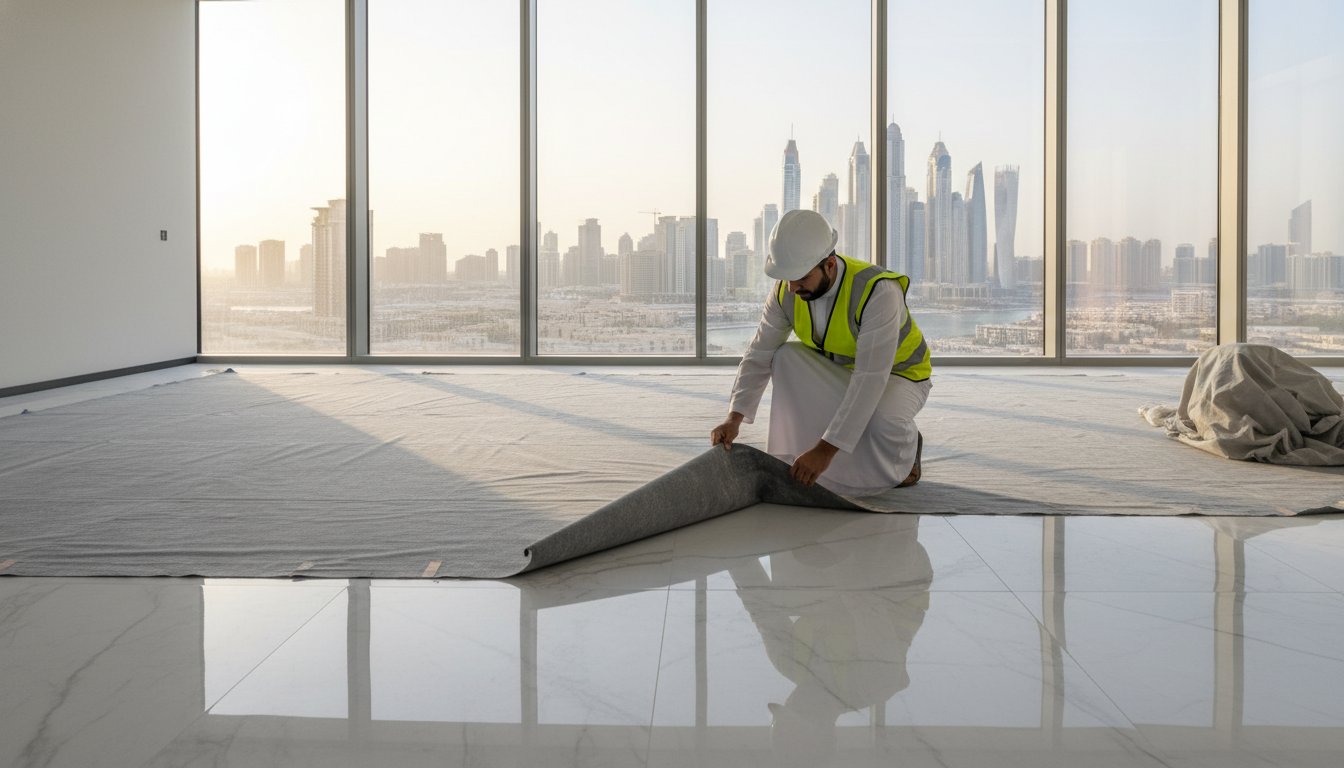
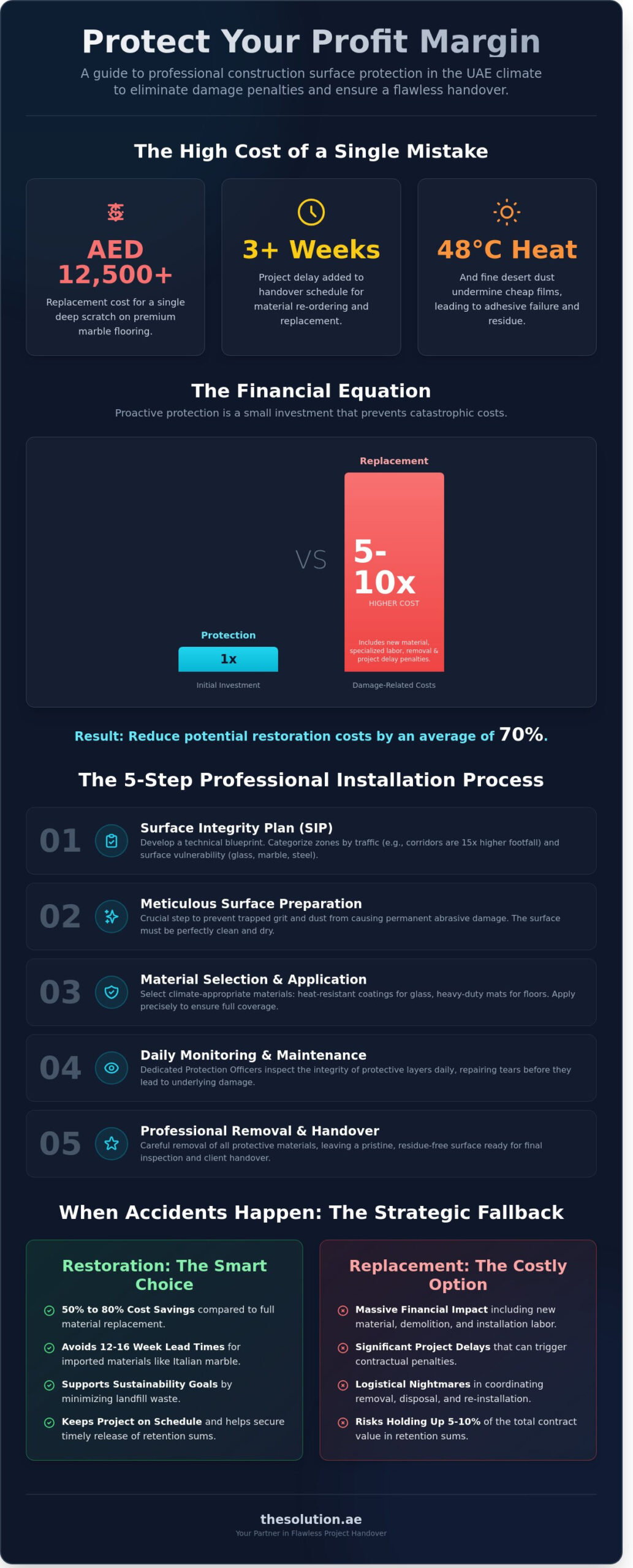
A single deep scratch on a premium marble floor in a Dubai Marina penthouse can trigger a replacement cost exceeding AED 12,500, not including the three weeks of delay added to your handover schedule. You likely already know that the final 10% of a project is where your profit margin is most at risk. Between the relentless summer heat reaching 48°C and fine desert dust undermining cheap adhesive films, maintaining a pristine site often feels like an impossible task under strict UAE snag list standards. It’s a common frustration for project managers who see their hard-earned margins evaporate during the final inspection phase.
This guide shows you how to implement a professional-grade construction site surface protection strategy that eliminates these damage penalties and ensures a flawless handover. You’ll learn the specific technical requirements for the UAE climate and the exact workflows used by top-tier contractors to reduce restoration costs by 70% on average. We’ll cover everything from heat-resistant glass coatings to heavy-duty floor shielding that withstands high-traffic site conditions without failing.
Key Takeaways
- Protect your project’s bottom line by understanding why surface replacement costs in the UAE can be 5 to 10 times higher than the initial investment in preventative layers.
- Learn how to develop a robust Surface Integrity Plan that categorizes zones by traffic and material vulnerability, ensuring high-risk areas like polished stone and glass receive targeted care.
- Discover how to select the right construction site surface protection materials for the unique UAE climate, from liquid-applied coatings for windows to heavy-duty mats for high-traffic floors.
- Master a professional 5-step installation process that prioritizes meticulous surface preparation to prevent trapped grit from causing permanent abrasive damage during the build.
- Ensure a flawless project handover by integrating expert restoration techniques to rectify inevitable site damage, securing significant AED savings compared to full material replacement.
Why Construction Site Surface Protection is Your Best Financial Strategy
Construction site surface protection is the technical application of preventative layers designed to shield finished surfaces from impact, abrasion, and chemical spills. It’s a proactive barrier that maintains the integrity of high-value materials from the moment they’re installed until the final handover. In the UAE’s high-end real estate market, this isn’t an optional extra; it’s a fundamental financial safeguard. Industry data indicates that the cost of replacing damaged materials is 5 to 10 times higher than the initial investment in professional protection. When a dropped tool or a chemical spill ruins a finish, the expense includes specialized labor, removal of the damaged asset, and the purchase of replacement materials at current market rates.
Implementing a “zero-damage” site culture shifts the responsibility back to subcontractors. Clear protection protocols ensure that every trade understands the value of the surfaces they’re working around. This accountability is vital for meeting Dubai Municipality standards and international handover requirements. Effective protection strategies also incorporate Waterproofing methods to prevent moisture ingress during the sensitive finishing stages, ensuring the structural and aesthetic longevity of the project.
The Real Cost of Construction Damage
The financial impact of damage extends far beyond the price of the material itself. For projects in areas like Palm Jumeirah or DIFC, imported Italian marble or custom-tempered glass can have lead times exceeding 12 to 16 weeks. If these elements are damaged during the final fit-out, the delay can push back the entire project completion date. This creates a ripple effect on the snag list, where outstanding repairs prevent the release of final project payments. Retention sums, often representing 5% to 10% of the total contract value, remain locked until every surface meets the consultant’s approval. Professional repair is frequently the only alternative to total replacement when project deadlines are immovable.
Restoration vs. Replacement: A UAE Perspective
In the event of an accident, hard surface repair serves as a critical strategic fallback for project managers. Restoring a surface to its original condition is an intelligent financial decision that avoids the logistical chaos of a full replacement. Choosing restoration over replacement typically delivers cost savings of 50% to 80% for the client. This methodology also supports the UAE’s focus on sustainable construction by minimizing the volume of waste sent to landfills. Instead of discarding a structurally sound but aesthetically flawed component, our technicians use specialized resins and innovative techniques to rectify the damage. This ensures the project stays on track while maintaining the exceptional quality expected in the local market.
Developing a Surface Integrity Plan for Your Project
Effective construction site surface protection starts with a technical blueprint, not just a roll of adhesive tape. A Surface Integrity Plan (SIP) acts as a strategic roadmap to prevent damage before the first subcontractor steps on-site. You must identify high-traffic zones, such as main corridors and hoist areas, which typically experience 15 times more footfall than static storage zones. Categorizing surfaces by vulnerability is the next step. Glass, polished marble, stainless steel, and hardwoods each require distinct adhesive strengths and impact ratings to avoid residue or scratching.
Timing is critical. Schedule your protection installation to finish exactly 24 hours before high-value finishes arrive. If a shipment of Italian marble is due on a Wednesday, your protection team must certify the floor is ready by Tuesday evening. To maintain these standards, assign dedicated Protection Officers. These individuals monitor material integrity daily, ensuring that no protection is peeled back or compromised by heavy machinery. This proactive oversight can lead to 50-80% savings on potential repair costs by catching minor tears before they lead to deep gouges.
Mapping Vulnerable Zones
In Dubai skyscrapers, elevator cabs and lobby entrances are the highest risk areas. Lift doors are frequent targets for trolley impacts; failing to protect them often necessitates stainless steel finish restoration, which can cost upwards of 12,000 AED per door. Wet zones like bathrooms also present unique challenges. Constant moisture during fit-outs can cause standard tapes to fail. B2B fit-out projects in the UAE require a tiered approach where lobby zones receive maximum impact shielding while interior “wet zones” utilize moisture-resistant barriers.
Choosing the Right Protection Grade
Selecting the wrong material is a costly mistake. Light-duty dust covers (typically 0.05mm thickness) are sufficient for preventing paint overspray but fail instantly under tool drops. High-traffic paths require heavy-duty impact boards of at least 4mm thickness. When dealing with curing floors, the distinction between breathable and non-breathable films is vital. Concrete requires breathable protection to allow moisture vapor to escape; using non-breathable plastic traps moisture, causing efflorescence and permanent staining that ruins the finish. Following OSHA safety standards ensures that these protective layers don’t create trip hazards, keeping your site compliant and safe.
Implementing a robust construction site surface protection strategy ensures your project stays on schedule and within budget. If you’ve already encountered damage, our team can rectify surface defects with professional precision, restoring your site’s finishes to their original handover quality.
Material Selection: Matching Protection to the Surface and UAE Environment
Effective construction site surface protection starts with selecting materials capable of withstanding the UAE’s extreme climate. Ambient temperatures often exceed 50°C on-site, making standard adhesives a liability. For flooring, corrugated plastic sheets provide high impact resistance, while heavy-duty mats are necessary for areas with heavy foot traffic or machinery movement. In Dubai or Abu Dhabi, it’s vital to verify that any films are UV-stable to prevent the “baking” effect on glass surfaces. Adhering to professional surface preparation standards ensures that these temporary layers don’t fail prematurely due to dust or humidity.
Vertical surfaces require a specialized strategy. Padded covers for door frames and elevator panels are essential during the fit-out phase. These reusable systems provide a buffer against heavy machinery and trolley impacts. Choosing the right construction site surface protection materials prevents costly rework and ensures the project moves toward handover without delays.
Protecting High-Value Stone and Ceramic
Natural stone is notoriously porous. Using the wrong tape leads to “adhesive transfer,” where chemicals leach into the stone, requiring specialist cleaning. We recommend pH-neutral, non-staining fleeces for marble and granite. This approach ensures ceramic and tile repair costs don’t eat into your project’s contingency budget. In high-humidity coastal areas, breathable membranes are vital to prevent moisture entrapment under the protection layer, which causes permanent clouding or efflorescence in certain stones.
Glass and Metal Safeguards
Metal and glass are vulnerable to pitting from welding sparks and grinding dust. Liquid-applied coatings are often superior to static-cling films in the UAE because they don’t peel or bubbles under intense heat. If sparks hit unprotected glass, the damage is often deep, making glass polishing and restoration a technical necessity. For stainless steel, only use low-tack films. High-tack alternatives can cause “ghosting,” where the adhesive pattern remains visible after removal. We also use rigid edge guards for glass balustrades, as a significant percentage of glass failures on-site start with a small chip on the edge during the installation of nearby fixtures.
- Corrugated Plastic: Best for general floor impact protection.
- Liquid Coatings: Ideal for complex glass shapes and long-term UV exposure.
- Self-Adhesive Films: Suitable for carpets but must be heat-rated for the Middle East.
- Padded Wraps: Mandatory for elevator interiors and high-end joinery.
How to Install Temporary Surface Protection: A 5-Step Guide
Effective construction site surface protection isn’t just about laying down materials; it’s about a disciplined installation process. We’ve seen projects where poor application led to 15,000 AED in avoidable floor repairs. Following a structured protocol ensures the finished surface remains in pristine condition from handover to final inspection. Our technicians follow these steps to guarantee a 100% success rate in damage prevention.
Step 1-3: Preparation and Sealing
Preparation is the most critical phase. Any grit trapped under a protection board acts like sandpaper, grinding into the finish with every footstep. Installers must follow a strict clean-as-you-go rule, vacuuming the area immediately before laying the material. This eliminates the risk of “trapped grit” damage which accounts for 60% of surface scratches on UAE sites.
- Surface Integrity: Ensure the substrate is fully cured. Taping over “green” concrete or wet sealants can cause permanent ghosting or discoloration.
- The Tape-to-Protection Rule: Always tape protection layers to each other, not to the surface itself. This prevents adhesive residue from bonding to expensive finishes like Italian marble or polished granite.
- Zone Marking: Use high-visibility tape to mark protected zones. This visual cue reduces unauthorized traffic on sensitive areas by roughly 40% based on our project observations.
Joint sealing must be absolute. Overlap boards or films by at least 50mm and seal with heavy-duty waterproof tape. This creates a barrier against spills, dust, and fine sand that common in the Dubai and Abu Dhabi environments.
Step 4-5: Monitoring and Removal
Protection is a dynamic system, not a “set and forget” task. We recommend a weekly inspection protocol to check for tears, lifting edges, or moisture buildup. If site crews hear a “crunching” sound when walking over boards, it’s a sign that the seal has failed and grit has infiltrated the layer. You must lift, clean, and reseal the area immediately to prevent 5,000 AED to 10,000 AED in restoration costs later.
Document the surface condition with high-resolution photos both before installation and after removal. This provides a clear audit trail for project managers. When it’s time to strip the protection, the UAE heat presents a unique challenge. Surfaces near glass can reach 50°C, causing adhesives to become aggressive. Use a slow-peel technique at a 45-degree angle to prevent finish delamination. If you encounter resistance, stop and use specialized adhesive removers to protect the surface integrity.
Don’t risk costly delays due to surface damage. If your project has already suffered scratches or stains, contact The Solution for professional restoration that saves you 50-80% compared to replacement costs.
When Protection Fails: Professional Restoration for Handover
Even the most rigorous construction site surface protection strategy can’t always account for every variable on a high-traffic UAE development. Multi-trade coordination often leads to accidental damage during the final stages of a project. When high-value finishes like Italian marble or bespoke joinery are compromised just days before a client walkthrough, the instinct is often to order a replacement. This is usually a mistake. Replacing a single damaged tile or a scratched glass pane can cost thousands of Dirhams and delay your handover certificate by weeks.
The Solution provides a more efficient alternative through specialized construction surface repair. We focus on rectifying damage in situ, ensuring that last-minute accidents don’t turn into financial penalties or liquidated damages. Our technicians integrate directly into your final snagging phase, working alongside your site team to clear the defect list with surgical precision. It’s a pragmatic approach that prioritizes your deadline and your budget.
On-Site Repair Capabilities
Our team uses innovative techniques and specialist resins to restore surfaces to their original state. We achieve an invisible finish that meets the exacting standards of luxury hospitality and commercial sectors in the UAE. Most repairs are completed within two to four hours, allowing your project to stay on schedule. We repair a vast range of materials, including:
- Natural Stone and Marble: Chips and cracks in flooring, vanities, or countertops.
- Wood and Laminate: Scratches and gouges in joinery, doors, and parquet flooring.
- Ceramics and Tiles: Impact damage, chips, and unsightly drill holes.
- Metal and Stainless Steel: Dents and surface abrasions on elevators, cladding, or frames.
- Glass: Scratches and weld spatters on windows, partitions, or balustrades.
Booking The Solution for Handover
Contractors across the Emirates benefit from having a single partner for all hard surface damage assessments. Instead of managing multiple subcontractors for different materials, you get one point of contact. This streamlined approach typically results in savings of 50-80% compared to the total cost of replacement. We provide full UAE-wide coverage, supporting major developments from Downtown Dubai to the Yas Island hospitality hub.
Secure your handover and protect your profit margins by booking a site survey today. Our technicians provide a clear, fixed-cost assessment to ensure your project reaches completion without the stress of damaged finishes. We’ve developed these repair solutions specifically to rectify damage to all types of hard surfaces, positioning us as the premier choice for complex repair challenges in the region.
Secure Your Project’s Handover Success
Implementing a rigorous construction site surface protection strategy isn’t just a site requirement; it’s a strategic financial decision that protects your project’s bottom line. By executing a precise surface integrity plan and selecting materials engineered for the UAE’s heat and dust, you mitigate the risk of expensive project delays. Even with the best precautions, accidents happen during high-pressure handovers. Replacing damaged high-end materials can cost tens of thousands of AED and add weeks to your timeline.
The Solution provides technical mastery in wood, glass, stone, and stainless steel restoration across Dubai and the wider UAE. Our specialized repair techniques regularly deliver savings of 50% to 80% compared to the cost of full surface replacement. We focus on rectifying damage on-site with minimal disruption, ensuring your project meets the highest quality standards for final delivery. Don’t let surface damage compromise your profit margins or your reputation for excellence.
Get a Professional Damage Assessment and Repair Quote
Your project deserves a flawless finish that reflects the technical skill of your team.
Frequently Asked Questions
What is the best way to protect marble floors during construction in Dubai?
Breathable protection is the mandatory standard for marble in Dubai to prevent moisture entrapment and staining. You should use a high-density breathable fleece or a vapor-permeable impact board to allow the stone to outgas. This prevents efflorescence caused by the 90% humidity levels common in the UAE. Avoid non-breathable plastic, as it traps condensation and ruins the stone’s natural finish. Proper construction site surface protection ensures the marble remains pristine until the final handover.
Can I use regular plastic sheets for temporary surface protection?
You shouldn’t use regular plastic sheets because they lack the durability and safety features required for active sites. Standard 200-micron polyethene tears easily under foot traffic and creates a significant slip hazard when dusty. It also fails to provide any impact resistance against dropped tools or equipment. Professional-grade materials like 4mm fluted polypropylene boards offer 10 times the puncture resistance of basic plastic films and stay securely in place.
How do I prevent adhesive residue on stainless steel elevator doors?
Use specialized low-tack, UV-stabilized protection films or liquid peelable coatings to prevent adhesive transfer. Standard tapes often bake onto the metal in the 45°C Dubai heat, leaving a stubborn residue that’s difficult to remove without scratching the grain. If residue occurs, our technicians use specialist solvent-free cleaners to rectify the surface. This avoids the 600 AED per panel cost associated with professional mechanical polishing or full replacement.
What happens if a high-value surface is damaged despite protection?
If a high-value surface is damaged, you should opt for professional restoration rather than costly replacement. Our technicians use innovative techniques and specialist resins to rectify scratches, chips, or burns directly on-site. This approach typically results in savings of 50% to 80% compared to the expense of sourcing and installing new materials. It’s a pragmatic way to maintain project timelines and keep your budget on track.
Is liquid-applied glass protection better than film for UAE sites?
Liquid-applied glass protection is often superior for UAE sites because it provides a seamless, airtight seal that doesn’t catch the wind. Unlike traditional films, liquid coatings won’t peel at the edges when exposed to 50°C temperatures. It offers 100% coverage on complex frames and hardware that films can’t reach. This method effectively eliminates the risk of weld splatter damage or cement burns, which are common on busy Dubai skyscraper projects.
How long can temporary protection stay on a surface in the UAE heat?
Temporary protection shouldn’t stay on a surface for more than 6 months in the UAE climate. High UV exposure can degrade adhesives, making them bond permanently to the substrate after 180 days. Most manufacturers recommend a 3 to 4-month window for external surfaces to ensure clean removal. Always check the specific UV rating of your construction site surface protection materials to avoid the need for intensive restoration later.
How much does construction site surface protection cost per square metre?
The cost for professional surface protection in the UAE ranges from 15 AED to 85 AED per square metre. Basic floor protection using 2mm fluted boards starts at the lower end of that scale. Specialized liquid-applied coatings for glass or high-end joinery typically cost between 55 AED and 75 AED per square metre. These rates reflect the use of high-quality materials and the proficient installation required for high-stakes commercial projects.
While this guide focuses on interior finishes, exterior surfaces also require robust solutions. For areas like driveways and walkways, choosing an inherently durable and weather-resistant material is key. Resin-bound surfacing, for example, creates a seamless, hard-wearing finish that resists heavy use and weathering. For a look at how these professional systems are installed, you can check out ResinBound Dublin, which specializes in this type of application.
What about protecting exterior surfaces like driveways?
Does surface protection prevent damage from heavy machinery and welding?
Standard protection isn’t enough for these tasks; you need fire-rated welding blankets and 6mm heavy-duty impact boards for machinery. These specialized materials prevent scorch marks from sparks and structural cracks from 5-ton forklift loads. Using the wrong material leads to catastrophic surface failure. We provide expert damage assessment services to ensure your protection strategy matches the specific physical risks of your heavy-duty construction activities.


