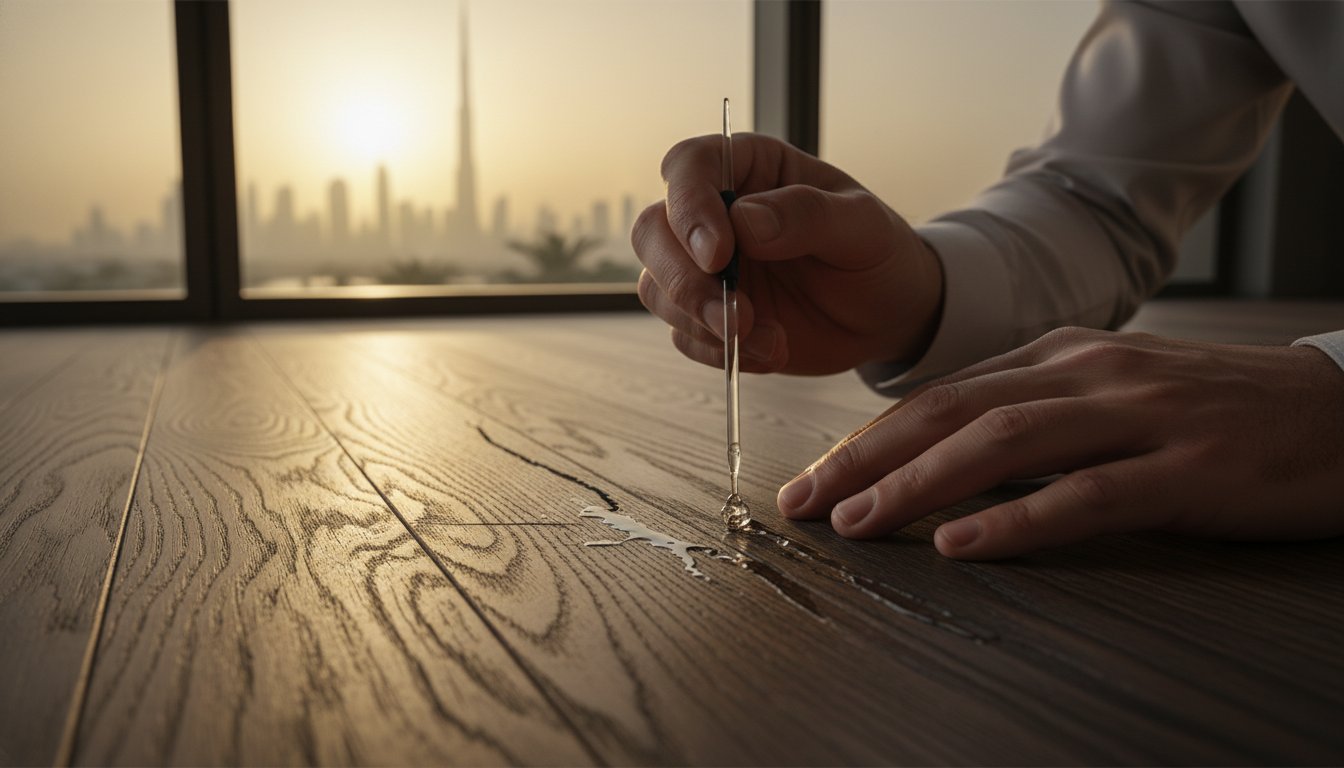
A deep gouge in your hardwood isn’t just a cosmetic flaw; it’s a structural vulnerability that can lead to moisture ingress and rot if you don’t rectify it properly. While new floor installation costs between $6 and $25 per square foot as of April 2026, most surface damage doesn’t require such a costly endeavor. You likely fear that a visible patch will ruin your room’s aesthetic or that you’ll never accurately match the complex wood grain and stain color.
We understand that you want a repair that is both invisible and durable. This article demonstrates how to repair deep gouge in wood floor installations using specialist resins and innovative techniques that restore the surface to its original standard. You’ll learn the specific steps to fill and finish these gaps yourself, while understanding the technical thresholds where professional intervention is required. We’ll also examine why a professional repair lasting up to 20 years provides superior financial value compared to a three to five year DIY fix. This guide ensures you make an intelligent, cost-effective decision for your property’s long term health and visual appeal.
Key Takeaways
- Utilize the fingernail test to determine if the impact has penetrated the polyurethane layer and requires structural restoration.
- Learn the precise sequence of how to repair deep gouge in wood floor surfaces using wax sticks and specialist resins for a durable finish.
- Understand why professional grain-mapping and color matching prevent the “patchwork effect” that often devalues DIY projects.
- Evaluate the significant cost savings of targeted restoration, which typically costs a fraction of a full floor replacement.
- Discover why specialist resins offer a 15 to 20 year lifespan, far exceeding the three to five year durability of standard retail fillers.
Assessing the Damage: Is it a Surface Scratch or a Deep Gouge?
Accurately identifying the severity of floor damage is the first step toward a successful restoration. A surface scratch only affects the top coat, but a deep gouge penetrates the protective polyurethane and physically removes wood fibers. To determine the depth, use the “Fingernail Test.” If your nail catches in the groove, the damage has reached the timber itself. This level of impact compromises the integrity of the Wood flooring, creating a pathway for moisture to enter. Once the seal is broken, everyday cleaning liquids or spills can seep into the grain, causing localized swelling and permanent discoloration.
Leaving these gouges unaddressed often leads to wood rot or structural instability. The repair approach varies based on the material. Solid hardwood allows for deeper sanding, whereas engineered wood has a limited wear layer, often only 3mm to 6mm thick. Laminate is different; it’s a photographic layer over high-density fiberboard. Once gouged, it can’t be sanded and requires specific resin-based fillers to mimic the pattern without compromising the core. Professional assessment ensures you don’t accidentally sand through the thin veneer of an expensive engineered plank.
The Impact of the UAE Climate on Wood Damage
In regions like Dubai, humidity levels often fluctuate between 40% and 90% throughout the year. This extreme variation causes significant expansion and contraction in timber. Cheap retail fillers lack the elasticity to cope with these movements. They frequently pop out within months of application, leaving the wood exposed again. The transition from high-humidity outdoors to intense indoor air conditioning creates unique structural stress. You might notice “splintering” around the edges of a gouge. This indicates the wood is under tension and requires a flexible, professional-grade restoration compound rather than a rigid DIY paste to prevent further cracking.
When DIY is Sufficient vs. When Restoration is Required
Understanding how to repair deep gouge in wood floor installations involves recognizing technical limits. We apply the “2mm rule.” If a gouge is deeper than 2mm, standard wood putty is likely to crack or fail. It simply cannot bond structurally with the surrounding grain at that depth. Location also dictates the strategy. A gouge in a high-traffic entrance hall is a trip hazard and a magnet for dirt. Damage in a low-visibility corner might be a candidate for a simple wax stick. Consider the grain complexity too. If the wood has a multi-tonal pattern like walnut or reclaimed oak, basic home kits will create a flat, opaque patch. Professional restoration uses grain-mapping and specialist resins to ensure the repair is invisible. According to data from September 25, 2025, a professional repair on a deep gouge can last 15 to 20 years, whereas a DIY patch typically fails within 3 to 5 years.
Step-by-Step DIY Repair for Moderate Wood Floor Gouges
Successful DIY restoration begins with meticulous preparation. You must first remove all loose wood fibers and debris that prevent bonding agents from adhering to the timber. Use a fine-bristled brush to clear the cavity, followed by a light wipe with mineral spirits. This process degreases the area and ensures a clean substrate. If you leave dust or oils behind, the filler will eventually delaminate, forcing a more expensive professional intervention later.
Choosing the correct material is the next technical hurdle. For moderate damage, you generally select between three options:
- Wax Sticks: Best for low-traffic areas; these stay somewhat flexible and are found in kits like the picobello Flooring Repair Kit, which costs approximately $50.49.
- Wood Putty: A common choice that dries hard, though it’s prone to shrinking as moisture evaporates.
- Shellac or Burn-in Sticks: These require a heat tool to melt the resin into the gouge, providing a much harder and more durable finish.
When learning how to repair deep gouge in wood floor planks, always overfill the void slightly. Most retail fillers lose volume during the curing process. By leaving a small “mound” of material, you ensure the repair remains flush with the floor once it fully hardens. Level the area using a plastic scraper rather than a metal putty knife; metal tools often cause secondary scratching that requires additional sanding to rectify.
Color Matching and Grain Blending
Rarely does a single filler shade match your floor perfectly. You’ll likely need to mix two or three colors to achieve a custom match. Perform a “wet test” by dabbing a small amount of mineral spirits onto your mixed filler; this reveals the final color it’ll reach once a topcoat is applied. For an invisible result, use a fine-tip artist brush to draw subtle grain lines over the dried filler. This breaks up the flat appearance of the patch and mimics the natural variation of the wood. If the damage is too extensive for these basic methods, you may need expert surface restoration to ensure a seamless finish.
Sealing the Repair for Longevity
The final step is protecting your work with a high-quality topcoat. Water-based polyurethanes dry quickly, which is beneficial in the high-heat UAE climate where dust contamination happens fast. However, oil-based options often provide a richer depth for older floors. Use a “feathering” technique with your applicator, starting from the center of the repair and lightly stroking outward into the original finish. This eliminates hard edges. In the UAE, avoid applying thick layers during peak afternoon heat; extreme temperatures can cause the finish to bubble or cloud. Allow at least 24 hours of drying time before permitting foot traffic, as labor accounts for up to 80% of floor restoration costs and you don’t want to repeat the process due to premature wear.
The Risks of Improper DIY on Deep Floor Gouges
Improper execution of how to repair deep gouge in wood floor surfaces often creates more financial liability than the initial damage. Standard wood putty is designed for minor nail holes rather than significant structural voids. These fillers are typically rigid and lack the adhesive properties to bond permanently with deep timber fibers. The material frequently cracks and falls out within months, especially in environments with variable humidity. When a filler fails, it leaves the wood exposed to further degradation, often requiring a more extensive and costly restoration later.
The “Patchwork Effect” is another significant risk for property owners. Homeowners often struggle to match the exact species and stain, leading to opaque, flat spots that disrupt the natural light reflection of the plank. This visual inconsistency can decrease property value during a resale, where new hardwood installation has a return on investment of 118% according to April 17, 2026 data. Chemical incompatibility is a frequent issue; many retail touch-up kits contain solvents that react aggressively with professional UV-cured finishes. This causes the surrounding area to bubble or peel. Correcting these failed DIY attempts requires technicians to spend extra hours excavating the incorrect materials. Since labor accounts for up to 80% of floor refinishing costs (May 23, 2025), these extra hours significantly increase the final invoice.
Structural Integrity and Moisture
An unsealed gouge is an open wound in your flooring. When you mop, cleaning liquids seep directly into the wood core. This localized moisture absorption causes the wood to swell, leading to “crowning” where the edges of the plank sit higher than the center. In extreme cases, this trapped moisture facilitates mold growth in the subfloor. A professional repair creates a hermetic seal that prevents these structural failures. While a three year DIY patch often leaves the timber vulnerable to rot, a professional restoration is expected to last 15 to 20 years.
Aesthetic Discontinuities in Commercial Spaces
For the hospitality and retail sectors, visible floor damage directly impacts brand perception. A poorly executed patch suggests a lack of attention to detail. In high-traffic environments, DIY fillers quickly fail under the mechanical pressure of heavy luggage trolleys or high heels. Understanding the risks associated with how to repair deep gouge in wood floor damage is vital for property managers who must meet strict construction handover standards. Professional restoration costs between $5 and $8 per square foot for deep gouges (April 30, 2025). This is a minor investment compared to the $10 to $16 per square foot cost of replacing damaged planks. Choosing a seamless, resin-based repair ensures the floor meets the technical requirements of high-use commercial zones.

Advanced Surface Restoration: How Professionals Rectify Deep Damage
Professional restoration is a technical discipline that goes far beyond cosmetic patching. When determining how to repair deep gouge in wood floor installations, our technicians initiate a systematic damage assessment. This process identifies the specific wood species and the original chemical composition of the finish. Whether dealing with solid walnut or an engineered plank with a thin 3mm wear layer, identifying the substrate is vital. This precision ensures that the restoration materials bond permanently without causing delamination or chemical rejection from the existing factory coating.
Precision leveling is the hallmark of a master craftsperson. We use specialized tools to ensure the repaired area is perfectly flush with the surrounding timber. Unlike DIY attempts that often leave a “bump” or a hollow, professional restoration achieves a seamless transition that’s undetectable to the touch. This level of accuracy is essential for maintaining the structural integrity of the floor and preventing future trip hazards in high-traffic commercial or residential zones.
The Specialist Resin Advantage
Retail wood fillers often contain high water or solvent content, causing them to shrink by up to 20% as they cure. We utilize specialist resins featuring non-shrink formulas that bond molecularly with the wood fibers. These compounds are engineered to be UV-stable, a critical requirement for properties in Dubai where intense sunlight can cause standard fillers to yellow or fade within 12 months. We also match the resin’s hardness to the specific Janka rating of your timber. This ensures the repair has the same “give” as the surrounding wood, preventing it from cracking when subjected to the pressure of heavy furniture or foot traffic.
Innovative Finishing Techniques
Once the structural repair is complete, we employ grain mapping to replicate the unique texture of the wood. This involves hand-drawing the grain lines over the resin to ensure a 100% invisible finish. For heritage properties, we can even replicate “distressed” or “aged” textures to maintain the floor’s historical character. We offer various sheen levels, from a 10% matte to a 90% high-gloss finish, achieved through on-site spray-finishing or hand-buffing. This targeted approach rectifies the damage without the mess and disruption of sanding the entire room, which typically costs between $5 and $8 per square foot. If you require a flawless result that protects your property value, consider our professional wood floor repair services to restore your surfaces to their original standard.
Repair vs. Replacement: The Intelligent Financial Choice
Choosing between targeted restoration and full replacement is a critical financial decision for property owners. While installing new hardwood flooring ranges from $6 to $25 per square foot as of April 17, 2026, professional restoration focuses only on the damaged zone. Understanding how to repair deep gouge in wood floor installations efficiently allows you to avoid the “domino effect” of construction. Replacing even a few planks often requires removing skirting boards, relocating heavy furniture, and potentially repainting walls. These secondary tasks inflate the project budget and extend the timeline from hours to days. By choosing to rectify specific damage, you maintain the property’s aesthetic value while achieving significant financial benefits.
Sustainability is another key factor in this decision. Restoring existing high-quality timber reduces environmental waste and preserves the original character of the building. In many cases, older timber has a grain density and patina that modern replacements cannot replicate. Our innovative techniques ensure that the original materials are preserved, which is a far more intelligent choice than uplifting an entire floor for localized damage. This approach keeps high-quality timber out of landfills and maintains the structural continuity of the room.
Calculating the ROI of Professional Repair
In our professional experience, achieving savings to the client of 50% to 80% is normal practice compared to the total cost of floor replacement. For the UAE’s hospitality and retail sectors, the primary benefit is minimal disruption. A hotel lobby or retail outlet cannot afford to close for a week of sanding and installation. We complete most deep gouge repairs in a single session, allowing the business to remain operational. This efficiency respects the time of busy commercial clients and ensures that surface damage doesn’t translate into lost revenue. Since labor can account for up to 80% of the total cost of a refinishing project, targeted repairs provide the highest return on investment.
Next Steps: Securing a Professional Assessment
The first step in restoration is an accurate damage assessment. To receive a remote quote, photograph the gouge from several angles. Include one shot with a coin or ruler next to the damage for scale; this allows our technicians to determine the depth and wood species before arriving on-site. During a professional assessment, we identify the original finish and select the specialist resins required for a molecular bond. If you want to restore your surfaces to an exceptional quality, you can Request a professional floor restoration quote from The Solution today. Our fully trained technicians provide affordable repair solutions that renew your flooring without the need for a costly endeavor.
Protecting Your Flooring Investment
A deep gouge doesn’t mean your entire floor requires replacement. By choosing targeted restoration over a full installation, you typically achieve savings to the client of 50% to 80%. Our fully trained technicians across Dubai and the UAE utilize specialist resin technology to rectify damage that standard retail products can’t handle. These innovative compounds bond molecularly with the timber, ensuring an invisible finish that withstands heavy traffic for years.
Understanding how to repair deep gouge in wood floor installations is the difference between a failed DIY patch and a professional result that lasts up to 20 years. We provide meticulous damage assessment and precision grain-mapping to ensure your surfaces return to their original standard without the disruption of a major construction project. It’s an intelligent financial decision that preserves the aesthetic and structural integrity of your property.
Take the pragmatic step for your property today. Restore your wood floor to its original beauty, contact The Solution today. Your flooring is a significant asset; we’re here to help you preserve it with technical mastery and reliable craftsmanship.
Frequently Asked Questions
Can a deep gouge in a wood floor be fixed without sanding the whole room?
Yes, localized restoration is the preferred method for addressing specific damage without the disruption of full sanding. Technicians utilize on-site finishing techniques to match the sheen and grain of the surrounding area. This approach avoids the dust and debris associated with traditional refinishing projects. It’s an efficient way to rectify damage in busy commercial or residential environments while maintaining the original floor’s integrity.
How much does it cost to professionally repair a deep gouge in wood flooring?
Professional repair costs typically range from $25 to $75 per gouge, with labor rates between $50 and $150 per hour as recorded in September 2025. Total project costs vary based on the number of impacts and the wood species involved. This targeted approach remains significantly more affordable than full floor replacement, which homeowners often find costs between $10 and $16 per square foot for materials and installation.
What is the difference between wood filler and professional restoration resin?
The main difference is the material stability and bonding capability. Standard wood fillers often shrink by up to 20% during the drying process, which causes them to crack and fall out of deep voids. In contrast, specialist resins are non-shrink formulas that bond molecularly with the wood fibers. These compounds offer superior durability and color stability, especially in the high-heat environments common in the UAE.
How long does a professional wood floor repair last in high-traffic areas?
You can expect a professional repair to last 15 to 20 years, even in high-traffic zones like hotel lobbies or retail entrances. This durability is achieved through the use of industrial-grade resins that match the Janka hardness rating of the original timber. While a DIY fix for how to repair deep gouge in wood floor surfaces may fail within three years, professional restoration provides a long term structural solution.
Can you match the grain of exotic woods like Teak or Iroko?
Technicians can accurately replicate the grain patterns of exotic species such as Teak, Iroko, or Mahogany. This is achieved through a process called grain-mapping, where the unique textures and multi-tonal shades are hand-drawn over the resin base. This meticulous approach ensures that the repair remains invisible even under the intense, direct sunlight often found in Dubai properties.
Is it possible to repair deep gouges in engineered wood floors?
It’s entirely possible to repair deep gouges in engineered wood floors without damaging the thin wear layer. Because engineered wood often has a veneer between 3mm and 6mm, aggressive sanding is risky. Resin-based restoration fills the void structurally without removing the remaining wood. This technique is the safest way to address how to repair deep gouge in wood floor damage on prefinished or engineered surfaces.
What happens if I leave a deep gouge in my wood floor unrepaired?
Leaving a gouge unrepaired exposes the raw timber to moisture, cleaning chemicals, and dirt. This leads to localized swelling, crowning, and eventually wood rot or mold growth in the subfloor. Since new hardwood installation has a return on investment of 118% at resale according to April 2026 data, maintaining the floor’s health is a vital financial priority. Promptly rectifying these impacts prevents a small flaw from becoming a total floor failure.
How soon can I walk on the floor after a professional repair?


