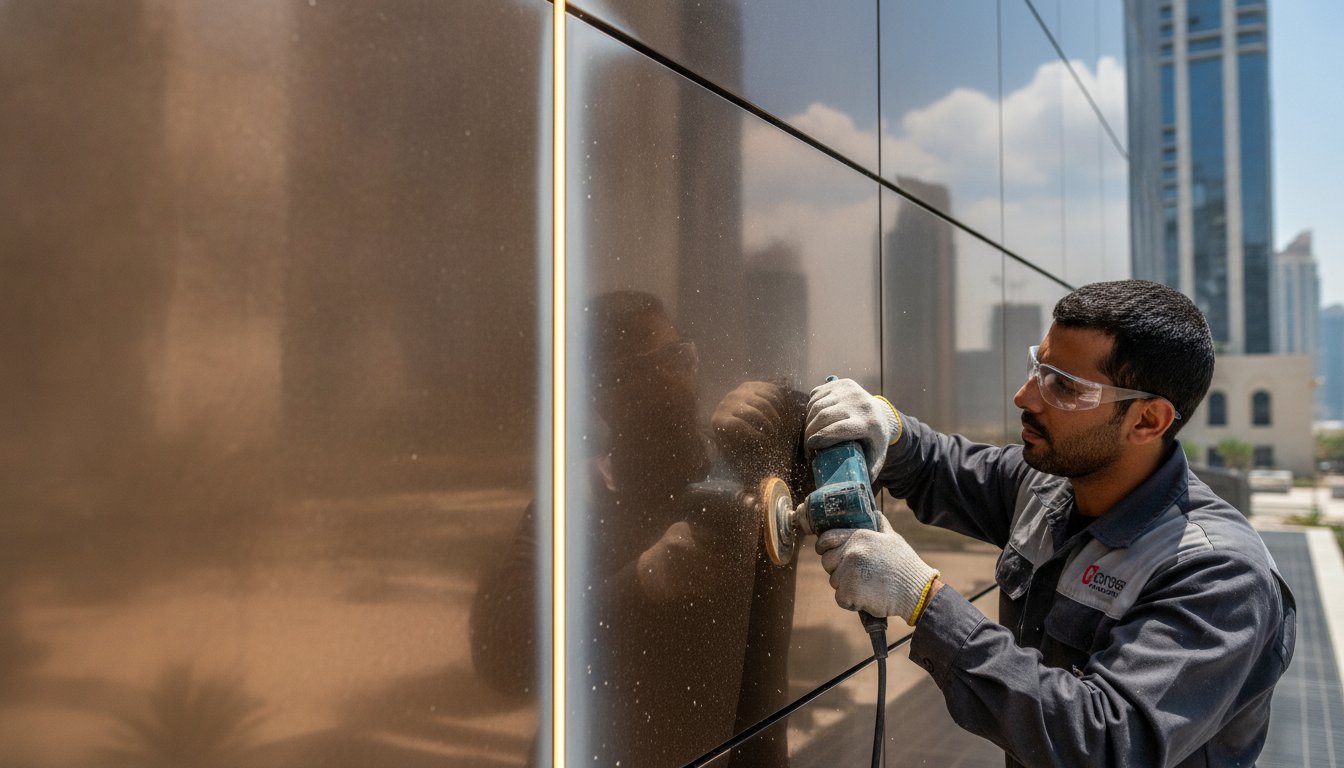
With building material costs in the Emirates surging by as much as 71% in 2026, the traditional “rip and replace” model for damaged facades is no longer a viable financial strategy. You’ve likely noticed how the UAE’s intense UV radiation and salt-heavy air quickly dull bespoke metal panels, leaving prestigious properties looking neglected. Replacing these custom elements isn’t just expensive. It’s a logistical headache that causes significant disruption to your tenants and daily operations.
Professional architectural metal restoration uae services offer a technical alternative that returns your surfaces to factory-standard finishes while eliminating the need for costly replacements. By choosing restoration, you can secure significant savings and maintain your property’s prestige without the chaos of a construction site. This 2026 reference guide explains how to navigate new regulations like Dubai’s Law No. (3) of 2026 while achieving a pristine, zero-disruption finish for your commercial assets.
Key Takeaways
- Learn why architectural metal restoration uae is a strategic financial choice, costing significantly less than full replacement by eliminating demolition and shipping fees.
- Understand the technical difference between surface cleaning and professional restoration that returns architectural alloys to their original factory standards.
- Identify common causes of metal degradation, including mechanical damage in high-traffic areas and chemical etching from improper cleaning agents.
- Discover the specialized on-site methodologies used to restore surfaces with zero disruption to building occupants or daily commercial operations.
- Explore how the “Repair over Replace” philosophy preserves the aesthetic prestige and structural integrity of modern UAE assets.
What is Architectural Metal Restoration?
Architectural metal restoration is the technical process of returning high-value metal surfaces to their original factory finish. Unlike general cleaning, which merely removes surface dust or grime, restoration addresses deep-seated defects. It involves a systematic approach to repairing physical damage, removing oxidation, and correcting chemical staining. For property managers and owners, architectural metal restoration uae is a critical maintenance strategy to preserve the Grade A prestige of their commercial assets. These interventions prevent minor aesthetic issues from evolving into structural failures that demand total replacement.
The distinction between technical repair and janitorial cleaning is significant. Cleaning is a recurring service that manages hygiene, while restoration is a specialized intervention. It requires a deep understanding of the conservation and restoration of metals to ensure that the structural integrity and aesthetic profile of the alloy remain intact. Our scope of work typically covers mechanical damage such as scratches and dents in high-traffic elevator cabs, as well as aesthetic degradation like oxidation or chemical etching caused by aggressive cleaning agents. We focus on results that restore the metal’s specific grain and reflectivity.
Key Metals Used in UAE Architecture
UAE skylines feature a diverse array of high-performance alloys that define modern luxury. Stainless steel, specifically grades 304 and 316, is the standard for modern facades and elevator interiors due to its perceived durability. In the luxury hospitality sector, bronze and brass are frequently used to create an atmosphere of opulence in lobbies and high-end retail spaces. Finally, anodised aluminium remains the preferred choice for residential and commercial cladding. Each of these materials requires a specific restoration methodology to match the original manufacturer standards without causing further damage.
The Impact of the UAE Environment on Metal
The local climate presents unique challenges for metal surfaces that aren’t found in more temperate regions. In coastal areas like Dubai Marina and Palm Jumeirah, high salinity in the air accelerates pitting and corrosion, even on treated metals. Intense UV radiation can break down protective coatings on anodised surfaces, leading to chalking and fading over time. Additionally, sand abrasion acts as a constant abrasive force, dulling polished finishes and creating micro-scratches that trap pollutants. Restoration effectively reverses this environmental wear, extending the lifecycle of the building’s exterior and interior metalwork without the disruption of construction.
Common Damages to Architectural Metal in Commercial Hubs
In the high-pressure environments of DIFC or Downtown Dubai, architectural metal faces constant physical and chemical threats. Mechanical damage is the most visible issue. Scratches and dents occur daily in high-traffic zones. Delivery trolleys in service elevators and luggage carts in luxury hotel lobbies are the primary culprits. These impacts don’t just ruin the look; they compromise the surface’s reflective quality and create catch-points for environmental grime. Over time, these small defects accumulate, making even the most prestigious lobbies look neglected.
Chemical damage is equally destructive but often self-inflicted. It’s a common mistake for general maintenance teams to use generic acidic cleaners or abrasive pads on sensitive alloys like bronze or brushed steel. This leads to permanent etching and a cloudy, mottled appearance that cleaning cannot fix. Technical experts often consult the NPS Guide to Historic Metal Preservation to understand how specific alloys react to various chemical environments. Without professional architectural metal restoration uae, these chemical burns can permanently devalue a property’s interior assets.
Exterior surfaces face environmental oxidation, specifically “tea staining” on stainless steel cladding. This brown discoloration is caused by salt deposits from the humid Gulf air. If it’s left untreated, it progresses to deep pitting and eventual structural rust. At ground level, scuff marks from footwear and bags are inevitable. If your building’s metalwork shows signs of etching or tea staining, consider a professional on-site surface damage repair assessment to prevent further degradation.
Elevator Door and Panel Restoration
Elevator interiors are arguably the most frequently damaged metal surfaces in any UAE commercial tower. They are confined spaces subject to constant impact. Restoring these requires more than just sanding. The challenge lies in addressing deep scratches in brushed stainless steel without creating “flat spots”. These are areas where the metal’s reflection becomes uneven because the grain wasn’t perfectly matched. A master craftsperson ensures the grain pattern is consistent across all panels, making the repair invisible to the naked eye.
Facade and Cladding Issues
Oxidation on exterior cladding is a precursor to structural integrity issues. In dense urban environments like Business Bay, restoring metal at height presents significant logistical challenges. It’s not just about removing the rust. The process must include a stabilization phase to stop the corrosion cycle. Once restored, these surfaces require specific protective treatments to resist the UAE’s extreme UV levels and saline atmosphere, ensuring the finish lasts for years rather than months.
Restoration vs. Replacement: A Financial Analysis
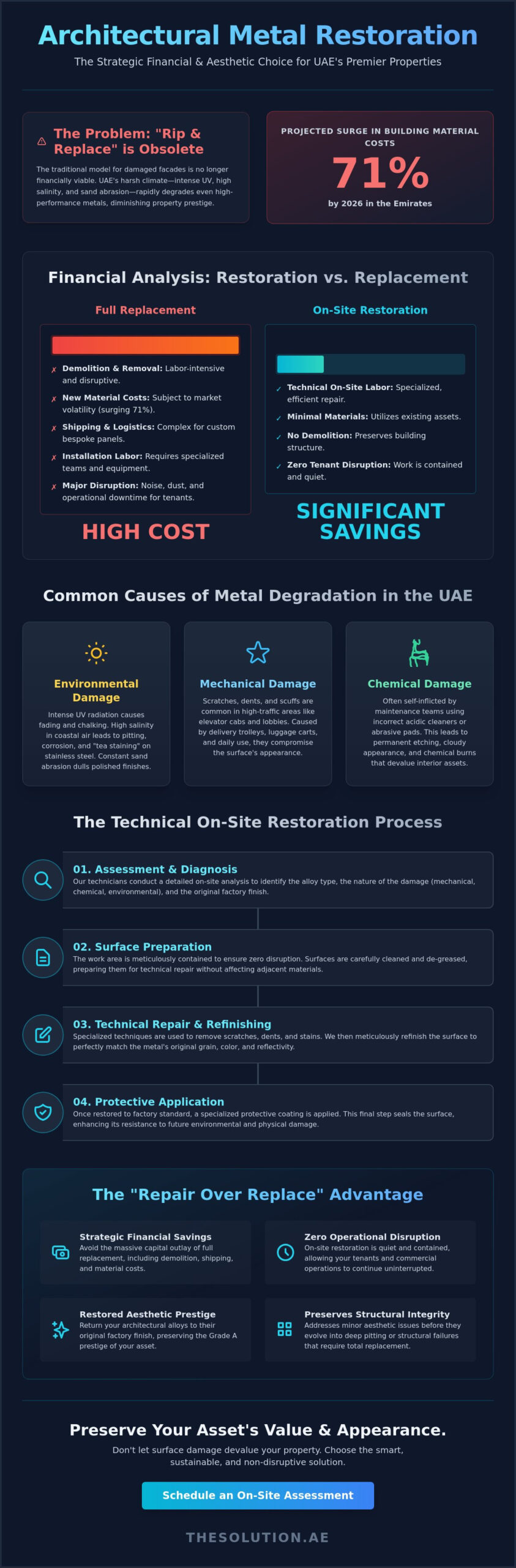
For property managers in the UAE, the decision to replace architectural metal often stems from a lack of technical awareness rather than financial necessity. Replacement is a disruptive and capital-intensive process that involves much more than the cost of new materials. When you choose replacement, you’re paying for the demolition of existing panels, international shipping for bespoke alloys, and the complex labor required for re-installation. In contrast, architectural metal restoration uae focuses on refurbishing what’s already there, bypassing these logistical hurdles entirely.
The “hidden costs” of replacement frequently cripple maintenance budgets. Beyond the invoice price, there’s the cost of operational downtime. Boarding up a lobby or closing an elevator bank for weeks impacts tenant satisfaction and building accessibility. On-site restoration eliminates this disruption. Our teams work within existing environments to deliver factory-standard finishes without the need for heavy machinery or site closures. This pragmatic approach aligns with the AIC Metal Conservation Guidelines, which advocate for minimal intervention to preserve the integrity of the original material.
Sustainability is another critical factor in this analysis. As the UAE construction market grows by an estimated 6.2% in 2026, the demand for raw materials is at an all-time high. Restoration significantly reduces a building’s carbon footprint by extending the lifecycle of existing metals. It prevents tons of high-grade alloys from entering the waste stream and avoids the energy-intensive manufacturing processes required for new fabrication.
Evaluating the Return on Investment (ROI)
Asset managers and Real Estate Investment Trusts (REITs) prioritize Net Operating Income (NOI). Restoration directly supports this goal by reducing capital expenditure. While a full replacement project might take weeks of planning and execution, professional restoration often provides a 24-hour turnaround for localized damage. This efficiency makes architectural metal restoration uae an essential tool for maintaining property value in a volatile market. On average, opting for technical restoration rather than full replacement yields a direct financial saving of approximately 80%.
When Restoration is the Only Logical Choice
Sometimes, replacement isn’t just expensive; it’s impossible. Many older commercial buildings in Dubai feature bespoke metal finishes or specific anodized shades that are no longer manufactured. Finding an exact match for a single damaged panel can be a logistical nightmare. Restoration allows for the precise color matching and grain replication of obsolete finishes. It’s also the preferred method for meeting tight deadlines during construction handovers. If you’re facing an inspection deadline, on-site surface damage repair is the fastest way to achieve compliance without the wait times associated with new fabrication.
The Technical Process: How Professional Restoration Works
Successful architectural metal restoration uae begins with a rigorous technical assessment. Our master craftspeople first identify the specific alloy and its original factory finish. This step is vital because the restoration methodology for a 316-grade stainless steel panel differs significantly from that of a brushed bronze interior. Once the material properties are confirmed, we move to preparation. This involves meticulous masking of all adjacent surfaces. We use specialized tapes and barriers to protect surrounding glass, stone, and wood, ensuring that the restoration process doesn’t compromise other high-value architectural elements.
The core of the restoration involves a series of controlled abrasive stages. Instead of aggressive grinding, we utilize stepped sanding. This technique involves progressively finer grits to remove surface defects like scratches or chemical etching while carefully maintaining the original geometry of the metal. If you remove too much material or apply uneven pressure, you risk warping the surface or creating waves that catch the light. Precision is the priority here. We focus on removing only the damaged layer to reveal the pristine metal beneath.
Precision Graining and Polishing
Recreating the original finish is the most technically demanding phase. Whether the surface is brushed, mirrored, or satin, the repair must be invisible. We use specialized, spark-free tools designed for safe operation within occupied commercial spaces. The challenge lies in matching the exact grit and direction of the original grain. Our technicians blend the repaired section into the surrounding area, ensuring a seamless transition. This level of detail is what separates professional restoration from amateur attempts that often leave visible “patch” marks on the metal.
Protective Coatings and Finishing
Once the metal is restored to its factory standard, it requires immediate protection. Freshly exposed metal is highly reactive, especially in the UAE’s humid environment. We apply technical clear coats or specialized waxes to seal the surface and prevent immediate re-oxidation. For high-touch areas like elevator buttons and handrails, we often recommend nano-coatings. These advanced treatments reduce fingerprinting and provide an extra layer of resistance against future mechanical wear. To maintain these results, we provide facility management teams with specific maintenance protocols that avoid the harsh chemicals mentioned in previous sections. For a detailed consultation on your property’s needs, contact our experts for stainless steel finish restoration services.
The Solution: UAE’s Leader in Architectural Metal Restoration
The Solution is the definitive choice for architectural metal restoration uae, providing a technical alternative to the high costs and long lead times of fabrication. Our business is built on a “Repair over Replace” philosophy. This approach prioritizes the restoration of existing assets to factory standards, ensuring property managers can maintain Grade A aesthetics without the capital expenditure of new materials. We don’t view restoration as a cosmetic fix. We view it as a strategic asset management decision that preserves the prestige of UAE properties while respecting maintenance budgets.
Our technical mastery is required for the most complex challenges in the region. We handle a diverse range of materials including stainless steel, bronze, and metal surfaces situated next to high-value glass. Our personnel undergo rigorous training to ensure they can replicate original manufacturer finishes on-site. This specialized skill set is essential for sectors like high-end hospitality, where the visual standard of every elevator door and lobby feature must be flawless. We also serve the marine and construction sectors, where environmental exposure and site damage require rapid, professional intervention.
Why Leading UAE Firms Trust The Solution
Leading firms across the Emirates rely on our expertise during the critical construction handover phase. It’s common for bespoke metal panels to suffer scratches or dents during final installation. We provide on-site surface damage repair that ensures these assets meet inspection standards without delaying the project timeline. Our teams are also experts at working within occupied spaces. Whether it’s a luxury hotel or a busy corporate office, we perform repairs with minimal disruption. We don’t generate the noise or dust associated with traditional construction, allowing your business to remain fully operational while we restore your finishes.
Get a Professional Assessment Today
Maintaining the value of your architectural assets requires a proactive approach. The Solution offers a structured assessment process for commercial properties across the UAE. Our master craftspeople conduct an on-site survey to identify the specific alloys and the extent of the damage. Following this assessment, we provide a detailed and transparent restoration quote that highlights the cost savings over replacement. We believe in clear communication and results-oriented service. If your property’s metalwork shows signs of wear, oxidation, or mechanical damage, Contact The Solution for a professional metal restoration assessment to secure a factory-standard finish for your asset.
Securing the Future of Your Architectural Assets
Maintaining the visual integrity of high-value metalwork is an essential component of modern asset management. Technical restoration proves that you don’t need to accept the high costs or long lead times of full replacement. By addressing environmental oxidation and mechanical damage through specialized on-site processes, you preserve the prestige of your property while achieving significant financial savings. This approach ensures your stainless steel and bronze surfaces remain in factory-standard condition without the disruption of a construction site.
The Solution is the trusted partner for major UAE developers and facility managers who demand technical mastery and zero downtime. Our craftspeople specialize in architectural metal restoration uae, delivering results that meet the highest commercial standards. It’s time to move beyond the “rip and replace” mentality and choose a pragmatic, results-oriented maintenance strategy. Request a Professional Metal Restoration Quote today to protect your investment and restore the original brilliance of your building’s metalwork. Your assets deserve a finish that reflects the quality of your brand.
Frequently Asked Questions
Can deeply scratched stainless steel elevator doors be fully restored?
Yes, deeply scratched stainless steel can be returned to its original factory finish through a series of stepped abrasive stages. We remove the damaged layer of metal and re-grain the surface to match the surrounding area perfectly. This process is highly effective for removing mechanical damage caused by delivery trolleys or luggage carts without the need for expensive panel replacement.
How long does architectural metal restoration typically take?
Most on-site restoration projects are completed within 24 to 48 hours depending on the depth of damage and the total surface area. For instance, a single elevator cab interior can often be fully restored in one working shift. This rapid turnaround is a primary advantage of architectural metal restoration uae, as it avoids the weeks of downtime associated with sourcing and installing new bespoke panels.
Is it possible to match the original grain of brushed metal on-site?
Yes, matching the original grain and grit of brushed metal is a standard part of our technical process. We utilize specialized tools and specific abrasive pads to replicate the linear or circular patterns found on factory-finished alloys. This precision ensures the repaired section blends seamlessly with the rest of the surface, making the intervention invisible to building occupants and visitors.
What types of architectural metals can be repaired in the UAE?
We restore a wide array of high-performance alloys including stainless steel (grades 304 and 316), bronze, brass, and anodized aluminum. These materials are frequently found in UAE facades, cladding, and luxury hospitality interiors. Our master craftspeople identify the specific alloy and its properties before beginning work to ensure the correct mechanical and chemical methodology is applied for that specific material.
Is restoration more sustainable than replacing metal panels?
Restoration is significantly more sustainable because it extends the lifecycle of existing assets and prevents high-grade alloys from entering the waste stream. By refurbishing existing panels, you avoid the carbon-intensive manufacturing and international shipping processes required for new metal fabrication. This practice directly supports the UAE’s commitment to green building standards and circular economy principles in the construction sector.
Does metal restoration create a lot of dust or noise in a lobby?
Our restoration process is designed for minimal disruption and generates very little noise or dust. We use specialized extraction systems and thorough masking techniques to contain any debris and protect the surrounding environment. This allows our teams to work in active lobbies or occupied commercial buildings without disturbing hotel guests, office tenants, or daily business operations.
Can you restore metal that has been damaged by harsh cleaning chemicals?
Yes, metal surfaces showing signs of chemical etching or clouding can be fully restored. Aggressive acidic cleaners often leave permanent marks on sensitive alloys like bronze or brushed steel. We use technical abrasive stages to remove the chemically damaged layer and reveal the pristine metal underneath. We then apply a protective coating to prevent future staining and maintain the finish.
How often should architectural metal be professionally restored in coastal UAE areas?
In coastal zones like Dubai Marina or Abu Dhabi’s Corniche, we recommend a professional assessment every 12 to 24 months. High salinity and humidity in these areas accelerate “tea staining” and pitting on exterior cladding. Regular architectural metal restoration uae maintenance prevents minor oxidation from becoming deep corrosion, which saves significant capital expenditure on long-term structural repairs.


