
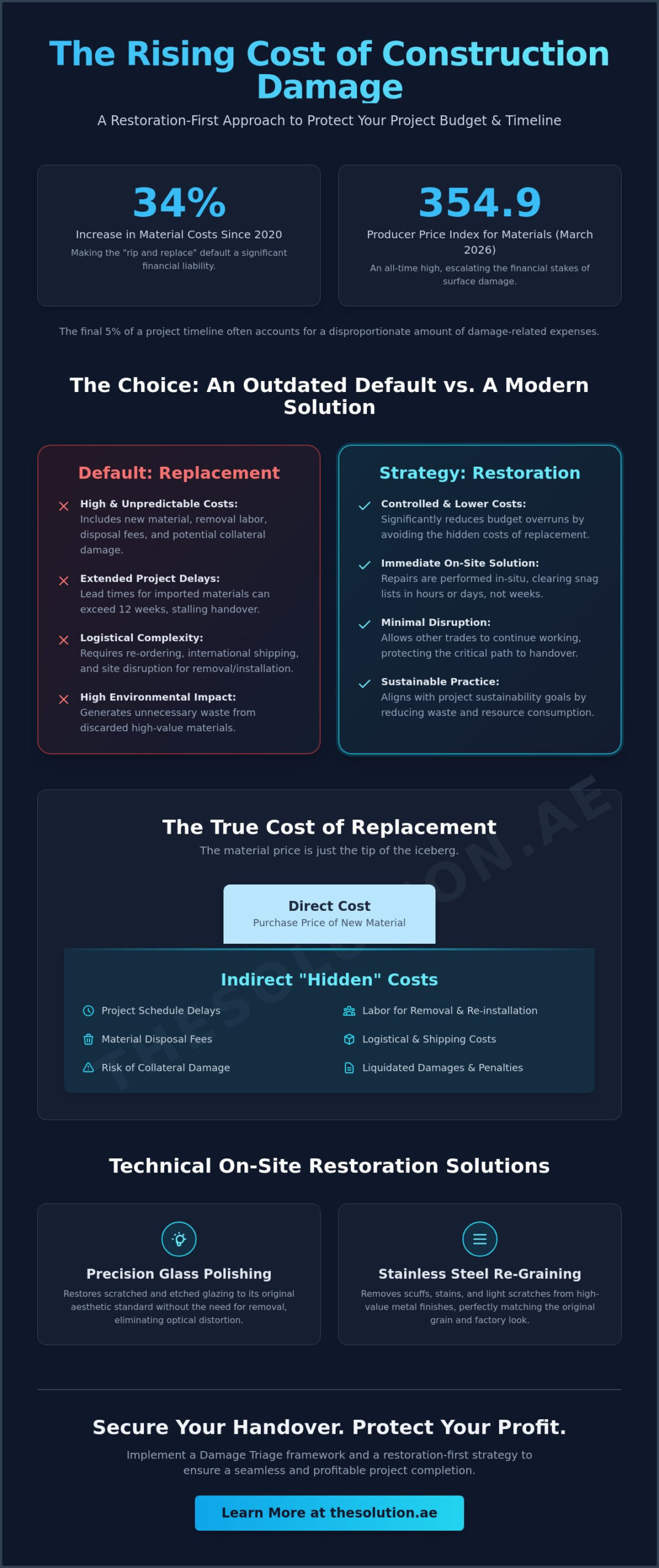
With the Producer Price Index for construction materials hitting an all-time high of 354.9 in March 2026, the financial stakes of surface damage have never been higher. Managing construction damage costs is no longer just a line item; it’s a critical logistical challenge that can derail a project’s final phase. You’re likely all too familiar with the frustration of seeing luxury materials damaged just before handover, knowing that replacements mean long lead times and budget overruns. Since 2020, material costs have climbed 34%, making the default “rip and replace” mentality a significant liability for your bottom line. This article shows you how to significantly reduce project budget overruns by implementing a restoration-first approach to construction surface damage. We’ll explore how technical on-site repair for glass, stainless steel, and wood can clear snagging lists faster while maintaining the high aesthetic standards your clients expect. This guide provides a pragmatic framework for choosing specialized repair over replacement to ensure a seamless and profitable project handover.
Key Takeaways
- Implement a “Damage Triage” framework to categorize site defects early and maintain clear subcontractor accountability throughout the project lifecycle.
- Discover the strategic benefits of managing construction damage costs by prioritizing professional restoration over the high price and long lead times of material replacement.
- Learn how precision glass polishing and stainless steel re-graining restore high-value surfaces to original aesthetic standards without the need for removal.
- Understand the indirect financial impact of replacement, including the hidden expenses of labor for removal, disposal fees, and logistical disruptions.
- Ensure a seamless handover by utilizing specialized repairs that meet the most stringent consultant inspections and support project sustainability goals.
The Financial Impact of Surface Damage in Modern Construction
Handover represents the most volatile period for any commercial project budget. While many site managers view damage as an inevitable byproduct of construction activity, effectively managing construction damage costs requires a shift from passive acceptance to active technical mitigation. In this context, costs aren’t just the price of a single piece of glass or a stone tile. They encompass the total financial burden of rectifying defects to meet a client’s exacting standards before the final certificate is signed. This includes the administrative overhead of managing snags and the potential for withheld payments.
The final 5% of a project timeline often accounts for a disproportionate amount of damage-related expenses. High-value finishes are most exposed during this window. Scratched glazing, scuffed stainless steel, and chipped joinery occur precisely when the site is most congested with finishing trades. Applying Cost engineering principles to this phase reveals that the expense of replacing a bespoke component often exceeds the original installation cost by several multiples. You aren’t just paying for the material. You’re paying for the logistics of re-ordering, the specialized labor for removal, and the risk of collateral damage during the replacement process.
Relying on a “replace-by-default” mindset is an outdated strategy that ignores the ripple effects on project timelines. When a critical path item like an imported glass panel is damaged, the lead time for a replacement can stretch into weeks. This delay can trigger liquidated damages and stall the entire handover sequence. Strategic restoration offers a pragmatic alternative. It allows you to maintain the schedule while ensuring the aesthetic integrity of the build.
Common Sources of Damage During the Handover Phase
- Mechanical Impact: Scissor lifts, scaffolding, and moving heavy furniture often leave deep gouges or dents in finished surfaces.
- Chemical Etching: Post-construction cleaning crews sometimes use aggressive acids or abrasive pads that can permanently stain or dull sensitive stone and metal.
- Environmental Scratches: High-traffic fit-outs lead to accidental surface abrasions when protective coverings are removed too early.
The True Cost of Snagging List Delays
Unresolved defects on a snagging list do more than look bad. They prevent the issuance of final payment certificates. Every day a contractor remains on-site to manage a replacement is a day of unrecoverable overhead. Site presence costs mount quickly. Beyond the immediate cash flow impact, failing to deliver a pristine finish damages your reputation with developers. High-end commercial clients expect technical mastery. They don’t want to hear about logistical delays or lead times for imported materials. Professional on-site restoration ensures you meet those expectations without the financial drain of full replacement.
Decoding the True Cost: Replacement vs. Professional Restoration
When analyzing the financial feasibility of a project, the decision between replacement and restoration often hinges on a misunderstanding of direct costs. While the purchase price of a new material might seem comparable to a specialized repair fee, the direct cost is merely the tip of the iceberg. Managing construction damage costs effectively requires looking at the total cost of ownership for a defect. This includes the labor for removal, the logistical burden of re-installation, and the environmental fees associated with disposing of damaged high-value materials.
The indirect costs of replacement frequently dwarf the material price. Removing a damaged component often risks collateral damage to surrounding finished surfaces, creating a cycle of additional repairs. Furthermore, the construction industry saw a 34% increase in material costs since December 2020. This inflation makes the “rip and replace” strategy an expensive gamble. Restoration, by contrast, is performed in situ. It eliminates the need for heavy machinery or the disruption of existing structures, allowing other trades to continue their work without interruption.
The Logistics of Replacement in the UAE
In the UAE, the logistical hurdles of replacement are particularly acute. Procurement for high-end materials often involves international shipping with lead times that can exceed twelve weeks. If you’re working with imported architectural glass or specialized stone in Dubai, a single breakage can halt progress for an entire floor. There’s also the significant risk of batch mismatch. Replacing a single damaged panel in a run of stainless steel or stone can result in visible variations in grain, shade, or texture. Technical restoration ensures a perfect aesthetic match by working with the existing material rather than introducing a new, potentially inconsistent batch.
Calculating ROI on Technical Repairs
On average, professional on-site restoration delivers a cost saving of approximately 70% to 80% compared to the total expense of full replacement. Beyond the immediate invoice, the real return on investment comes from avoiding liquidated and ascertained damages (LADs). When a project is nearing handover, every day of delay caused by a late-arriving replacement part translates into heavy financial penalties. Contractors who prioritize on-site surface damage repair often find they can close out projects with significantly higher margins. Consider a scratched glass facade: replacing the structural unit requires cranes, road closures, and weeks of planning. Professional glass polishing achieves the same visual result in a fraction of the time, keeping the project on schedule and the budget intact.
Strategic Damage Mitigation: A Proactive Management Framework
Effective cost management requires a structured on-site framework rather than a reactive scramble during the final week of a project. By implementing a proactive triage system, site managers can gain control over managing construction damage costs before they escalate into significant budget overruns. This framework relies on early identification, precise documentation, and the integration of restoration specialists into the master project schedule. Waiting until the snagging list is a hundred items long is a tactical error that leads to bottlenecks and delayed handovers.
Documentation is the foundation of accountability. Every instance of surface damage should be logged with high-resolution photography and mapped to the specific subcontractor active in that area. This data doesn’t just help in recovering costs; it changes site behavior. When subcontractors know that surface defects are tracked and billed back, they tend to exercise greater care around finished surfaces. Establishing a partnership with a restoration expert early in the build allows you to set clear benchmarks for what constitutes an acceptable repair versus an essential replacement.
The Triage Process: Is it Repairable?
Determining the feasibility of a repair requires technical assessment rather than guesswork. For glass surfaces, the “fingernail test” is a basic indicator. If a scratch is deep enough to catch a nail, it requires professional mechanical polishing to restore optical clarity. For stone or ceramic, we evaluate whether the damage is a superficial scuff or a structural chip. A professional on-site surface damage repair assessment provides a definitive answer, preventing the wasted time of ordering a replacement for a defect that could be restored in hours. We focus on aesthetic restoration that meets the most rigorous consultant inspections while ensuring the material’s integrity remains intact.
Minimizing On-Site Disruption
Maintaining site productivity is essential when managing construction damage costs. Professional restoration doesn’t have to mean shutting down a work zone. We utilize dust-free polishing and extraction systems for materials like marble and glass, allowing other trades to continue their work in the immediate vicinity. Scheduling repairs during off-peak hours or night shifts further minimizes the impact on the critical path. Our technicians are trained to follow strict HSE protocols and site safety standards, ensuring that technical mastery never comes at the expense of project safety or logistical efficiency. This structured approach keeps the handover process moving forward without the friction of traditional replacement methods.
Technical Restoration of High-Value Construction Materials
Technical mastery is the primary differentiator when managing construction damage costs. It isn’t enough to simply cover a defect; the restoration must be invisible to the naked eye and withstand the scrutiny of a final handover inspection. Modern restoration techniques allow for the precision repair of high-value materials that were previously considered unfixable. This technical capability shifts the financial burden from high-cost replacement to efficient, on-site recovery. By focusing on the specific properties of each material, we ensure that the repaired surface is as durable as the original.
Specialized Glass and Mirror Restoration
Glass is one of the most frequently damaged materials on a commercial site. Weld splatter, deep scratches from heavy cleaning, and accidental abrasions can ruin the optical clarity of expensive glazing. Our technicians use a multi-stage mechanical polishing process to remove these defects without creating optical distortion or lensing. We maintain the structural integrity of tempered and laminated glass by carefully managing heat buildup during the polishing phase. This process is essential for large-scale facades where replacement is logistically impossible. For a deeper look at these technical processes, see our definitive guide to glass polishing.
Stainless Steel and Metal Finish Recovery
Architectural metalwork, particularly elevator doors and panels, is prone to scuffs and oxidation in high-traffic zones. Unlike a simple cleaning, professional restoration involves re-graining the metal to match the original factory finish. We address chemical staining and deep scratches on brushed or polished stainless steel without removing the panels from the site. This avoids the logistical nightmare of dismantling elevator cars or sourcing replacement panels that might not match the existing batch. You can find detailed methodologies in our stainless steel finish restoration guide.
Luxury Stone and Tile Snagging
Luxury flooring like marble, granite, and porcelain often suffers from chips or cracks during the final fit-out. We use advanced color-matching resins and technical polishing to perform invisible repairs. By replicating the natural veining and luster of the stone, we eliminate any evidence of the original damage. This process is significantly faster than cutting out and replacing tiles, which often results in damage to the surrounding grout or underfloor heating systems. Our ceramic and tile repair guide outlines how we achieve these seamless results.
Our expertise also extends to high-end joinery, where we fix dents and burns in wood and laminate surfaces. This comprehensive approach to managing construction damage costs ensures that every finish on your site meets the highest aesthetic standards. If you’re facing a complex snagging list, request a technical assessment of your site damage to see how professional restoration can protect your project budget.
Leveraging Expert Restoration to Secure Handover Approval
Handover approval is the final hurdle in any commercial project. Effectively managing construction damage costs means ensuring that every repaired surface passes the most rigorous consultant inspections on the first attempt. A failed inspection doesn’t just delay payment; it erodes trust with the developer. Professional restoration provides a predictable, high-quality outcome that replacement often cannot guarantee, especially when dealing with the risks of batch mismatch or transit damage. It’s a matter of technical mastery that protects your reputation as much as your budget.
Sustainability is another critical factor in modern construction. Choosing to restore rather than replace directly supports LEED and other green building certifications by reducing construction waste and the carbon footprint associated with manufacturing and shipping new materials. It’s an intelligent financial decision that also aligns with modern environmental mandates. By extending the life of existing high-value surfaces, you demonstrate a commitment to resource efficiency that resonates with high-end commercial clients and regulatory bodies alike.
The Defect Liability Period (DLP) can be a significant drain on resources if initial repairs are substandard. Technical restoration using factory-grade compounds ensures that the repair is permanent. It won’t degrade or discolor over time, which reduces the need for repeat visits and allows your team to move on to the next project with confidence. High-quality initial repairs are the only way to minimize the long-term administrative burden of managing construction damage costs after the keys have been handed over.
Meeting International Standards of Quality
In the UAE, the intense natural light makes even the smallest surface defect visible. Our restoration process ensures that repairs are invisible to the naked eye, even under critical lighting conditions. We use precision tools and compounds that match factory specifications for hardness and texture. This technical rigor is essential for guaranteeing the longevity of repairs in a climate characterized by high heat and humidity. We don’t just hide the damage; we restore the material’s original aesthetic and functional properties.
Partnering for Long-Term Maintenance
The Solution is the preferred partner for the UAE’s leading developers because we provide a comprehensive resource for all hard surfaces. Moving from post-construction repair to a scheduled facility maintenance partnership offers a significant economic advantage. Instead of managing multiple vendors for glass, metal, and stone, a single-source provider ensures consistency and reduces administrative overhead. This proactive approach keeps high-traffic commercial spaces in pristine condition long after the initial handover. Contact The Solution for a professional site assessment to secure your project’s finish and protect your bottom line.
Securing Your Project Margin through Technical Mastery
Transitioning from a replacement-based mindset to a restoration-first strategy is the most effective way of managing construction damage costs in today’s volatile market. By prioritizing on-site repairs for glass, metal, stone, and wood, you eliminate the logistical bottlenecks and procurement delays that threaten final handovers. This approach doesn’t just save capital; it ensures that your project meets the highest aesthetic standards without the risk of batch mismatches or structural disruption. Technical restoration is a pragmatic financial tool that protects your bottom line while supporting sustainability goals.
As specialists in UAE construction handover support, The Solution provides the technical expertise required to clear snagging lists with precision. Our on-site methodologies deliver significant cost and time savings, allowing you to close out projects efficiently and maintain your reputation with developers. Don’t let surface defects derail your final project phase. Request a site assessment from The Solution to manage your damage costs and ensure a seamless transition to handover. We’re ready to help you finish your project to an impeccable standard.
Frequently Asked Questions
What types of construction damage are most cost-effective to repair?
Scratches in architectural glass, scuffs on stainless steel elevator panels, and chips in luxury stone or ceramic tiles are the most cost-effective to repair. These materials carry high replacement costs and long lead times for procurement. Restoring them in situ avoids the logistical expense of removal and prevents collateral damage to surrounding finished surfaces.
How much can I save by choosing restoration over replacement in Dubai?
Choosing restoration typically results in a saving of 70% to 80% compared to the total cost of full replacement. This calculation accounts for the material price, labor for removal, disposal fees, and the avoidance of liquidated damages. It’s a pragmatic financial decision that keeps your project budget on track during the final handover phase.
Will on-site repairs delay the final inspection and handover?
No, professional restoration actually accelerates the handover process by clearing snagging lists faster than replacement cycles allow. Most repairs are completed within hours or days. In contrast, ordering and installing new bespoke materials often takes weeks. This speed helps you meet inspection deadlines and secure final payment certificates without delay.
Can deep scratches in tempered glass be removed without causing distortion?
Yes, specialized mechanical polishing techniques remove deep scratches while maintaining the optical clarity of tempered glass. The process uses graduated abrasive stages to gently level the surface. Technicians monitor heat buildup and glass thickness throughout the process to ensure the structural integrity and safety standards of the glazing remain intact.
Is on-site stainless steel restoration as durable as the original finish?
Yes, on-site restoration replicates the original factory grain and finish to provide identical durability. We use technical re-graining tools that match the specific texture and luster of the metal. The restored surface maintains its resistance to oxidation and wear, making it perfectly suitable for high-traffic areas like elevator interiors and lobby panels.
What is the typical lead time for a professional surface restoration team?
Most restoration teams can be deployed to a site within 24 to 48 hours depending on the scale of the damage. This rapid response is critical during the final 5% of a project when snagging lists must be cleared immediately. Establishing a partnership with a restoration specialist early in the build allows for seamless integration into your handover schedule.
How do I document construction damage for insurance or subcontractor back-charges?
Effective documentation involves high-resolution photography, a detailed defect log, and clear mapping to the subcontractor active in the area. Managing construction damage costs effectively requires providing this evidence to support back-charges or insurance claims. A professional technical assessment provides the verification needed to justify restoration expenses over the higher cost of replacement.
Can you repair chipped marble tiles without removing them from the floor?
Yes, we perform invisible repairs on marble, granite, and porcelain tiles directly on-site without removing them. We use color-matched resins and technical polishing to replicate the natural veining and luster of the stone. This process eliminates the risk of damaging underfloor heating or surrounding grout lines that often occurs during traditional tile replacement.


