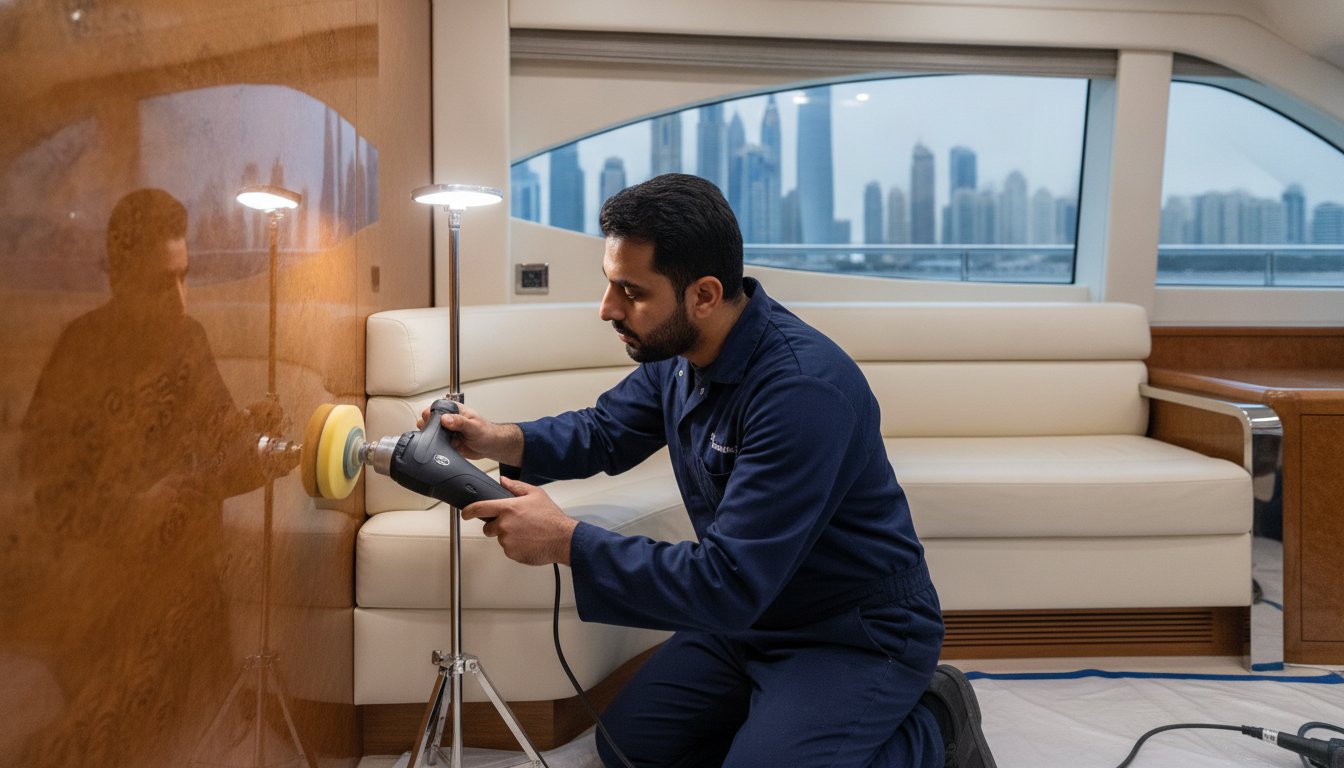
Choosing to replace damaged exotic surfaces instead of restoring them is often a multi-million dollar mistake that drains your maintenance budget and stalls your charter season. You already know that keeping a vessel’s interior in showroom condition is a relentless task, especially when dealing with high-traffic areas and delicate materials. The pressure to maintain pristine aesthetics while avoiding the massive downtime of a traditional shipyard period is a constant challenge for every captain and chief stewardess. Our specialized approach to superyacht interior finish repair ensures that minor chips, scratches, and dullness don’t escalate into a full-scale replacement crisis.
This guide provides a professional 2026 maintenance checklist designed to help you identify surface degradation early across all materials; this includes glass, stainless steel, and rare wood veneers. By following this structured assessment, you’ll learn how to preserve your asset’s value and save up to 80% on traditional refit costs. We’ll walk through the specific indicators of wear for various finishes and explain how technical restoration can restore a factory-level finish with minimal disruption to your schedule.
Key Takeaways
- Establish a structured monthly inspection protocol for your stewardess team to identify surface damage before it requires a major refit.
- Master the technical requirements for a successful superyacht interior finish repair that matches original grain, colour, and lustre perfectly.
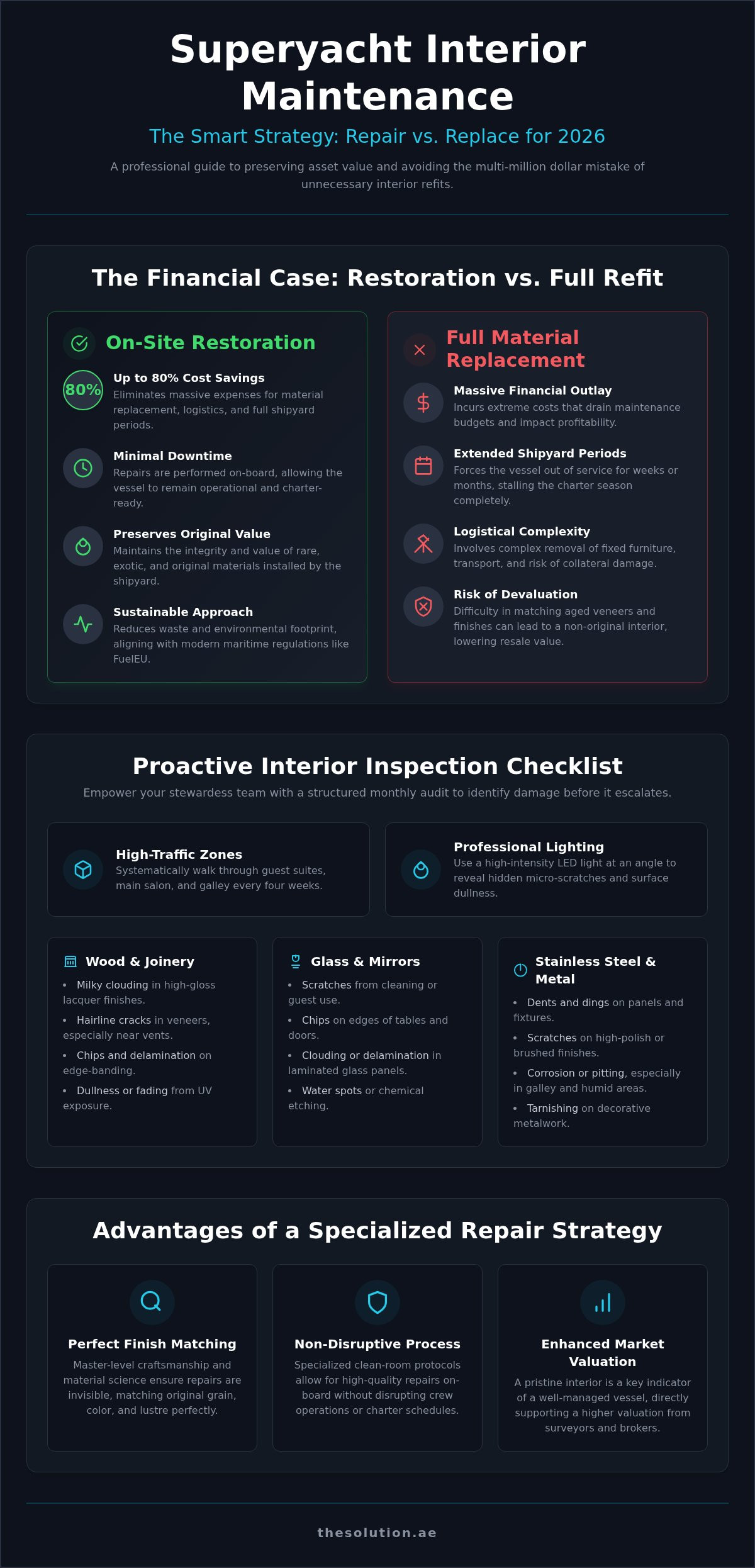
- Evaluate the significant cost benefits of on-site restoration, which typically provides up to 80% savings compared to full material replacement.
- Identify the specific “hidden” costs of traditional interior refits, including logistics and vessel downtime, that restoration effectively eliminates.
- Learn how specialized clean-room protocols allow for high-quality repairs on-board without disrupting crew operations or charter schedules.
The Critical Role of Interior Finish Maintenance in Asset Preservation
The environment aboard a Superyacht is uniquely aggressive toward luxury materials. High humidity, salt-laden air, and intense UV exposure create a constant cycle of expansion and contraction in wood veneers and stone. While these materials are selected for their aesthetic brilliance, they’re structurally sensitive. Even minor chips in a high-gloss finish provide a gateway for moisture to penetrate the underlying substrate. Once moisture enters, it often leads to delamination or clouding, turning a simple aesthetic flaw into a structural failure.
In the 2026 market, the industry’s moving toward sustainable restoration. New regulations like the FuelEU Maritime initiative emphasize reducing the environmental footprint of vessel operations. Choosing a specialized superyacht interior finish repair over full material replacement aligns with these sustainability goals while preserving the vessel’s resale value. Surveyors and brokers often use the condition of the interior as a proxy for the overall maintenance standards of the yacht. A pristine interior suggests a well-managed vessel, which directly supports a higher market valuation.
Understanding Yacht Interior Maintenance Solutions
Professional finish restoration is a technical discipline that goes far beyond general janitorial work. While crew members can handle routine cleaning, technical surface repair requires an understanding of chemistry, material science, and master-level craftsmanship. General maritime contractors often lack the specific tools and training needed to match the complex grain patterns of exotic woods or the specific lustre of high-performance coatings. True restoration involves rebuilding the damaged area to ensure the repair is invisible and durable.
The Economic Impact of Finish Neglect
The financial consequences of neglecting minor defects are significant. In the luxury charter sector, guests pay a premium for perfection. A single visible scratch on a dining table or a dented stainless steel panel can jeopardize high-value contracts and lead to negative reviews. This is the “broken window” theory in a maritime context: small signs of neglect suggest a lack of attention to detail across the entire operation. High-end guests expect perfection.
Proactive maintenance is always more cost-effective than reactive refitting. By addressing damage early, captains can avoid the massive logistical costs associated with removing fixed furniture or the downtime required for shipyard periods. A strategic superyacht interior finish repair can be performed on-site, allowing the yacht to remain operational and ready for its next voyage. Choosing repair over replacement is an intelligent financial decision that preserves both the aesthetic and the bottom line.
The Superyacht Interior Inspection Checklist: What to Look For
Empower your interior team by establishing a monthly audit protocol. Your stewardess team is the first line of defense in maintaining a vessel’s aesthetic integrity. They should conduct a systematic walkthrough of high-traffic zones, the galley, and guest suites every four weeks. This proactive approach ensures that minor issues are identified before they escalate into a full refit crisis. By documenting damage early, you can schedule a targeted superyacht interior finish repair during a short port stay rather than waiting for a winter yard period.
To perform a professional-grade audit, use high-intensity LED lighting. Standard ambient cabin lights often hide micro-scratches and surface dullness. Direct the light at an angle across the surface to reveal hidden defects. When categorizing damage, distinguish between cosmetic surface marks, structural cracks in veneers, and environmental issues like UV fading. Referencing the Acceptance Criteria Guidelines for the Finish and Appearance for Super Yacht Coatings provides a standardized framework for your assessment. This ensures your standards align with international maritime benchmarks.
Wood and Joinery Inspection Points
Check for milky clouding in high-gloss lacquer finishes. This usually indicates moisture ingress or a failure in the coating’s bond. Inspect exotic wood veneers for hairline cracks, which often occur near climate control vents due to humidity fluctuations. Pay close attention to edge-banding and decorative trim. These areas are prone to impact dents from luggage or cleaning equipment. Identifying these small breaches in the protective coating is vital to preventing the underlying wood from swelling or discolouring.
Stone, Glass, and Metal Audit
Examine marble and onyx surfaces for etching. Even a small acidic spill from a guest’s drink can dull the stone’s natural lustre and leave a permanent mark. For glass balustrades and partitions, look for micro-scratches that accumulate over time and obscure clarity. Stainless steel fixtures require a close look for “tea-staining” or pitting, especially in areas where salt air penetrates the interior. If you identify these issues, a professional superyacht interior finish repair can restore these surfaces to their original condition without the astronomical cost of replacement. Address these defects early to maintain the vessel’s market value and guest appeal.
Strategic Repair Solutions for High-Value Marine Materials
Invisible repair is the industry benchmark for superyacht interior finish repair. Achieving this standard requires the precise replication of grain patterns, colour depth, and surface lustre to ensure the restoration is undetectable even under high-intensity inspection lighting. Performing these technical tasks on-site is superior to workshop restoration because it eliminates the logistical risk of transporting fragile components and avoids the high costs of dismantling fixed joinery. Our 2026 protocols utilize advanced UV-stable resins and multi-stage polishing technologies engineered specifically for the maritime environment. These materials are tested to ensure long-term durability against constant humidity fluctuations and salt-air exposure.
Restoring High-Gloss Veneers and Exotic Woods
Mirror-finish lacquers are a hallmark of luxury yacht interiors but present a significant challenge when damaged. A standard patch is often visible because it fails to account for the way light refracts through the clear coat. Successful restoration involves technical grain reconstruction and precision colour matching to maintain the visual flow of the exotic wood. For a deeper analysis of these methodologies, you can review our technical guide on wood surface repair. We use specialized equipment to blend new finishes into existing coatings, ensuring a seamless transition that preserves the original aesthetic.
Stone Restoration: Beyond Simple Polishing
Chips in marble, onyx, or engineered stone surfaces don’t necessitate full replacement. We utilize colour-matched stone resins that bond at a molecular level to restore both structural integrity and visual continuity. This process mirrors our specialized approach to ceramic and tile repair, where the goal is a flawless finish that withstands heavy use. Following the repair, we apply high-performance marine-grade sealants. These barriers protect the stone from acidic etching and moisture penetration, which are common issues in high-traffic galley and guest areas.
Glass and Metal Finish Refinement
Maintaining the clarity of specialty glass balustrades and partitions requires a systematic approach to scratch removal. We use controlled abrasive polishing to eliminate deep gouges without creating optical distortion. Metal surfaces require similar precision. Restoring the specific directional grain in brushed stainless steel is essential for elevator doors and cabinetry hardware that have suffered from tea-staining or physical impact. By using specific abrasive grades, we can replicate the factory finish exactly. This detailed approach to superyacht interior finish repair ensures every surface remains in pristine condition throughout the charter season.
The Financial Case: Restoration vs. Full Interior Refit
Choosing restoration over replacement is an exercise in financial intelligence. While a full refit often involves purchasing new exotic materials and paying for expensive shipyard labor, a strategic superyacht interior finish repair focuses on technical mastery of the existing surfaces. This approach generates up to 80% savings compared to full replacement costs. Beyond the direct financial benefit, restoration supports your environmental goals. Extending the life of luxury veneers and stones significantly reduces the volume of high-value waste sent to landfills. It’s a pragmatic way to align luxury maintenance with modern sustainability standards while keeping the vessel’s aesthetic at peak levels.
Downtime Analysis: Repair vs. Replacement
A comprehensive interior refit typically requires months in a shipyard. This extended timeline directly translates to lost charter revenue and increased crew housing costs, which are expenses that don’t always appear in initial quotes. In contrast, on-site restoration often takes only a few days. You can schedule these repairs during a short stay in Dubai ports without interrupting the vessel’s operational cycle. This efficiency ensures the yacht remains available for high-value bookings. On-site work also eliminates the risk of scope creep. In a traditional refit, removing fixed panels often reveals hidden plumbing or electrical issues that balloon the budget. Technical restoration avoids these surprises by working solely on the surface level, so you don’t have to worry about hidden structural issues.
Preserving Original Craftsmanship
Maintaining the original design integrity is a priority for any discerning owner. Bespoke fittings installed during the initial build often feature rare material batches that are impossible to replicate today. A full-scale tear-out risks damaging adjacent surfaces, such as delicate ceiling panels, integrated lighting systems, or expensive electronics. These collateral damages can add thousands to a refit bill. By choosing a surgical superyacht interior finish repair, you preserve the architect’s original vision while ensuring every surface remains in factory condition. This meticulous approach maintains the asset’s prestige without the trauma of structural demolition. It ensures that the unique character of the vessel remains intact for future surveys and sales. To protect your vessel’s value and minimize operational interruptions, request a technical surface audit before your next charter season begins to identify repairable defects before they require replacement.
Implementing a Non-Disruptive Restoration Strategy with The Solution
The Solution implements a specialized on-board methodology that treats the vessel’s interior as a clean-room environment. We understand that a superyacht interior finish repair must be executed with zero impact on the surrounding luxury environment. Our technicians utilize localized containment and high-efficiency particulate air (HEPA) dust extraction systems to ensure that no debris migrates to adjacent areas. We use advanced, low-VOC (Volatile Organic Compound) materials that provide zero-residue and zero-odour finishes. This allows for immediate guest re-entry and crew operations to resume without the lingering chemical smells associated with traditional spray painting or finishing.
Our efficiency was demonstrated during a project involving a 60m superyacht in a Dubai port. The vessel required a comprehensive restoration of damaged high-gloss wood veneers and etched stone surfaces throughout the main salon and guest corridors. By deploying a specialized team with synchronized schedules, we completed the full restoration in 72 hours. This timeframe allowed the captain to maintain a tight charter turnaround that would’ve been impossible with traditional refit methods. We focus on solving problems quickly so your vessel stays in service.
Our On-Board Workflow
We’ve refined a three-step process designed to maximize quality while minimizing vessel downtime.
- Step 1: Precision Damage Mapping: We conduct a technical consultation to identify every defect and determine the exact material composition for finish matching.
- Step 2: Advanced Surface Protection: Technicians apply multi-layer protective barriers to all surrounding areas, ensuring that only the target surface is exposed during the repair.
- Step 3: Surgical Repair: We execute the restoration using master-level craftsmanship to reconstruct grains and match lustre levels perfectly.
The UAE’s Premier Marine Restoration Partner
Dubai’s yachting community relies on The Solution for complex challenges because we prioritize B2B standards and technical mastery. Our technicians undergo rigorous training to handle the exotic materials found on modern vessels, from rare marbles to specialty metals. We function as a reliable partner for management companies and captains who require results that meet the highest maritime standards. Choosing a specialized superyacht interior finish repair is a strategic decision that preserves asset value and ensures operational readiness. Consult The Solution for your yacht restoration needs to secure a flawless finish for your next voyage.
Securing Your Yacht’s Aesthetic Legacy
Maintaining a vessel’s interior requires more than just reactive cleaning; it demands a strategic commitment to surface preservation. By implementing a monthly inspection protocol and addressing minor damage early, you protect both the yacht’s market value and its design integrity. Choosing a specialized superyacht interior finish repair over a full refit is the most intelligent financial decision a captain can make in 2026. This approach ensures that your vessel remains a benchmark of luxury without the logistical burden of a shipyard period.
The Solution provides a high-standard alternative to costly replacements, offering on-site, non-disruptive service across the UAE. Our technicians are trained to master-craftsperson standards, ensuring that every restoration of exotic wood, stone, or glass is invisible and durable. You can save up to 80% compared to full interior replacement while keeping your vessel ready for immediate charter. Request a Technical Assessment for Your Yacht Interior today to ensure your vessel remains in pristine condition for the upcoming season. We’re ready to help you master the art of interior preservation.
Frequently Asked Questions
Can high-gloss wood veneers be repaired on-site without removing the panels?
Yes, high-gloss wood veneers can be repaired on-site without dismantling any fixed joinery. Our technicians utilize specialized UV-stable resins and a multi-stage polishing process to reconstruct the surface grain and match the original lustre. This approach eliminates the logistical risks and high costs associated with removing panels from the vessel. It ensures a seamless finish that’s undetectable even under professional inspection lighting while keeping the surrounding areas completely protected during the work.
How long does a typical superyacht interior finish repair take?
Most projects are completed within 24 to 72 hours, depending on the severity of the damage. A single superyacht interior finish repair for a dining table or a few guest suite surfaces often takes less than a day. This efficiency is a primary advantage for vessels with tight charter turnarounds. We coordinate with the chief stewardess to work around crew schedules, ensuring the restoration’s finished before the next guests arrive on board.
Is the repair on marble or onyx permanent and heat-resistant?
Repairs on marble and onyx are permanent and designed to withstand the rigorous environment of a luxury vessel. We use high-performance stone resins that bond at a molecular level to restore structural integrity. These materials are heat-resistant and polished to match the original stone’s natural sheen. After the repair, we apply marine-grade sealants that provide a durable barrier against future acidic etching from spills or moisture penetration in high-traffic galley areas.
Will the repaired glass surface have any optical distortion?
No, a professionally executed repair won’t cause optical distortion. We utilize controlled abrasive polishing techniques that gradually level the glass surface around the scratch. This process maintains the structural clarity of balustrades, partitions, and specialty glass fixtures. By carefully managing the material removal, our technicians ensure that the repaired area remains perfectly flat and clear. This is a far more cost-effective solution than the high expense of custom glass replacement.
Can you match the specific directional grain of brushed stainless steel?
Yes, our technicians can exactly replicate the specific directional grain of brushed stainless steel. We use a series of specialized abrasive pads and technical refinishing tools to match the factory-original pattern. This is essential for restoring elevator doors, cabinetry hardware, and galley fixtures that have suffered from physical impacts or tea-staining. The result is a uniform finish that blends perfectly with the surrounding metalwork, maintaining the high-end aesthetic of the vessel’s functional areas.
What is the cost saving of repair versus a full interior refit?
Choosing restoration over replacement typically results in savings of up to 80% compared to the cost of a full interior refit. These savings come from eliminating the need for expensive new raw materials and the heavy labor costs of demolition and re-installation. Additionally, the reduction in vessel downtime prevents the loss of significant charter revenue. It’s an intelligent financial decision that preserves the vessel’s original craftsmanship while significantly lowering the annual maintenance budget.
Do you provide services in all major UAE ports and marinas?
Yes, we provide comprehensive restoration services in all major UAE ports and marinas. Our mobile teams are equipped to work on-site at locations including Dubai Harbour, Port Rashid, and Yas Marina in Abu Dhabi. This regional coverage ensures that captains can schedule a superyacht interior finish repair during any scheduled port stay in the Emirates. Our local presence minimizes travel logistics and allows us to respond quickly to urgent repair needs before a charter begins.
Are the materials used in restoration safe for use in confined yacht spaces?
Yes, all materials used in our restoration processes are safe for use in confined yacht environments. We prioritize low-VOC and zero-odour resins and coatings that don’t release harmful fumes during or after application. This ensures that the air quality remains safe for the crew and allows for immediate guest re-entry once the work is finished. Our clean-room protocols further protect the interior by using HEPA-filtered dust extraction to maintain a pristine environment throughout the repair.


