
A single scratch on a high-end stainless steel finish or a chipped marble tile can stall a multi-million dirham handover, yet the traditional solution of full replacement is often a costly, unnecessary mistake. With the UAE Civil Code update effective June 1, 2026, extending the latent defect claim period to one year, the pressure to deliver a flawless project has never been higher. You’ve likely felt the frustration of watching a deadline slip because of an endless list of surface defects and the inevitable subcontractor disputes that follow. We understand that reducing snagging issues in construction is about more than just aesthetics; it’s about protecting your profit margins and meeting strict regulatory standards.
This guide shows you how to streamline your handover process by identifying, preventing, and intelligently repairing surface damage without the expense of replacing materials. You’ll discover how specialized on-site restoration for glass, wood, and ceramics can turn a complex snag list into a successful, zero-defect delivery. We’ll walk through the technical methodologies that ensure your luxury builds maintain the highest standards while avoiding the delays that come with traditional rectification methods.
Key Takeaways
- Learn how choosing on-site restoration over full replacement significantly reduces rectification costs and project lead times.
- Identify high-value surface defects on glass and stainless steel that frequently cause the most significant handover delays.
- Implement a strategic framework for reducing snagging issues in construction by prioritizing professional repairs over lengthy procurement cycles.
- Discover why internal audits and strict surface protection protocols are essential for maintaining the integrity of high-end finishes.
- Understand how technical mastery in ceramic and metal restoration ensures your luxury builds meet the highest aesthetic standards for a seamless handover.
The Impact of Snagging on Construction Handovers in the UAE
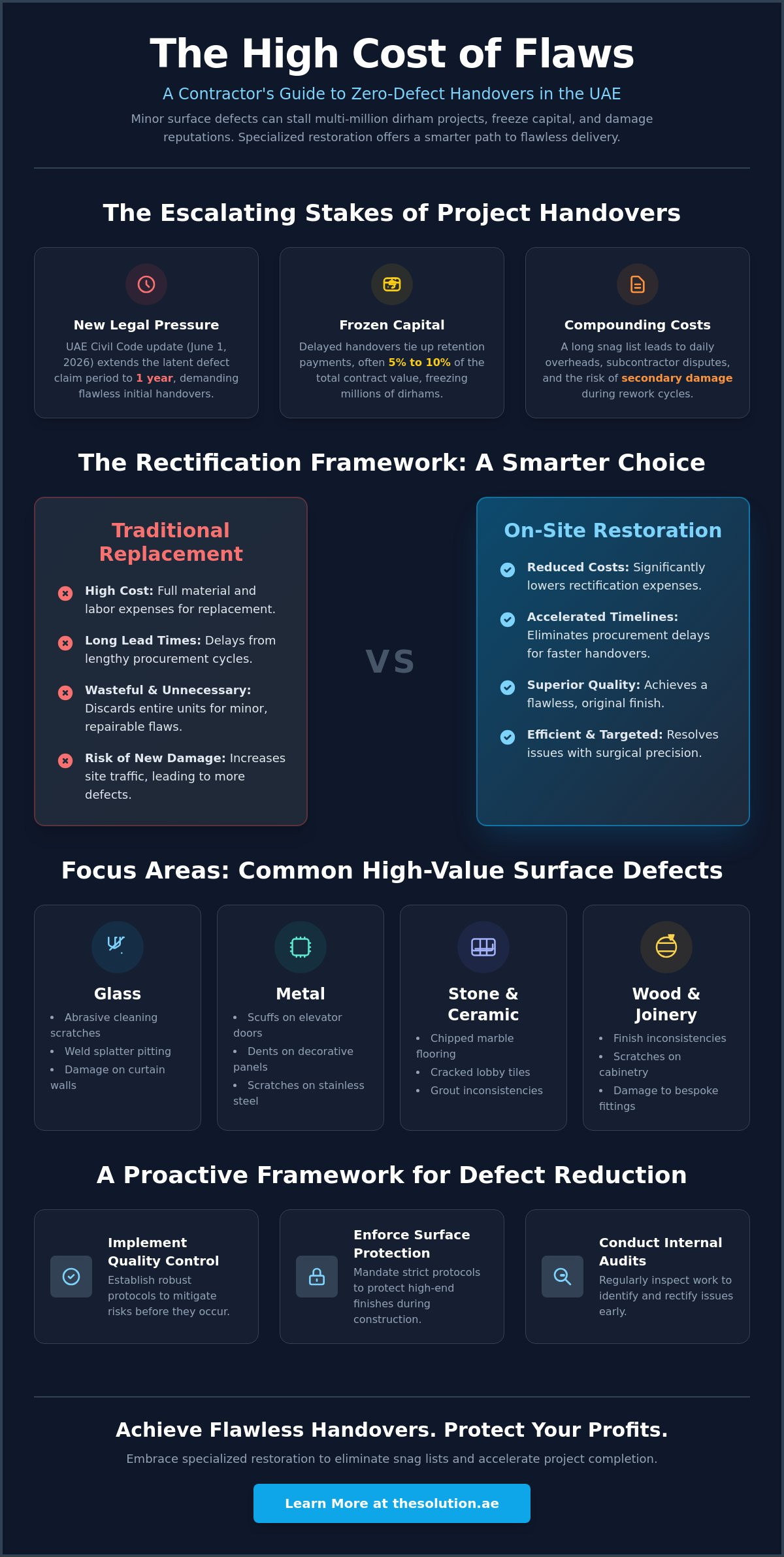
Snagging is the final hurdle in any construction lifecycle. It’s the process of identifying and rectifying minor defects, such as surface scratches, dents, or finish inconsistencies, before the final client handover. In the high-stakes UAE market, where luxury finishes are the baseline, snagging has become the primary bottleneck for developers and contractors. Success in reducing snagging issues in construction directly correlates with the speed at which a project reaches financial close and the release of retention payments. These payments often represent 5% to 10% of the total contract value. In large-scale developments, this means millions of dirhams in frozen capital. Efficiently closing these items is a matter of liquidity and business health.
Market standards in 2026 leave no room for error. With the new UAE Civil Code, Federal Decree-Law No. 25 of 2025, coming into effect on June 1, 2026, the legal framework around defects has tightened. Contractors now face a one-year limitation period for latent defects and a strict ten-year decennial liability for structural integrity. This regulatory environment makes a flawless initial handover a financial necessity rather than just an aesthetic preference. High-end builds in Dubai and Abu Dhabi now require a level of precision that traditional patch and paint methods can’t reach. Clients expect a showroom finish the moment they step through the door. Any visible repair that doesn’t match the original texture or sheen is immediately rejected, adding another item to the list.
Snagging vs. Punch Lists: What You Need to Know
Terminology often varies based on the contract’s origin. While local UAE projects typically refer to snagging, international contracts often use the term Punch list to describe the same process of documenting incomplete or incorrect work. The project consultant plays a critical role here, acting as the final judge of quality. What might seem like a minor aesthetic blemish can lead to significant legal delays if the consultant refuses to sign off on the completion certificate. These minor issues often involve high-value materials where the standard for acceptance is exceptionally high.
The True Cost of a Long Snag List
A long snag list is a drain on resources. Every day a handover is delayed, the contractor incurs overhead costs, ranging from site security to utility bills. For Tier 1 contractors in Dubai, a reputation for messy handovers can damage future bidding prospects. The hidden cost lies in the rework cycle. Sending multiple subcontractors back to a site for repetitive visits is inefficient and often leads to secondary damage. One trade might repair a wall only to scratch a finished floor, creating a never-ending cycle of rectification. Focusing on reducing snagging issues in construction through technical restoration prevents these compounding costs and protects the project’s bottom line.
Common Surface Snags: Identifying High-Value Damage
Identifying high-value surface damage is the first step toward reducing snagging issues in construction. While structural integrity is non-negotiable, it’s often the aesthetic finishes that determine the success of a final inspection. In the UAE luxury sector, materials like oversized glass panels and brushed stainless steel are standard. These surfaces are highly susceptible to damage during the final stages of a build, often when multiple trades are working in close proximity. A single scratch on a bespoke finish can lead to a rejected handover, even if the building is technically complete.
Glass damage remains a persistent issue on modern sites. Scratches from abrasive cleaning or permanent pitting from welding splatter on curtain walls frequently lead to rejection by consultants. Replacing these panels is rarely a viable option due to the long lead times and high costs associated with custom glazing. Similarly, metal finishes on elevator doors and decorative panels often suffer from dents and scuffs. Implementing robust Construction quality control protocols helps mitigate these risks, but when damage occurs, technical restoration is the most efficient path forward. It’s a pragmatic approach that saves time and protects the project’s bottom line.
Stone and ceramic surfaces, particularly chipped marble flooring or cracked tiles in high-traffic lobbies, create immediate negative impressions. Joinery and wood elements are equally vulnerable. Scratched laminates or dented timber doors during furniture move-in are common entries on a consultant’s report. These snags require a meticulous approach to ensure the repair is indistinguishable from the original material. Our team focuses on reducing snagging issues in construction by providing master-level repairs that restore the integrity of these high-value assets without the need for disruptive replacements.
Structural vs. Cosmetic Snags
Cosmetic snags are often the most contentious points during a final walk-through. From a master craftsperson’s perspective, a scratch is never just a scratch; it’s a failure of the finish that compromises the entire design intent. We focus on delivering invisible repairs that pass even the most rigorous consultant scrutiny. This level of technical mastery ensures that aesthetic defects don’t become legal or financial liabilities during the handover phase.
High-Traffic Areas: The Snagging Hotspots
Elevators, lobbies, and entrance portals are the primary snagging hotspots. These areas receive the most movement and are often the last to be finished. They require specialized stainless steel finish restoration to remove scuffs and restore the grain to its original state. Maintaining glass integrity in Dubai’s high-rise environments is a constant challenge, but on-site polishing can resolve issues without the need for complex removals. If you’re facing a growing list of surface defects, our on-site surface damage repair team can restore your finishes to a showroom standard.
The Rectification Framework: Repairing vs. Replacing Damaged Assets
Choosing between repair and replacement is a critical financial decision for project managers. Replacement is often the default response to surface damage, yet it’s frequently the least efficient option. In the context of reducing snagging issues in construction, restoration provides a faster, more cost-effective path to handover. While procurement for imported high-end finishes can take months, technical restoration is usually completed in hours. This speed is essential when retention payments are on the line and every day of delay incurs significant overhead costs.
The financial benefits are clear. Specialized repair typically costs only 20% to 30% of the total replacement value. This calculation includes not just the material cost, but the labor for removal, disposal, and re-installation. There’s also the technical risk to consider. Replacing a single chipped tile often compromises the surrounding grout lines or the underlying waterproofing seal. This can lead to different Types of Construction Defects that appear months after the client has moved in. On-site repair maintains the integrity of the original installation while achieving a seamless aesthetic finish.
Sustainability is another factor that contractors can’t ignore. Modern construction standards in the UAE increasingly prioritize waste reduction. On-site restoration keeps high-value materials out of landfills and reduces the carbon footprint associated with shipping replacement assets from overseas. By choosing restoration, you’re reducing snagging issues in construction while aligning with the region’s growing emphasis on green building practices and LEED certifications.
When to Choose Professional Restoration
Professional restoration is the logical choice for bespoke or imported materials where replacement is physically impossible within the project timeline. Our hard surface repair methodologies are designed for these high-stakes scenarios. Restoration is particularly effective in occupied or nearly-finished buildings where the dust and vibration of a full replacement would cause secondary damage to adjacent finishes. We focus on delivering results with minimal disruption to other site activities.
Risk Management in Rectification
The primary risk in any repair is the “patchwork” look. A visible repair is just as likely to be rejected by a consultant as the original damage. This is why DIY fixes or general contractor attempts often fail; they lack the technical mastery to match color, texture, and light reflection perfectly. To avoid secondary snags, it’s vital to use technicians trained to international standards. Meticulous texture matching and chemical bonding ensure that the rectified area is indistinguishable from the factory finish, providing a permanent solution that stands up to long-term use.
Proactive Strategies for Reducing Your Final Snag List
Reducing snagging issues in construction requires a shift from reactive repairs to proactive site management. Waiting for the final consultant walk-through is a high-risk strategy that often leads to a backlog of defects and delayed handovers. The most successful contractors implement a “Pre-Snag” internal audit at least 30 days before the official inspection date. This internal review allows your team to identify and resolve surface damage before it ever reaches the consultant’s report. It’s a pragmatic way to filter out minor issues and ensure that the final list remains manageable and professional.
Zone-based accountability is another powerful tool for maintaining site quality. By making specific trade leads responsible for the condition of their work area, you create a culture of ownership. If a finished floor is scratched or a stainless steel panel is dented in a specific zone, the responsible trade must account for the rectification. This incentive structure significantly reduces the “last man in” syndrome, where late-stage subcontractors inadvertently damage the work of previous trades. Engaging specialized restoration teams early in the process to fix damage as it occurs prevents the compounding of issues that often characterizes the final weeks of a project.
Effective Surface Protection Protocols
Physical protection is your first line of defense. Standardizing the use of Correx, RAM board, and heavy-duty protective films is essential for safeguarding high-value finishes. High-impact zones like lobbies and corridors require more than just a single layer of plastic. In areas where technical work is being performed, such as glass polishing and restoration, exclusion zones must be strictly enforced. This prevents dust or debris from other trades from contaminating the restoration process and ensures a factory-level finish is maintained until the final client walk-through.
The Role of Documentation and Communication
Clear documentation is the only way to resolve disputes over damage responsibility. Site managers should use high-resolution photo evidence to document the state of finishes before and after a trade enters a zone. This visual record streamlines communication between site teams and restoration experts, allowing for faster response times. Closing out snags in real-time, rather than waiting for a massive end-of-project push, keeps the site clean and the handover timeline on track. If you are currently managing a complex project and need professional support, you can book our on-site repair services to resolve defects before they become bottlenecks.
Flawless Handovers: Why Specialized Restoration is the Smart Choice
Achieving a zero-snag handover is the ultimate objective for any Tier 1 contractor in the UAE. As project timelines compress, the ability to deliver pristine finishes without the delays of replacement becomes a significant competitive advantage. The Solution plays a vital role in supporting the region’s most prestigious construction projects by providing technical mastery where it matters most. By integrating specialized restoration into your final delivery phase, you’re not just fixing defects; you’re making an intelligent financial and logistical decision that protects your project’s profitability and reputation.
Our versatile capabilities allow us to handle a wide array of materials on a single site. From ceramic and tile repair to the restoration of complex stainless steel and glass surfaces, we provide a comprehensive resource for any technical problem. This versatility is essential for reducing snagging issues in construction because it eliminates the need to coordinate with multiple vendors for different surface types. We manage the entire restoration scope, ensuring consistency in quality and a unified approach to the handover list.
Restoration is also a critical tool for managing the Defect Liability Period (DLP). In Dubai and the Northern Emirates, developers are typically responsible for non-structural and finishing defects for one year from the date of handover. Utilizing on-site repair during this period allows you to fulfill these obligations quickly and with minimal disruption to the new property owners. It’s a pragmatic way to maintain high aesthetic standards while adhering to the stricter accountability standards introduced by the March 2026 Dubai construction laws.
The Solution’s Master Craftsmanship
Every technician at The Solution undergoes rigorous training and assessment to ensure they meet our standards of meticulous precision. We understand that in a luxury build, a repair must be completely invisible to pass consultant scrutiny. Our commitment to rapid response times and minimal disruption means we can work alongside other trades to close out defects in real-time. In one notable project, our team helped a contractor by reducing snagging issues in construction through the repair of over 400 individual surface defects. We successfully reduced a 500-item snag list by 80% within a single week, allowing the project to meet its original handover date.
Partnering for Success in 2026
Leading UAE developers trust us because we deliver predictable, high-quality results under pressure. We don’t just provide a service; we act as a reliable partner that understands the commercial priorities of the construction sector. If you’re ready to clear your current snag list and ensure a flawless transition to the client, Contact The Solution for a technical assessment. Snagging is a manageable challenge when you have the right restoration partner. By choosing repair over replacement, you’re choosing the most efficient path to a successful project closeout.
Master Your Construction Handover with Technical Restoration
Successful project closeouts in the UAE’s competitive market depend on speed and aesthetic precision. Shifting your strategy from costly material replacement to professional restoration is the most efficient path to financial close. We’ve explored how proactive internal audits and specialized surface protection are essential for reducing snagging issues in construction, but the final differentiator is the quality of the rectification itself. Our on-site technicians are trained to elite standards to ensure every repair is indistinguishable from the original finish.
This approach is an intelligent financial decision. Specialized repair is up to 80% cheaper than replacement and eliminates the months-long lead times associated with bespoke imports. It’s why we’re trusted by Dubai’s leading hospitality and commercial developers to handle their most challenging surface defects. Clear your snag list today with The Solution’s expert restoration services. Your project deserves a flawless finish that reflects your commitment to excellence.
Frequently Asked Questions
What is the most common snagging issue in UAE construction?
Surface scratches on glass and scuffs on stainless steel are the most frequent issues found during inspections. High-rise developments often see curtain wall damage from cleaning or welding splatter. These cosmetic defects are primary bottlenecks for reducing snagging issues in construction because they are highly visible to consultants and property owners during the final walk-through.
How much can I save by repairing surfaces instead of replacing them?
Repairing surfaces typically costs between 20% and 30% of the total replacement value. This calculation includes the savings on new material procurement and the labor required for removal and disposal. Restoration also eliminates the indirect costs of project delays and extended site overheads that occur while waiting for long-lead imported items to arrive.
Can scratches in tempered glass really be removed without distortion?
Yes, expert glass polishing and restoration can remove deep scratches and welding splatter without causing optical distortion. The process involves precise abrasive stages that maintain a perfectly level surface. This is a technical, cost-effective alternative to replacing expensive tempered panels, which often have lead times of several months in the UAE market.
How long does a typical on-site surface repair take?
Most on-site surface repairs are completed within a few hours per item. This speed is a significant advantage over the weeks or months required for the procurement and installation of new assets. Technicians work directly in the affected zone with specialized, portable equipment, allowing other trades to continue their work without major disruption to the project timeline.
Is restoration covered under the Defects Liability Period (DLP)?
Restoration is a standard and accepted method for fulfilling obligations under the Defects Liability Period. In the UAE, developers are responsible for finishing defects for one year after the handover date. Professional repair ensures these defects are rectified to the required aesthetic standard without the structural risks or waterproofing issues associated with removing and replacing fixed items.
What is the best way to protect stainless steel during construction?
The best protection involves applying high-quality, heavy-duty protective films immediately after installation. You should also enforce strict cleaning protocols that forbid the use of steel wool or abrasive chemicals by late-stage subcontractors. If damage occurs, specialized stainless steel finish restoration can return the metal to its original grain and luster on-site.
Can you match the color and texture of rare marble or stone?
Technical restoration allows for the precise matching of color and texture in rare marble and natural stone. Technicians use specialized resins and pigments to replicate the unique veining and light reflection of the material. This ensures that chips or cracks in high-traffic lobbies are repaired to a standard that is indistinguishable from the original installation.
When is the best time to call a professional restoration company during a project?
Engaging a restoration partner during your internal “Pre-Snag” audit, usually 30 days before handover, is the most effective strategy. This proactive approach is key to reducing snagging issues in construction by clearing the defect list before the official consultant inspection. You can also call for repairs as damage occurs to prevent a massive backlog at project completion.


