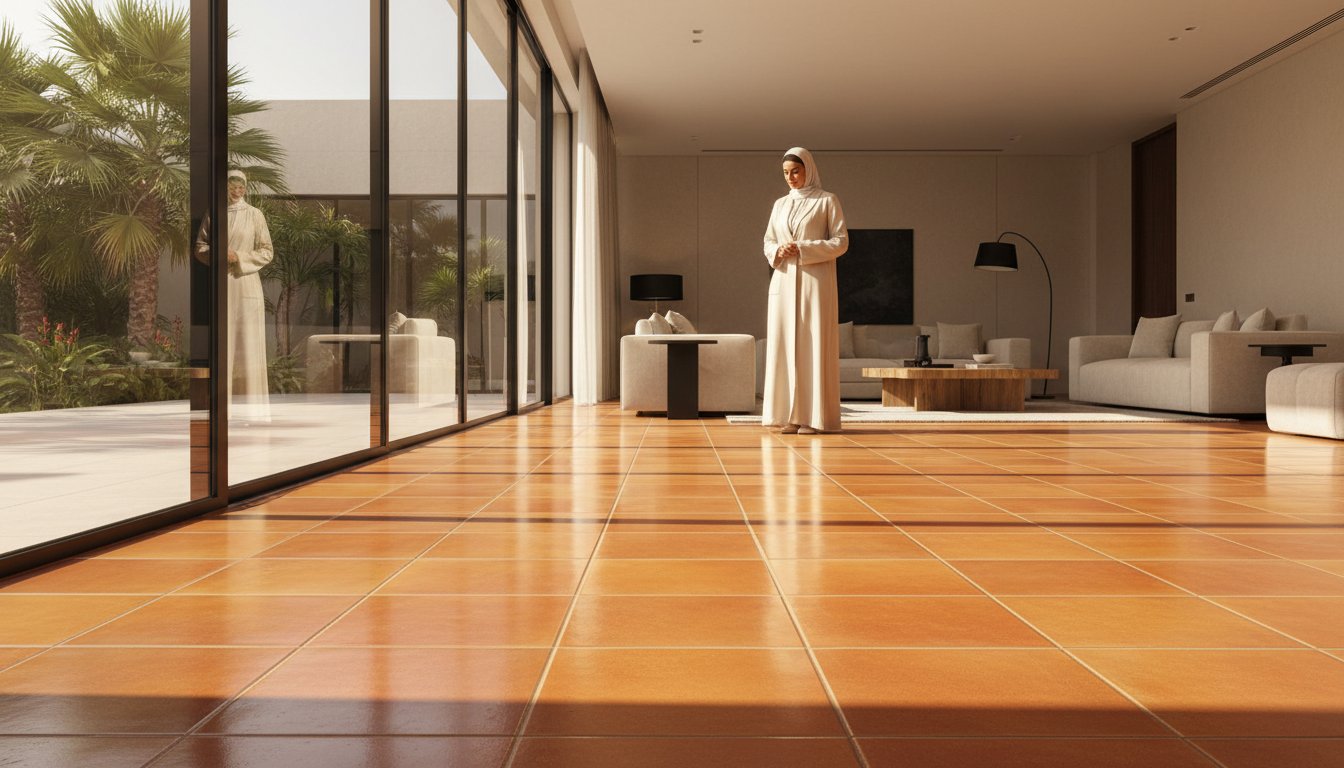
The timeless appeal of terracotta tiles lies in their warm, rustic charm. Yet, this natural beauty can be easily diminished by daily wear, stubborn stains, and improper care, leaving your floors looking dull and faded. Many property owners in the UAE hesitate to act, fearing that using the wrong cleaning products or techniques could cause irreversible damage to these porous surfaces, leading to a costly replacement that could run into thousands of Dirhams.
This definitive guide provides the expert procedures required to rectify these common issues and protect your investment. You will learn the correct methodology for safe daily cleaning, effective stain removal, and the critical process of sealing to prevent future damage. We will equip you with the knowledge to restore your terracotta’s original lustre and assess issues like chips or cracks, enabling you to make an informed, cost-effective decision between professional repair and a full replacement.
Understanding Terracotta: The Beauty and The Challenge
Terracotta, which translates from Italian as “baked earth,” is a natural clay material prized for its warm, rustic aesthetic and exceptional durability. With a rich history in architecture, particularly in warm climates like the UAE, it brings an authentic and timeless appeal to any space. However, the inherent properties that give these tiles their character also present a significant maintenance challenge. A foundational understanding of What is Terracotta? reveals its core vulnerability: high porosity. This makes proper care essential to maintain both its beauty and longevity, especially in high-traffic commercial or residential areas. Whether your installation features rustic handmade tiles, which are typically more porous, or denser machine-made tiles, the principles of protection remain critical.
The Porous Nature of Terracotta Explained
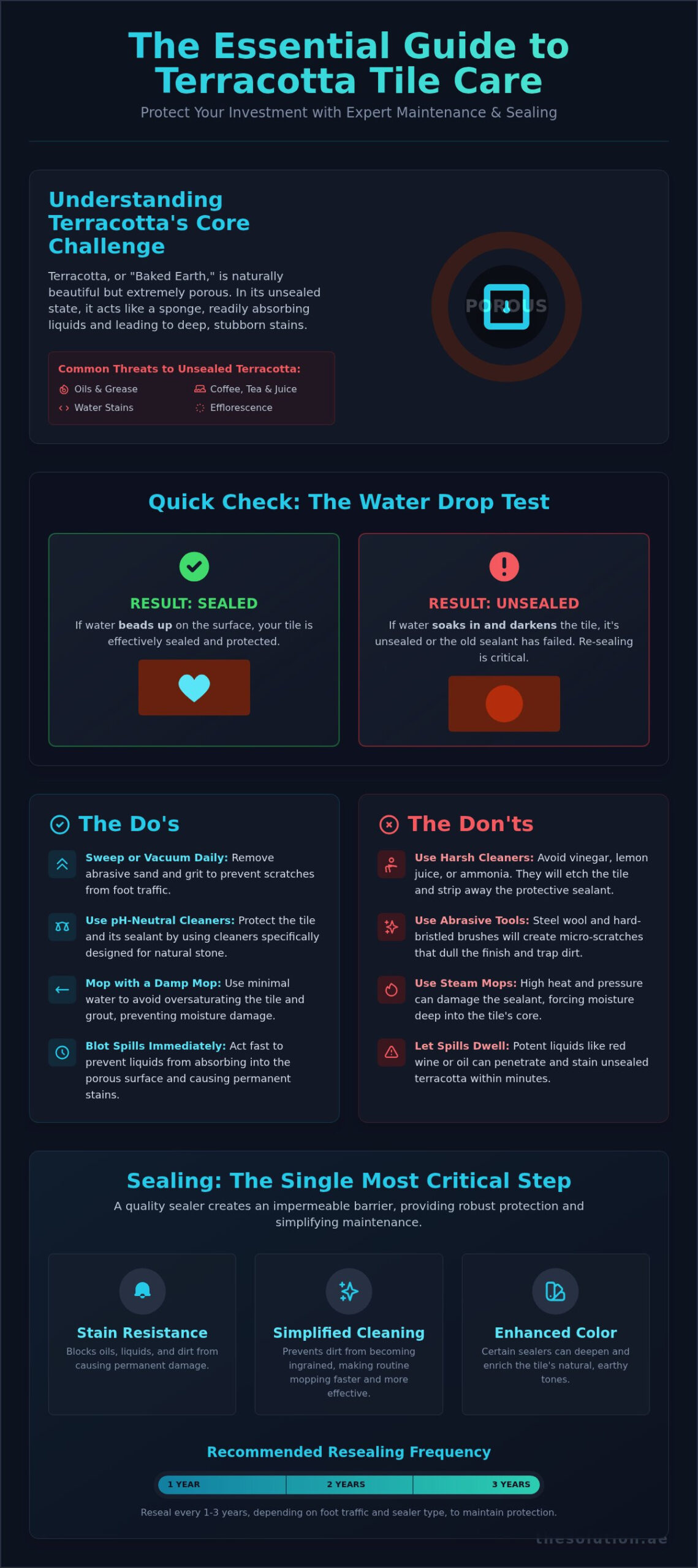
In its unsealed state, terracotta is exceptionally porous and functions much like a sponge. It will readily absorb liquids, leading to deep-set stains that are difficult and costly to rectify. For high-traffic environments, this vulnerability poses a constant risk from common substances, including:
- Oils and grease from footwear or spills
- Beverages such as coffee, tea, and juice
- Water, which can lead to efflorescence or dark spots
This high absorbency makes professional sealing a non-negotiable first step for any installation of terracotta tiles. An effective impregnating or topical sealant provides a robust protective barrier, preventing stains and simplifying routine cleaning-a crucial investment to avoid expensive restoration work in the future.
Identifying Your Terracotta Finish
Effective maintenance protocols are dictated by the tile’s finish. There are three primary types: unsealed (natural), sealed, and glazed. To determine your floor’s condition, perform a simple water drop test on a clean, discrete tile. Place a few drops of water on the surface and observe for one to two minutes. If the water beads up, the tile is effectively sealed. If the water soaks in and darkens the tile, it is either unsealed or the existing sealant has degraded and requires reapplication. This assessment is vital, as using the wrong cleaning methods or products can cause irreversible damage to the surface.
Daily & Routine Maintenance: Keeping Your Terracotta Clean
Proactive maintenance is the most effective strategy to preserve the integrity and aesthetic of high-traffic terracotta floors. Consistent, gentle cleaning is your first line of defense, preventing the accumulation of abrasive sand and grit common in the UAE climate. This simple diligence is critical to avoiding the premature wear that leads to more complex and costly restoration services. A structured routine protects your investment and ensures your terracotta tiles maintain their intended finish for years.
The foundation of effective care is a two-part process. Daily, perform a dry clean by sweeping with a soft-bristle broom or vacuuming with a soft brush attachment. This removes loose debris that can scratch the surface. Weekly, conduct a more thorough wet clean. Use a microfibre mop that is damp, not soaking wet, with a solution of warm water and a pH-neutral cleaner. This method cleans effectively without oversaturating the porous tile or compromising the sealant.
The Do’s: Best Practices for Terracotta Cleaning
Adhering to correct procedures is essential for the long-term health of your flooring. These practices ensure cleaning enhances, rather than degrades, the tile surface.
- Do: Sweep or Vacuum Daily. The primary objective is to remove abrasive particles before they can be ground into the tile surface by foot traffic.
- Do: Use pH-Neutral Cleaners. Selecting the correct cleaning agent is critical. Always opt for pH-neutral formulas specifically designed for natural stone, a recommendation that aligns with established tile industry standards for material preservation.
- Do: Mop with a Damp Mop. Use minimal water to clean the surface. Excess moisture can penetrate the grout and tile, potentially leading to efflorescence or sealant failure.
- Do: Clean Up Spills Immediately. Terracotta is porous. Blot spills with a clean cloth as soon as they occur to prevent them from absorbing and causing permanent stains.
- Do: Consider the Source of Dirt. Since abrasive grit and staining oils are often tracked in by footwear, keeping shoes clean is an effective preventative measure. For professional care of everyday and delicate footwear, you can visit Hustle Laundry.
The Don’ts: Products and Methods to Avoid
Using improper tools or chemicals can cause irreversible damage to terracotta tiles, resulting in the need for professional intervention. Avoiding these common mistakes is non-negotiable.
- Don’t: Use Acidic or Alkaline Cleaners. Common household products like vinegar, lemon juice, or ammonia-based cleaners are highly corrosive and will etch the tile surface and strip away protective sealants.
- Don’t: Use Abrasive Tools. Scouring powders, steel wool, and hard-bristled brushes will create micro-scratches that dull the finish and trap dirt.
- Don’t: Use Steam Mops. The combination of high heat and pressurized moisture can damage sealants, force water into the tile’s core, and lead to structural weakening over time.
- Don’t: Let Spills Dwell. Liquids such as oil, coffee, or red wine can penetrate unsealed or poorly sealed terracotta in minutes, causing deep stains that are difficult to rectify.
Sealing Terracotta Tiles: The Essential Protective Step
Due to its natural porosity, unsealed terracotta is highly susceptible to staining and moisture absorption. Sealing is the single most critical step in the maintenance of terracotta tiles, particularly in high-traffic commercial and residential areas found across the UAE. A quality sealer penetrates the clay’s microscopic pores, creating an impermeable barrier that blocks liquids, oils, and dirt from causing permanent damage. This protective measure delivers three primary benefits: it simplifies daily cleaning, provides robust stain resistance, and can enhance the tile’s natural, earthy colours.
To maintain this protection, professional resealing is typically required every 1 to 3 years, depending on foot traffic and the type of sealer used. Neglecting this process compromises the floor’s integrity and leads to costly restoration work.
Choosing the Right Sealer: Penetrating vs. Topical
The selection of a sealer directly impacts both the appearance and performance of your floor.
- Penetrating (Impregnating) Sealers: These soak into the tile to protect it from within, preserving the natural, matte finish. They do not form a surface film, making them an excellent choice for maintaining the authentic look of terracotta.
- Topical Sealers: These create a protective film on the tile’s surface, available in finishes from satin to high-gloss. This layer acts as a sacrificial coating that absorbs wear and tear, and is often preferred in very high-traffic commercial settings for its durability and ease of cleaning.
The correct choice depends on the desired aesthetic, expected foot traffic, and whether the installation is interior or exterior.
How to Tell When It’s Time to Reseal
Identifying the need for resealing is a straightforward diagnostic process. The most reliable method is the water drop test: place a few drops of water on the tile and grout. If the water beads up, the sealer is still effective. If it soaks in and darkens the tile within a few minutes, the surface has lost its protection and is vulnerable. Other indicators include a dull appearance and increased difficulty in cleaning. Delaying resealing exposes the porous clay to contaminants, risking permanent staining that can only be rectified through intensive restoration.
The Professional Sealing Process
A professional application ensures maximum durability and a flawless finish. The process is meticulous and systematic, beginning with a deep, intensive cleaning to remove all dirt, grease, and old sealer remnants. Proper surface preparation is non-negotiable for effective adhesion. Following this, the floor must be allowed to dry completely before the sealer is applied with specialist equipment. The precise application technique is critical for an even, durable finish, and expert guides on how to properly seal terracotta tiles demonstrate the level of skill required. Finally, the sealed floor must cure for a specified period-typically 24-72 hours-before it can withstand foot traffic.
Advanced Problem Solving: Stains, Efflorescence, and Scratches
Even with diligent maintenance, high-traffic commercial floors are susceptible to specific issues. A methodical approach is required to rectify damage without compromising the integrity of your terracotta tiles. This guide outlines effective solutions for the most common challenges, clarifying when a DIY approach is viable and when professional intervention is the most cost-effective decision.
Tackling Common Stains
The porous nature of unglazed terracotta makes it prone to absorbing spills. Swift and correct treatment is critical to prevent permanent discoloration. For any cleaning method, always test on an inconspicuous area first.
- Oil and Grease: These require a poultice to draw the stain out. Create a paste using an absorbent powder (like diatomaceous earth or baking soda) and a solvent (like acetone). Apply the paste, cover with plastic, and let it dry completely before scraping it away.
- Organic Stains (Wine, Coffee): For fresh stains, blot immediately. For set-in stains, use a pH-neutral tile cleaner. A solution of hydrogen peroxide and water can be effective on stubborn spots, but requires careful application.
- Water Marks and Mineral Deposits: Hard water can leave white marks. Gently scrub the area with a soft brush and a solution of one part white vinegar to five parts water. Rinse thoroughly with clean water afterward to neutralize the acid.
What is Efflorescence and How to Remove It
Efflorescence is a crystalline deposit of salts, appearing as a white, powdery residue on the tile surface. It is often a result of moisture migrating through the tile and evaporating, a common occurrence in the UAE’s humid climate. To remove it, first use a stiff, dry brush to scrub away the loose powder. If residue remains, use a specialized efflorescence cleaner, following the manufacturer’s instructions precisely. It is crucial to identify and rectify the source of the moisture to prevent recurrence.
Dealing with Scratches and Scuffs
Surface damage from foot traffic and moved furniture detracts from a floor’s appearance. The correct response depends on the severity.
- Minor Scuffs: On properly sealed floors, light scuffs can often be buffed out using a soft cloth or a tennis ball. A small amount of the recommended floor cleaner can assist in this process.
- Deeper Scratches: Scratches that have penetrated the sealer and damaged the tile itself cannot be simply buffed away. Attempting to do so can cause more harm. These situations require professional honing and polishing to restore a uniform finish without damaging the surrounding tiles.
Prevention remains the most effective strategy. Utilise high-quality entrance mats, apply felt pads to all furniture legs, and avoid dragging heavy objects across the floor. For deep scratches or widespread damage that compromises the professional look of your space, expert restoration is the most reliable path. Contact us to assess the damage and explore our cost-effective surface repair solutions.
Professional Restoration vs. Replacement: When to Call The Experts
While routine maintenance is essential, there comes a point where high-traffic floors require more than standard cleaning. Before considering a costly and disruptive replacement, understand that professional restoration offers a highly effective and financially intelligent alternative. Complete replacement is a significant undertaking, involving high material costs, extensive labour, and operational downtime. Expert restoration, however, rectifies damage and renews the surface of your existing terracotta tiles, delivering a pristine finish with minimal interruption.
Signs You Need Professional Help
DIY methods have their limits. If you observe the following issues, it is time to engage a specialist to prevent further deterioration and restore the integrity of your flooring:
- Deeply Set Stains: Persistent discolouration from oil, rust, or foot traffic that does not respond to standard cleaning or poultice treatments.
- Cracked or Chipped Tiles: Structural damage that compromises the floor’s safety and appearance, requiring seamless, durable repairs that match the original tile.
- Widespread Dullness: A loss of lustre and ingrained wear patterns in main walkways that cannot be lifted without specialised honing and polishing machinery.
- Failed Sealant: Old sealers that have yellowed, peeled, or become sticky, trapping dirt and proving difficult to remove without professional stripping agents.
The Professional Tile Restoration Process
Our technicians utilise a systematic, multi-stage process to return your terracotta floor to its optimal condition. This involves the proficient use of advanced equipment and innovative techniques to rectify all forms of surface damage. The process includes deep cleaning and stripping of old sealants, precision repair of chips and cracks with specialist resins, honing or polishing to restore the surface finish, and finally, the application of a high-quality, long-lasting sealant designed for the demanding UAE climate.
The Benefits of Repair Over Replacement
Opting for professional restoration over a full replacement is a strategic decision that delivers tangible benefits, particularly for commercial properties and high-value residences.
- Significant Cost Savings: Restoration is a far more cost-effective solution. By avoiding the high cost of new tiles, demolition, and installation labour, clients typically save 50-80% compared to the expense of replacement, which can run into thousands of dirhams.
- Time and Convenience: On-site restoration is completed in a fraction of the time required for replacement, causing minimal disruption to your home or business operations.
- Sustainability: Restoring your existing terracotta tiles is an environmentally responsible choice, reducing landfill waste and preserving original materials.
Don’t let worn or damaged tiles diminish the value of your property. Get a professional assessment for your terracotta tile restoration.
Mastering the Care of Your Terracotta Tiles
Caring for your terracotta tiles is a balance of routine maintenance and proactive protection. As this guide has shown, consistent cleaning and proper sealing are the cornerstones of preserving their rustic charm and preventing long-term damage. While many minor issues can be addressed, significant stains, scratches, or efflorescence often require a level of expertise that goes beyond standard DIY methods.
Before considering a costly replacement that could run into thousands of Dirhams, explore a more intelligent financial alternative. The Solution specialises in rectifying damage to all hard surfaces, offering cost-effective on-site repairs. Trusted by leading construction and hospitality clients across the UAE, our highly skilled technicians restore your surfaces with minimal disruption.
With the right care and expert support, your terracotta floors will continue to bring warmth and character to your space for years to come.
Frequently Asked Questions About Terracotta Tile Care
How do you restore the shine to dull terracotta tiles?
Restoring the finish on dull terracotta tiles is a multi-step professional process. First, any old, worn sealant must be chemically stripped from the surface. This is followed by a deep cleaning using a pH-neutral solution to remove ingrained dirt without damaging the clay. Once the tiles are completely dry, a high-quality impregnating or topical sealant with a satin or gloss finish is applied. This rectifies the dullness and provides crucial protection against future wear and staining.
Is it safe to use vinegar or bleach to clean terracotta floors?
No, it is highly inadvisable to use acidic or alkaline cleaners like vinegar or bleach. As a porous, natural clay material, terracotta is susceptible to damage from harsh chemicals. Vinegar’s acidity can etch the surface and break down the sealant, while bleach can cause permanent discoloration. Always use a pH-neutral cleaner specifically formulated for natural stone and clay surfaces to ensure safe and effective maintenance without causing irreversible damage to your flooring.
How can you fix a chip or a crack in a terracotta tile without replacing it?
Rectifying chips and cracks without costly replacement is a specialist service. Our technicians utilize innovative repair techniques involving specialist resins and hard fillers. The damaged area is meticulously filled, profiled, and then colour-matched to the surrounding tile for a seamless finish. This professional repair is a durable and cost-effective solution, often saving clients hundreds of dirhams (د.إ) compared to the expense and disruption of sourcing and installing a replacement tile.
How often do interior terracotta floors need to be professionally sealed?
The frequency of sealing depends directly on the level of foot traffic. For high-traffic commercial or residential areas, we recommend a professional inspection and resealing every 2 to 3 years. This proactive maintenance preserves the tile’s integrity and appearance. In areas with lower traffic, the sealant may remain effective for 3 to 5 years. Regular professional sealing is the most effective method to protect your investment in high-quality terracotta tiles and prevent deep staining.
Why do white, chalky stains (efflorescence) appear on my terracotta?
That white, chalky substance is efflorescence, which consists of natural salt deposits. It occurs when moisture travels through the porous terracotta and evaporates from the surface, leaving the salts behind. This is often a sign of an underlying moisture issue from the subfloor. The primary solution is to identify and rectify the source of the moisture. Afterwards, the efflorescence can be professionally removed and the floor correctly sealed to inhibit its recurrence.
Is terracotta a good choice for outdoor patios in the UAE climate?
Terracotta can be used for outdoor patios in the UAE, but material selection and maintenance are critical. It is imperative to choose high-density, low-porosity terracotta specifically rated for exterior use to withstand intense sun and humidity. Proper professional sealing is non-negotiable to protect the tiles from moisture absorption and potential salt damage from the coastal air. Without correct specification and a rigorous maintenance schedule, standard terracotta will degrade rapidly in the demanding UAE climate.


