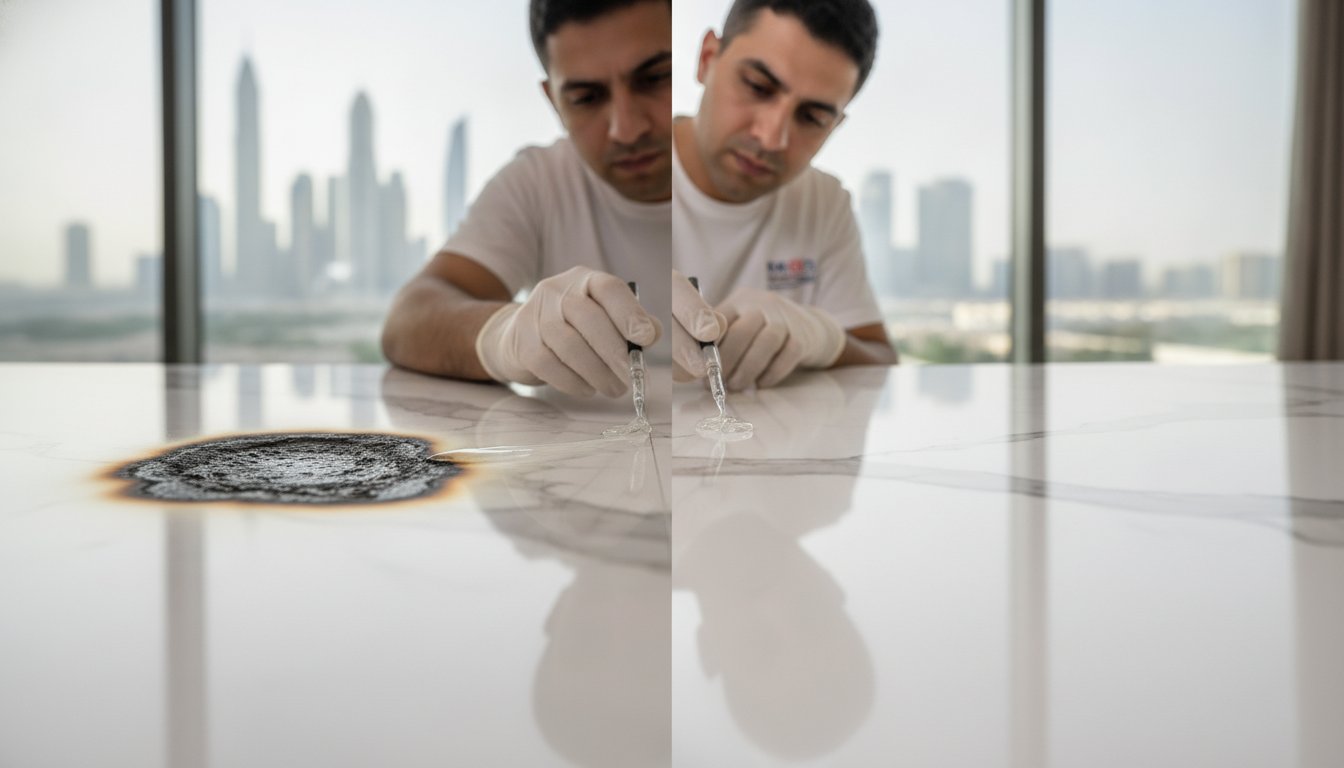
The most expensive way to handle a scorched countertop is often the one property managers choose first: full replacement. You likely believe that once a hot pan leaves its mark, the structural integrity and aesthetics of your surface are permanently compromised. It’s a common frustration to look at a visible blemish in a luxury or commercial space and assume the only solution is a costly, disruptive installation. However, you don’t have to settle for an unsightly finish or an inflated renovation bill. Learning how to repair burn mark on laminate worktop surfaces through technical restoration can return your facility to its original standard without the need for new materials.
This guide explores how professional surface restoration seamlessly erases burn marks, saving you from high costs and significant downtime. While DIY kits might seem like a quick fix, they often fail to achieve the invisible finish required in professional environments. We’ll break down the differences between standard hardware store putty and advanced technical recalibration. You’ll discover how a master craftsperson uses precision methodology to deliver a flawless result, ensuring your kitchen or facility remains operational and aesthetically perfect.
Key Takeaways
- Understand the structural nature of laminate burns as the thermal degradation of melamine resin rather than a simple surface stain.
- Discover why technical experts use industrial-grade polymer resins to repair burn mark on laminate worktop surfaces for a seamless, invisible finish.
- Contrast the long-term durability of professional restoration against the temporary results of retail wax kits and DIY fillers.
- Evaluate the significant ROI of choosing on-site repair to avoid the hidden costs of plumbing disconnection and backsplash damage.
- Learn how professional surface restoration minimizes facility downtime by completing complex repairs in a matter of hours.
The Anatomy of a Burn: Why Laminate Worktops Scorch
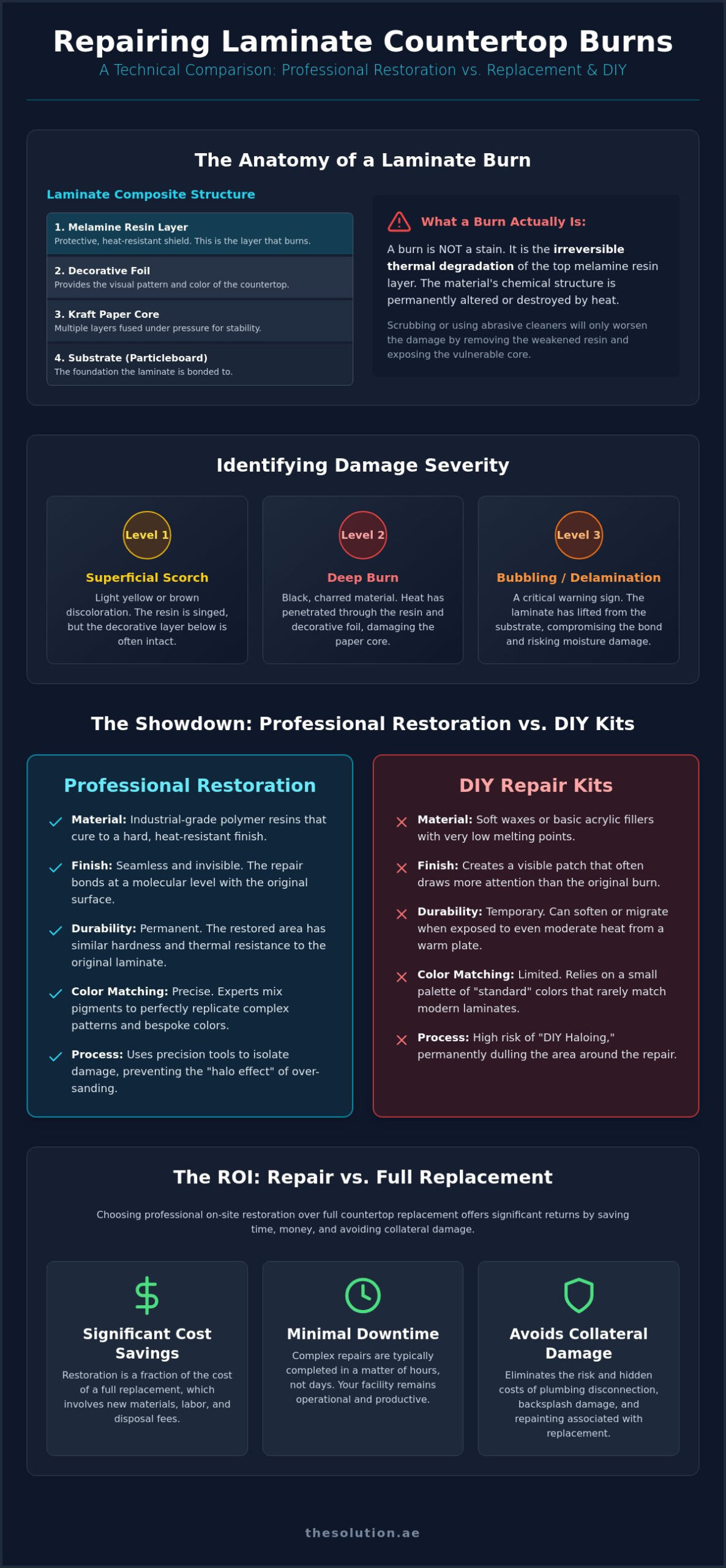
Laminate is a sophisticated composite material. It consists of layers of kraft paper, a decorative foil layer that provides the aesthetic pattern, and a top layer of melamine resin. These components are fused under high pressure to create a durable, non-porous surface. Decorative high-pressure laminates are designed for daily use, but they have distinct physical limits. A “laminate burn” occurs when extreme heat causes thermal degradation of the protective thermosetting plastic layer. This is a permanent chemical change, not a simple surface stain.
Understanding the material science is essential before you attempt to repair burn mark on laminate worktop surfaces. Scrubbing the area with abrasive cleaners or bleach only accelerates the destruction. Many people attempt to “clean” a burn mark, but this leads to further surface erosion. You aren’t removing dirt; you’re scrubbing away the already weakened material and exposing the porous paper core beneath. Once the resin is gone, the worktop is vulnerable to moisture and bacteria.
The Role of Melamine Resin
The top layer of melamine resin acts as a shield. It provides heat resistance up to a specific threshold, typically around 180°C for short durations. When a hot pot or pan exceeds this temperature limit, the resin reaches its glass transition point and begins to decompose. This chemical breakdown is irreversible. The resin doesn’t just change colour; it loses its structural integrity and protective properties. Because the protective layer has physically changed state or evaporated, thermal damage is permanent without the addition of new, industrial-grade material. To effectively repair burn mark on laminate worktop installations, you must replace the missing resin with a compatible, high-performance polymer.
Identifying the Severity of Damage
Identifying the depth of the damage is the first step in professional restoration. A superficial scorch appears as a light yellow or brown discolouration. This indicates the resin has singed but the decorative foil remains intact. Deep burns are more severe. You will see carbonised material, which looks like black charring. This means the heat has penetrated through the resin and the foil into the kraft paper core.
Bubbling is a critical warning sign. It indicates that the heat has caused the adhesive bond between the laminate and the particleboard substrate to fail. This delamination creates an air pocket. If you notice the surface lifting or feel a hollow space beneath the burn, the bond is compromised. Bubbling indicates a need for immediate professional intervention to stabilise the substrate before moisture enters the core and causes permanent swelling.
Professional Restoration vs. DIY Repair Kits
Property owners often turn to retail kits to repair burn mark on laminate worktop damage. These products typically rely on soft waxes or basic acrylic fillers. While they might hide a blemish temporarily, they lack the chemical resilience required for a high-traffic kitchen or commercial facility. Waxes are particularly problematic because they have a low melting point. Placing a warm plate near the repaired area can cause the wax to soften or migrate, rendering the fix useless. A professional approach replaces these temporary fillers with industrial-grade polymer resins that cure into a hard, heat-resistant surface.
The risk of “DIY haloing” is another significant concern. This occurs when an amateur sands the repair area and accidentally strips the protective finish from the surrounding “healthy” laminate. This creates a dull, permanent ring around the patch that’s impossible to hide with standard cleaning. Restoration specialists use precision tools to isolate the damage, ensuring the surrounding material remains untouched. This level of accuracy is what separates a visible patch from a technical restoration.
The Limitations of Retail Wax and Fillers
Retail kits provide a limited palette of “standard” colors. In luxury interiors or bespoke commercial spaces, these “one-size-fits-all” shades rarely match the complex patterns of modern laminates. This discrepancy creates a visible patch that draws more attention to the damage than the original burn. Professional-grade fillers are engineered to mimic the specific hardness and thermal expansion of the original laminate. This ensures the repair remains stable as temperatures fluctuate. Unlike soft fillers, industrial resins bond at a molecular level, preventing the delamination common with store-bought alternatives.
Why Technical Expertise Matters for Invisible Repairs
Achieving an invisible result requires more than just filling a hole. It involves meticulous grain replication and texture matching. A master craftsperson uses specialized pigment sets to hand-paint the intricate details of the surrounding surface back onto the repair. This level of hard surface repair demands a steady hand and a deep understanding of color theory. It’s a technical craft that goes beyond simple maintenance.
Professionals also use UV-stable topcoats to seal the work. These coatings prevent the repair from yellowing or fading when exposed to direct sunlight over time. If you require a permanent, high-standard solution, consulting a restoration specialist ensures the repair survives daily cleaning and thermal stress without degrading. This methodical approach protects your investment and maintains the aesthetic integrity of your space.
The Professional Process for Repairing Laminate Burns
Technical restoration isn’t a quick fix; it’s a systematic methodology designed to return a surface to its original specification. When we repair burn mark on laminate worktop surfaces, we follow a structured five-step approach that addresses both aesthetic and structural damage. This process prevents common failures like peeling or discolouration that occur with inferior methods. Unlike simplified DIY videos that suggest you “just sand and fill,” a master craftsperson treats the repair as a technical recalibration of the material’s properties.
- Step 1: Precision Excavation: All carbonised and degraded material is removed using surgical-grade tools. This includes degreasing the area to ensure no oils interfere with the new bond.
- Step 2: Substrate Stabilisation: If the heat has reached the core, we apply a stabilising agent before building up the surface with multi-layer industrial resins.
- Step 3: Level Sanding and Profiling: We use a multi-stage levelling process to match the original sheen. This ensures the repair is flush with the surrounding worktop.
- Step 4: Artistic Colour Matching: Technicians use specialized pigment sets to replicate the exact hue and pattern of the laminate.
- Step 5: High-Durability Sealing: A final UV-stable, heat-resistant seal is applied to protect the work from future wear and moisture.
Excavation and Stabilisation
The success of a repair depends entirely on the preparation phase. We don’t just fill over the burn; we remove every trace of “dead” or carbonised material. If any charred residue remains, the new resin won’t bond properly, leading to eventual delamination. We also inspect the surrounding area to ensure the laminate isn’t under tension or lifting from the substrate. A clean, vertical edge is vital for a seamless transition because it allows the polymer resin to achieve a structural anchor point against healthy material. This step ensures the repair is a permanent part of the worktop rather than a superficial patch.
Artistic Finishing and Grain Replication
The most challenging part of the process is making the repair disappear. Modern laminates often feature complex stone, wood, or abstract patterns that require a high level of skill to mimic. Technicians use fine-point tools and artist-grade brushes to replicate these textures by hand. By carefully balancing the opacity of pigments, we allow for natural depth that matches the way light hits the original surface. Once the artistic layer is complete, we initiate a final curing process. This ensures the material is fully hardened and the worktop is ready for immediate use, allowing your facility to return to full operation without the long lead times of a replacement.
Calculating the ROI: Repair vs. Full Replacement
Choosing to repair burn mark on laminate worktop surfaces is a strategic fiscal decision. While replacement is often the default reaction to damage, it triggers a costly chain of logistical events. A full replacement requires disconnecting plumbing, removing backsplashes, and potentially damaging adjacent cabinetry. This process often takes days or weeks if the specific material is out of stock. In contrast, a technical restoration is completed on-site within hours, bypassing the procurement cycle entirely. This speed ensures your facility remains operational without the disruption of a construction site.
The hidden costs of replacement frequently exceed the price of the material itself. You must factor in the labor for demolition, waste disposal fees, and the risk of collateral damage to tiles or paintwork. Matching laminate batches is another major hurdle. If an identical match isn’t available, property managers are often forced to replace all worktops in a facility to ensure aesthetic uniformity. Restoration eliminates this risk by working with the existing material to achieve a perfect match. It is a pragmatic solution that prioritizes both quality and budget control.
Efficiency for Property and Facility Managers
In the high-pressure environment of Dubai’s real estate market, downtime equals lost revenue. Hotel suites must be ready for guests. Commercial kitchens cannot stop production for a multi-day renovation. On-site repairs allow for immediate use of the facility once the curing process is complete. This speed is especially critical for construction surface repair during final handovers. Meeting strict deadlines depends on resolving snags quickly without waiting for new shipments or coordinating multiple trades.
The Aesthetic and Financial Benefit
Restoration typically provides savings of up to 80% compared to the total cost of full replacement. This allows facility managers to reallocate budgets toward broader maintenance needs while maintaining the original design intent of the property. Beyond the financial ROI, choosing repair is a sustainable choice that aligns with the UAE’s environmental goals by reducing construction waste in landfills. For a comprehensive maintenance strategy, many commercial clients combine this service with stainless steel finish restoration to ensure all high-value surfaces meet the same standard of excellence. To secure these savings for your project, book a technical assessment with our restoration experts today.
Restoring Perfection with The Solution in Dubai
The Solution operates as a specialized partner for technical restoration across the UAE. We don’t just patch surfaces; we restore them to a master craftsperson standard. Our personnel undergo rigorous training and continuous assessment to ensure every project meets our high internal benchmarks. This commitment to technical mastery is why leading developers and facility managers trust us to repair burn mark on laminate worktop surfaces in their most prestigious properties. We focus on results that are both aesthetically invisible and structurally sound.
Comprehensive Hard Surface Expertise
Our capabilities extend far beyond laminate. We maintain a “repair first” philosophy that prioritizes the restoration of high-value assets over the waste of replacement. This approach is particularly valuable in Dubai’s hospitality and marine sectors, where bespoke finishes are difficult to source and expensive to install. Our expertise covers a wide array of materials, including wood, stone, and specialized ceramic and tile repair. By focusing on technical recalibration, we help clients avoid the logistical nightmares associated with full renovations.
We’ve successfully executed complex restorations in some of Dubai’s most prominent developments. These projects demonstrate our ability to handle high-volume commercial challenges while maintaining meticulous attention to detail. Whether you’re dealing with a single scorched countertop or a facility-wide maintenance requirement, our methodology remains consistent. We deliver an intelligent financial decision that protects your bottom line and preserves the design intent of your space.
Contact The Solution for On-Site Restoration
Securing a professional restoration is a straightforward process. We understand the priorities of busy commercial clients, so we’ve streamlined our assessment workflow. To repair burn mark on laminate worktop damage in your facility, simply provide us with a high-resolution photo of the area. Our technical team will conduct a remote assessment to determine the most effective restoration path and provide a transparent quote. Once approved, our technicians arrive on-site to execute the repair with minimal disruption to your daily operations.
We serve clients across Dubai, Abu Dhabi, and the wider UAE region. Our on-site service model ensures that your surfaces are restored without the need for removal or long lead times. If you’re ready to eliminate unsightly damage and restore your surfaces to their original standard, request a professional surface repair quote from our team today. We’re the reliable partner you need for even the most complex technical restoration challenges.
Secure Your Surface Restoration Strategy
Technical restoration is the most pragmatic way to manage damaged assets without the logistical burden of full replacement. We’ve established that a scorch is a chemical degradation requiring professional-grade resins and artistic precision to truly disappear. Choosing to repair burn mark on laminate worktop surfaces isn’t just about aesthetics; it’s a calculated financial decision that preserves your original design while eliminating construction waste. Our specialized UAE-wide on-site repair team is trusted by major hospitality and construction firms to deliver results that meet the highest technical standards. This expertise ensures that even the most severe thermal damage is resolved efficiently.
By opting for restoration, you secure a cost-effective alternative to replacement that avoids the risks of collateral damage to backsplashes and plumbing. The Solution provides the technical mastery needed to handle complex challenges across Dubai and the wider Emirates. You don’t have to settle for visible damage or inflated renovation costs. Restore your worktop to perfection—Contact The Solution today. Our experts are ready to return your surfaces to their original, flawless condition with the precision your facility deserves.
Frequently Asked Questions
Can a severely deep burn mark on a laminate worktop really be fixed?
Technical restoration can resolve even deep, carbonised burns that have penetrated the decorative foil layer. The process involves excavating the charred material and rebuilding the surface using multi-layered polymer resins. This methodology restores the structural integrity of the surface and prevents moisture from reaching the porous paper core beneath. It’s a permanent solution that avoids the high costs and logistical challenges of a full replacement.
How long does a professional laminate repair take to cure?
Most industrial-grade resins used to repair burn mark on laminate worktop surfaces cure in approximately one to two hours. While the material hardens quickly, the full chemical bond reaches maximum strength over a 24-hour period. This rapid turnaround is a primary benefit for commercial facilities, such as hotel kitchens or office breakrooms, that cannot afford long periods of operational downtime.
Will the repaired area be heat-resistant like the original worktop?
The specialized resins used in professional restoration are engineered to withstand standard kitchen temperatures and thermal expansion. While they offer high thermal resistance, it is always recommended to use trivets or heat mats for hot cookware. This precaution preserves the aesthetic finish and prevents future thermal degradation, just as it would for the original manufacturer’s surface.
Is it possible to match the grain of a stone-effect laminate worktop?
Master craftspersons use fine-point tools and specialized pigment sets to hand-replicate complex stone, wood, or abstract patterns. By layering different levels of opacity, technicians recreate the natural depth and texture of the original design. This ensures the repair is visually indistinguishable from the surrounding material, maintaining the design intent of your luxury interior.
How much does it cost to repair a burn mark compared to replacing the counter?
Restoration typically costs a fraction of the total price required for a full replacement. Choosing to repair burn mark on laminate worktop damage allows you to avoid the expenses of purchasing new materials and hiring tradespeople for plumbing or tiling. Most property managers realize significant savings while bypassing the hidden costs of demolition and waste disposal.
Can I use the worktop immediately after the repair is completed?
You can generally use the worktop for light tasks as soon as the technician finishes the on-site process. However, it’s best to avoid heavy cleaning or placing warm items directly on the area for the first 24 hours. This window allows the polymer resins to achieve their full structural bond and ensures the long-term durability of the finish.
What should I avoid doing to a burn mark before a professional arrives?
Avoid scrubbing the scorched area with abrasive pads or applying bleach to “lift” the discolouration. These actions strip away the remaining protective melamine resin and expose the paper core to moisture, which can cause the substrate to swell. Leave the damage untouched to ensure the restoration technician has a stable, dry surface for the repair.
Does the repair come with a guarantee of durability?
Professional repairs are designed as permanent solutions that withstand daily use and standard cleaning protocols. The industrial resins bond at a molecular level to the original laminate, ensuring the restored area won’t lift, peel, or yellow over time. This meticulous application process focuses on technical mastery and long-term reliability rather than a temporary aesthetic patch.


