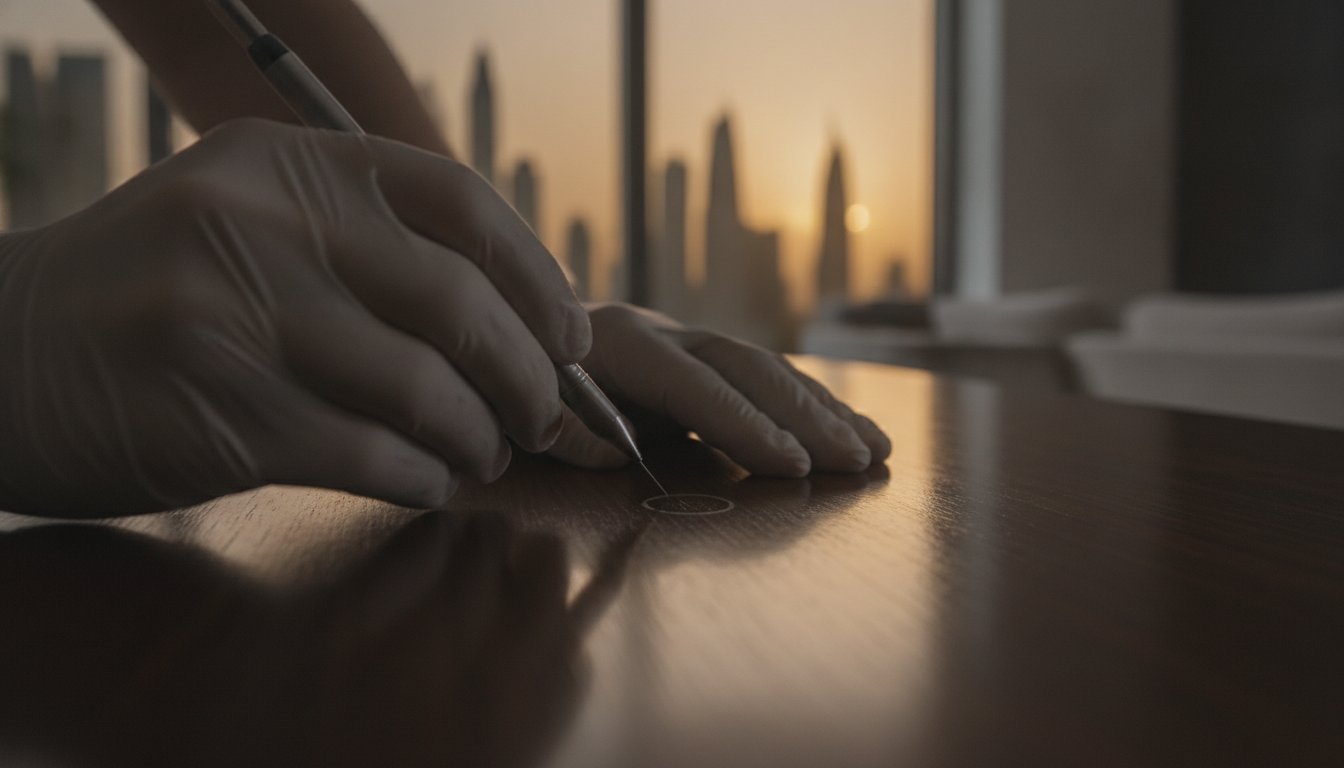
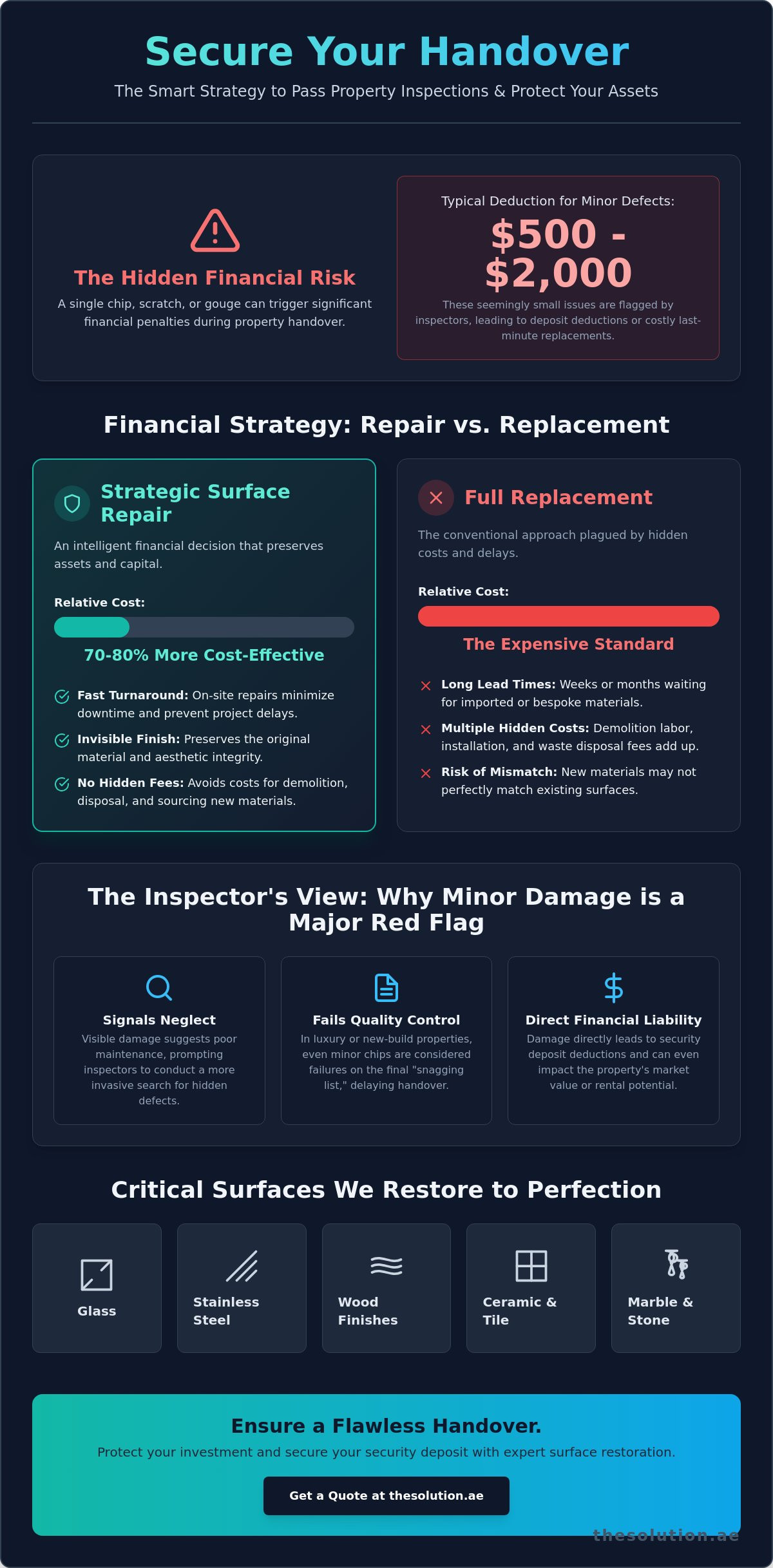
Replacing a damaged surface before a property handover is often an unnecessary drain on your capital. You likely understand the anxiety that comes with an upcoming walkthrough, where a single chip in a ceramic tile or a scratch on a stainless steel finish can trigger a flagged report or a significant deposit deduction. With minor repairs identified during inspections often costing between $500 and $2,000, these small defects represent a substantial financial risk. Strategic surface repair to pass property inspection is the smarter, more pragmatic alternative to the standard “rip and replace” mentality.
We agree that your priority is a seamless handover without the headache of sourcing and installing new materials. This guide will show you how professional restoration secures your assets, protects your security deposits, and eliminates inspection red flags at a fraction of the cost of replacement. We’ll preview the technical methodologies used to restore everything from glass to wood, proving why on-site repair is the most intelligent financial decision for property professionals and developers in 2026.
Key Takeaways
- Understand how minor imperfections like chips and scratches act as red flags for inspectors, signaling poor maintenance and triggering deeper scrutiny.
- Learn how strategic surface repair to pass property inspection eliminates the high costs of replacement, including lead times and disposal fees, while securing your security deposit.
- Identify the high-stakes surfaces, including stainless steel, glass, and wood, that require meticulous restoration to meet the standards of luxury property handovers.
- Discover the technical process behind flawless restoration, where master craftspeople use precision color matching and texture replication to make damage invisible.
- Recognize the operational advantages of on-site repairs, which minimize construction delays and allow for a seamless handover of assets without disrupting site schedules.
The Role of Surface Condition in Property Inspections
A property inspection is more than a simple checklist; it’s a professional evaluation of asset management and quality control. While a comprehensive guide to home inspections will confirm that the process focuses on safety and systems, the visual condition of surfaces often dictates the inspector’s overall rigor. Scratches on a stainless steel lift door or chips in a marble lobby floor aren’t just aesthetic flaws. They act as red flags. To an inspector, visible damage suggests a lack of oversight or systemic neglect, which often prompts a much more invasive search for hidden defects.
First impressions carry immense weight in high-traffic areas like lobbies and elevators. When an inspector enters these zones, they’re looking for signs of how the property is handled. Flawless surfaces create a “halo effect.” If the visible elements are pristine, the inspector subconsciously assumes the hidden mechanical systems are equally well-maintained. Conversely, deep scratches or persistent stains signal that the property hasn’t been cared for, leading to a more critical review of the entire premises. It’s a pragmatic reality: a well-presented surface reduces the likelihood of a punitive report.
It’s vital to distinguish between expected wear-and-tear and actionable damage. Faint scuffs from shoes might be overlooked in some contexts, but a chip in a ceramic tile or a deep gouge in a wooden door frame requires rectification. Utilizing surface repair to pass property inspection ensures these specific, high-risk defects are neutralized before the official walkthrough occurs. This proactive approach transforms a potential liability into a verified asset.
Why Inspectors Flag Minor Surface Damage
Modern properties often rely on high-end aesthetic compliance to maintain their market value. A minor chip in a stone countertop or a scratch in a glass partition might seem trivial, but in a luxury setting, these are considered failures in quality control. During the final stages of construction, “snagging lists” become the primary hurdle for contractors. Even minor chips suggest that the finish has been compromised during the build process. Addressing these through specialized surface repair to pass property inspection prevents these items from appearing on the final report, ensuring the project meets the required handover standards without delay.
The Impact on Security Deposits and Handovers
For commercial tenants and facilities managers, surface damage is a direct financial liability. Landlords calculate security deposit deductions based on the cost of restoring a unit to its original condition. If you rely on full replacement, you face the high costs of long lead times, specialized labor, and disposal fees. This can also lead to “loss of rent” claims if the unit cannot be re-let immediately. Securing a “no-defects” certificate is essential for a clean handover. Professional on-site restoration eliminates these risks by providing a fast, invisible fix that satisfies even the most meticulous property manager, protecting your capital and your reputation.
Financial Strategy: Repair vs. Replacement vs. Penalties
For facilities managers, every line item on a maintenance budget must be justified by its return on investment. Choosing on-site surface repair to pass property inspection is not just a cosmetic choice; it’s an intelligent financial strategy. When a surface is replaced, the visible invoice for the new material is only a fraction of the total expenditure. You must account for the hidden costs that include specialized labor for demolition and installation, expensive disposal fees for construction waste, and the logistical nightmare of long lead times for imported materials.
Professional restoration is consistently 70-80% more cost-effective than full replacement. By opting for technical repair, you avoid the need to renegotiate property values or offer seller credits due to damaged assets. Maintaining the original material also preserves the integrity of the space. It ensures that a single damaged tile doesn’t lead to a mismatched floor because the original batch is no longer available. This level of precision is why The Solution focuses on invisible restoration rather than destructive replacement.
Calculating the Cost of Replacement
The procurement of specialty materials like Italian marble or bespoke glass often involves weeks of waiting. In a high-stakes commercial environment, this delay is unacceptable. Consider the disruption cost: closing a lobby or an elevator for a week to replace a panel is often non-viable due to tenant inconvenience and operational downtime. From a sustainability perspective, repair is the superior choice for ESG-conscious firms. It eliminates the carbon footprint associated with manufacturing and transporting new goods while keeping functional materials out of landfills.
Avoiding Inspection Penalties
Inspection failures result in more than just a list of chores. They trigger re-inspection fees and can delay the release of funds or the commencement of new leases. Understanding the consumer protection for home inspections framework helps managers realize that documented, professional maintenance is the best defense against punitive reports. You can use repair receipts as evidence of a high standard of care. By leveraging expert hard surface repair, you maintain asset depreciation schedules without the shock of capital-heavy replacement costs. This documentation proves to stakeholders that the property is under the care of master craftspeople who prioritize technical mastery over quick fixes.
Critical Surfaces to Restore Before Your Property Handover
Surface restoration in luxury properties requires a level of precision that exceeds standard janitorial capabilities. When preparing for a handover, you must identify high-stakes surfaces where even a millimeter of damage can lead to a failed snagging report. In the UAE’s premium real estate market, invisible is the only acceptable standard. Understanding what to expect during a home inspection helps you prioritize the areas that inspectors scrutinize most under high-intensity lighting. A successful surface repair to pass property inspection targets these visible assets to ensure they meet factory-grade specifications.
Glass and Mirror Restoration
Glass surfaces are among the most difficult to maintain during construction and tenancy. Scratches on facade glass or glass balustrades aren’t just aesthetic issues; they can be flagged as safety hazards if the structural integrity is questioned. Professional glass polishing and restoration is essential for retail storefronts where crystal-clear visibility is a commercial requirement. Our technicians also address mineral deposits and etching on bathroom mirrors, which are common results of hard water exposure. We use specialized abrasive compounds to level the surface, followed by high-speed polishing to restore the original clarity without optical distortion.
Metal and Stainless Steel Polishing
Elevator doors and wall panels are high-traffic zones that frequently suffer from dents and deep scratches. These surfaces act as a centerpiece in commercial lobbies, making their condition a primary focus for inspectors. Achieving a uniform grain after a repair is a complex technical challenge. Expert stainless steel finish restoration involves re-graining the metal to match the existing factory finish perfectly. This process eliminates the “patchy” look often left by amateur attempts. Fixing scratches in metal thresholds and cladding ensures that the building’s entrance reflects a standard of meticulous maintenance.
Stone, Ceramic, and Tile Repair
Natural stone like marble and granite often suffers from chips along the edges of countertops or deep cracks in flooring. These defects are immediate red flags for moisture ingress and potential structural movement. Utilizing technical ceramic and tile repair allows us to fill these voids with UV-stable resins that match the stone’s unique color and translucency. We replicate the natural veining and texture so the repair is indistinguishable from the surrounding material. This level of detail is critical for passing close-up inspections in kitchens and bathrooms, where inspectors spend a significant amount of time evaluating the quality of the finish. Using surface repair to pass property inspection in these areas prevents the need for costly tile removal and the risk of damaging underfloor heating or waterproofing layers.
The Professional Restoration Process for Flawless Results
The technical restoration of high-value surfaces is a disciplined process that combines chemical engineering with artisan skill. Achieving a result that satisfies a rigorous Dubai construction handover requires more than a simple patch. Our master craftspeople follow a structured methodology designed to return damaged assets to their original specifications. This on-site approach eliminates the logistical delays of off-site refurbishment, allowing your project to remain on schedule. By utilizing specialized compounds and precision tools, we perform surface repair to pass property inspection without the intrusive noise or dust associated with full replacement.
Assessment and Material Matching
The process begins with a technical assessment of the substrate. Technicians must accurately identify the specific grade of metal, such as 304 or 316 stainless steel, or the porosity and mineral composition of a stone slab. This identification is critical for ensuring the longevity of the repair. We use a science-based approach to custom-mix UV-stable resins and high-grade pigments, adjusting the opacity and hue to integrate perfectly with the surrounding area. At The Solution, an invisible repair is defined as a restoration that remains undetectable to the naked eye under standard 1,000-lux site inspection lighting. This meticulous matching phase ensures that the repair doesn’t just cover the damage but chemically and visually replaces it.
Execution and Finishing
Once the material is matched, the execution phase requires extreme precision. We utilize micro-abrasives and variable-speed polishing tools to level the repair site. Sanding and buffing are performed in stages, gradually refining the surface until the texture and sheen are identical to the factory finish. It’s not enough for the repair to look good; the structural bond must be as resilient as the original material to withstand daily wear. Final quality checks are conducted using high-intensity lamps to simulate the conditions of a professional walkthrough. This rigorous internal standard ensures that every surface repair to pass property inspection we complete is ready for the most critical surveyor. To secure your asset’s value before your next deadline, book a technical assessment with our restoration experts today.
Securing Your Property Handover with The Solution
Securing a successful property handover requires a partner who understands the high stakes of commercial and residential walkthroughs. By integrating professional surface repair to pass property inspection into your final project phase, you eliminate the friction of managing multiple vendors. Our technicians are cross-trained across a versatile array of materials. We provide everything from wood repair on bespoke cabinetry to glass polishing and restoration on high-rise facades, all within a single site visit. This comprehensive capability ensures that every visible asset meets the rigorous standards of 2026 property surveyors.
Speed is a critical factor when handover deadlines are non-negotiable. Traditional replacement often involves lead times that can span weeks, putting your delivery schedule at risk. In contrast, our on-site restoration processes are designed for rapid execution without compromising quality. We’ve already established that restoration is consistently 70-80% more cost-effective than replacement. This economic advantage, combined with our ability to work around existing site schedules, makes The Solution the most pragmatic choice for protecting your capital and ensuring a flawless inspection report.
Expertise Across All Sectors
Our team provides specialized support for hospitality, marine, and commercial real estate. High-end hotels rely on our meticulous standards to maintain a five-star aesthetic, while the marine sector utilizes our technical mastery for stainless steel and glass restoration on luxury vessels. For construction firms, we act as the final line of defense before a client walkthrough. We specialize in clearing complex snagging lists, ensuring that accidental site damage doesn’t result in a failed handover. Every technician undergoes rigorous training to maintain our reputation for reliability and technical excellence.
Next Steps: Get Your Inspection-Ready Quote
Achieving a “no-defects” certificate starts with a professional assessment. To request an on-site evaluation for your property, simply contact our team with your project details and inspection timeline. Preparing documentation, such as photos of the damaged areas and a list of the materials involved, helps us provide an accurate and efficient quote. We understand the priorities of facilities managers and developers, focusing on minimal disruption and maximum financial benefit. Don’t let minor surface defects jeopardize your asset handover. Contact The Solution today for professional surface repair that guarantees inspection success and secure your property’s value with confidence.
Secure Your Handover Success with Strategic Restoration
Approaching a property walkthrough shouldn’t be a source of financial anxiety. We’ve demonstrated that technical restoration is a powerful financial tool, offering a cost-effective alternative to expensive asset replacement while maintaining high-end aesthetic standards. By addressing defects in glass, stone, metal, and wood before the inspector arrives, you safeguard your security deposits and ensure a seamless asset transfer. Utilizing professional surface repair to pass property inspection is the most pragmatic way to neutralize red flags and demonstrate a high standard of maintenance.
The Solution offers UAE-wide coverage for construction and commercial sectors, providing specialized expertise in restoring diverse materials to their factory-grade finish. Our master craftspeople are ready to help you clear snagging lists and meet tight deadlines with minimal disruption to your operations. Don’t let minor chips or scratches compromise your project’s reputation. Request an On-Site Surface Restoration Quote and prepare your property for a flawless walkthrough. You can move forward with your next handover knowing your surfaces are in expert hands.
Frequently Asked Questions
Will a professional property inspector be able to see the surface repairs?
No, high-quality technical repairs are designed to be invisible under standard site lighting. We use precision color matching and texture replication to ensure the repaired area integrates seamlessly with the surrounding substrate. This level of detail ensures that surface repair to pass property inspection remains undetectable even to experienced surveyors who use high-intensity lamps to scrutinize finishes during a final walkthrough.
How much can I save by repairing surfaces instead of replacing them?
On-site restoration typically costs 70% to 80% less than full replacement. These savings come from eliminating the need for new material procurement, specialized demolition labor, and expensive disposal fees. For facilities managers, choosing repair is an intelligent financial decision that preserves capital while avoiding the long lead times often associated with importing bespoke materials like Italian marble or custom glass panels.
Can you repair scratches in glass without distorting the view?
Yes, our glass polishing process removes scratches while maintaining optical clarity. We use a multi-stage abrasive system to level the surface of the glass followed by high-speed buffing with specialized compounds. This technique ensures there’s no “lensing” or distortion. It’s a critical service for retail storefronts and facade glass where visual perfection is required for both safety and commercial presentation.
What types of surfaces can be restored before a property handover?
We restore an exhaustive list of hard surfaces including stainless steel, glass, natural stone, ceramic tiles, and wood. Our technical capabilities extend to polished metals, high-gloss laminates, and various types of flooring. This versatility allows developers to consolidate their snagging requirements with a single partner, ensuring every surface from the lobby elevator to the penthouse kitchen is in pristine condition for the handover.
How long does a typical on-site surface repair take?
Most individual surface repairs are completed within a few hours. Because the work is performed on-site, there’s no downtime for shipping or off-site processing. Larger projects, such as restoring multiple elevator panels or extensive floor areas, are scheduled to minimize disruption to building operations. This speed is essential for meeting tight inspection deadlines and avoiding penalties associated with delayed handovers.
Is it possible to match the color of old marble or wood during a repair?
Yes, we specialize in custom-mixing pigments and resins to match the specific patina of aged materials. Whether it’s the unique grain of a wooden door frame or the complex veining of natural marble, our technicians replicate the original aesthetic on-site. This precision ensures that surface repair to pass property inspection results in a finish that’s indistinguishable from the surrounding area, regardless of the material’s age.
Do you provide services for commercial construction snagging lists?
We act as a primary resource for construction firms looking to clear snagging lists before the final client walkthrough. Our team identifies and rectifies accidental site damage that occurs during the build phase, such as chipped tiles or scratched thresholds. This proactive approach helps contractors secure a “no-defects” certificate quickly, facilitating a smooth transition of the asset to the property owner or facilities manager.
Can stainless steel elevator doors be polished back to their original finish?
Yes, we can restore stainless steel to its original factory grain. Our process involves re-graining the metal to eliminate deep scratches, dents, and oxidation. This is far more efficient than replacement, which would require shutting down the elevator for an extended period. The result is a uniform, professional finish that restores the centerpiece of a commercial lobby to its intended aesthetic standard.


